


The world of B2B is changing fast. By 2026, only organizations with the most effective b2b corporate lead generation strategies will stand out from the crowd and win new business.
This guide is your roadmap to future-proof, high-performing b2b corporate lead generation. It is designed to give marketing and sales leaders actionable tactics, innovative tools, and expert insights for generating top-tier leads at scale.
You will discover the latest trends, step-by-step playbooks, AI-driven solutions, multi-channel approaches, and proven measurement frameworks. Ready to take your lead generation to the next level? Dive in and master the art of B2B growth.
The Evolving B2B Lead Generation Landscape in 2026
The world of b2b corporate lead generation is changing faster than ever. As we look toward 2026, what worked in the past is no longer enough. Buyer expectations, technology, and competition are all evolving, creating both new challenges and exciting opportunities.
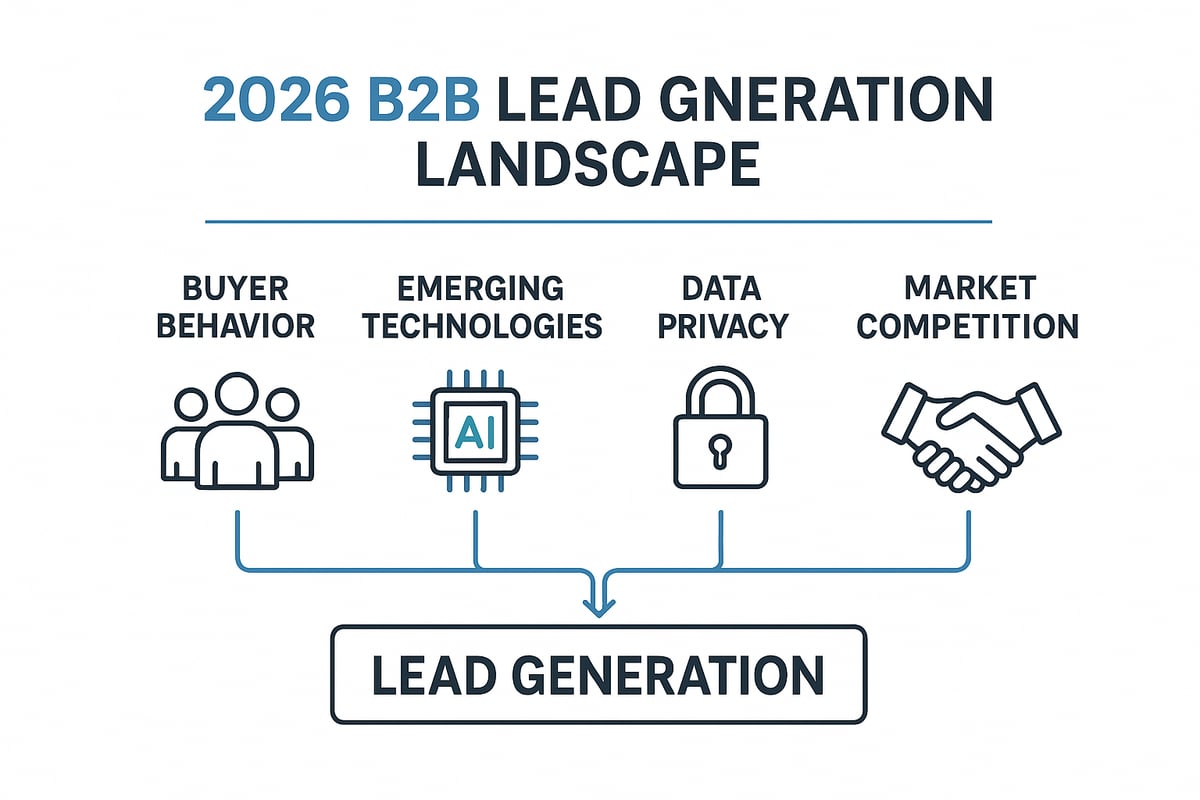
Shifting Buyer Behavior and Decision Journeys
Today’s b2b corporate lead generation strategies must address how buyers now behave. Buyers are more self-sufficient, doing deep research before ever contacting vendors. In fact, most buyers engage with content and peers long before they reach out.
Buying committees have expanded, with six to ten stakeholders involved in each decision. This means outreach needs to be hyper-personalized and relevant to each player in the process. According to Salesforce, 74% of B2B buyers expect tailored experiences at every step.
To stand out, marketers must map the full decision journey, anticipate questions, and deliver value at every touchpoint. If you fail to personalize, buyers will move on to competitors who do.
Emerging Technologies Transforming Lead Generation
Technology is redefining what’s possible in b2b corporate lead generation. Artificial intelligence (AI) now powers data enrichment, predictive analytics, and real-time lead qualification. Conversational AI and chatbots engage prospects instantly, making the buyer’s journey smoother.
The integration of intent data and behavioral signals allows you to reach buyers at the right moment with the right message. McKinsey reports that 61% of top-performing companies already use AI in their lead generation process.
For example, AI-personalized content drives 31% higher lead capture rates, proving that smart automation is vital for scaling results. The companies that embrace these tools will gain a significant edge.
Regulatory and Data Privacy Changes
Stricter data privacy laws are rewriting the rules for b2b corporate lead generation. Regulations like GDPR, CCPA, and similar global policies mean that collecting and using data requires more transparency and consent.
The deprecation of third-party cookies forces marketers to rely on first-party data strategies. According to HubSpot, 87% of marketers now prioritize collecting data directly from their audiences.
This shift makes trust and compliance more important than ever. Businesses that respect privacy and build transparent data practices will be better positioned to earn buyers’ confidence and avoid costly penalties.
Competitive Saturation and Market Fragmentation
The b2b corporate lead generation space is more crowded than ever. There is a surge in SaaS offerings and niche service providers, making it harder to grab attention.
Differentiation is crucial. Buyers are not just looking for features—they want value and trust from vendors. Forrester found that 67% of B2B buyers rank trust as a leading factor in choosing a provider.
To win, companies must showcase unique value propositions and build credibility at every interaction. Standing out means being authentic, reliable, and consistently delivering on promises.
Key Arguments and Insights
To thrive in b2b corporate lead generation in 2026, agility and innovation are non-negotiable. The most successful companies will continuously test, learn, and adapt their strategies.
Data-driven decision-making provides a powerful competitive advantage. Teams that align marketing and sales create seamless buyer experiences, leading to better conversion and retention.
In summary, mastering b2b corporate lead generation in this landscape means keeping pace with buyer expectations, leveraging technology, respecting privacy, and building trust. Those who do will lead the market.
Step-by-Step B2B Lead Generation Strategy for 2026
Ready to transform your b2b corporate lead generation approach for 2026? The path to scalable growth is no longer linear. Instead, it’s a dynamic process that demands agility, data-driven decisions, and a relentless focus on the customer. This step-by-step strategy will guide you through the proven methods, innovative tools, and integrated workflows essential for success.
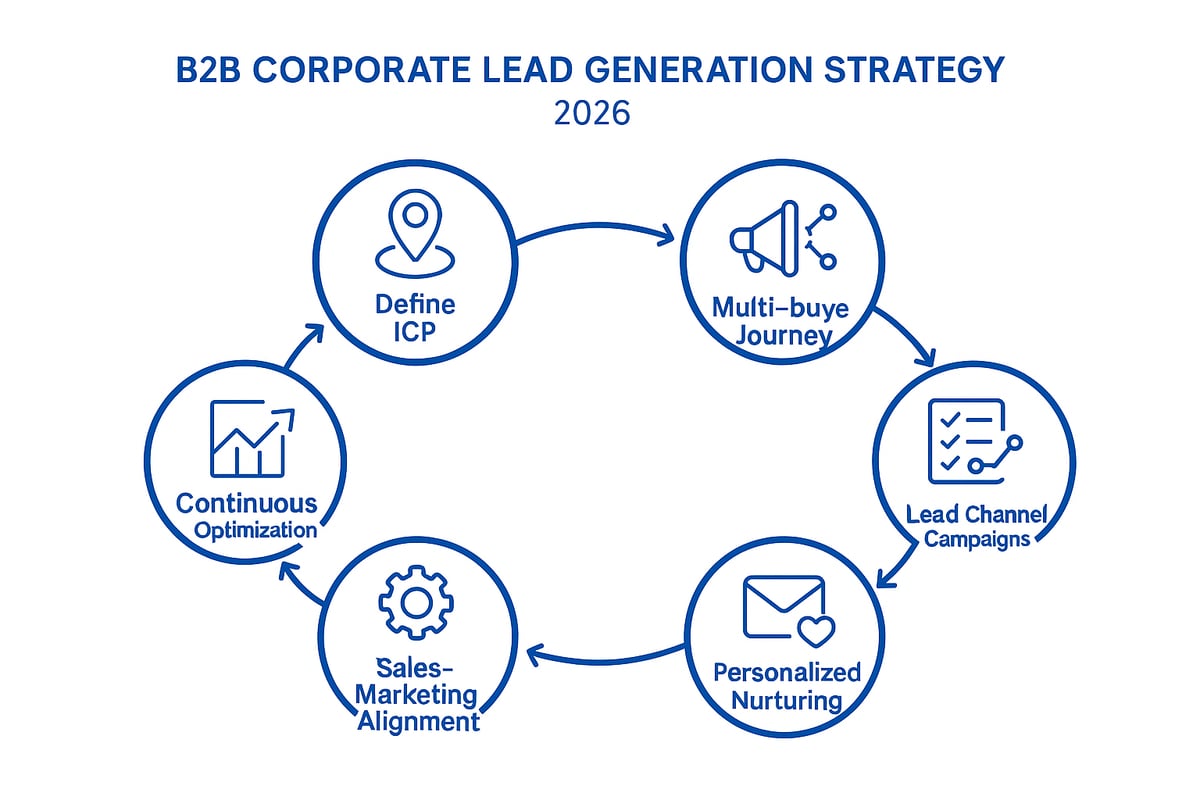
Step 1: Define and Refine Your Ideal Customer Profile (ICP)
The foundation of successful b2b corporate lead generation is a crystal-clear Ideal Customer Profile. In 2026, static ICPs are obsolete. Leading teams harness AI and real-time intent data to pinpoint high-potential accounts, constantly updating their profiles as market trends and customer needs evolve.
Regularly review your ICPs by analyzing feedback from both sales and customer success teams. This dynamic approach ensures your messaging and outreach are always relevant. Companies that refresh their ICPs in response to data see a 33% improvement in conversion rates. Make this the cornerstone of your lead generation efforts.
Step 2: Map the Modern B2B Buyer Journey
Today’s B2B buying process is non-linear and heavily digital. To optimize b2b corporate lead generation, map every touchpoint your buyers encounter—both online and offline. Identify the research, consideration, and decision stages, and align your content accordingly.
Recognize that 80% of buyers engage with multiple assets before connecting with sales. Tailor your outreach and resources to support each stage. By visualizing the buyer journey, you can anticipate needs, remove friction, and guide prospects seamlessly toward a decision.
Step 3: Develop Multi-Channel Lead Generation Campaigns
Relying on a single channel is a thing of the past. In 2026, b2b corporate lead generation thrives on orchestrated, multi-channel campaigns. Blend inbound tactics like content marketing, SEO, and webinars with outbound strategies such as email, LinkedIn, and account-based marketing.
Successful teams leverage paid media and retargeting to reach high-intent audiences. Multi-channel approaches drive a 24% increase in qualified leads. For a deeper dive into what works, explore these multi-channel lead generation campaigns proven to maximize results.
Step 4: Implement Advanced Lead Qualification and Scoring
Manual lead scoring is no longer enough for b2b corporate lead generation. AI-powered models now analyze engagement patterns, firmographics, and intent signals to score and prioritize leads in real time. Integrate these insights with your CRM and marketing automation platforms for seamless handoff between teams.
Automated lead scoring not only boosts sales productivity by 28%, but also ensures your team focuses on the most promising opportunities. Set up clear qualification criteria, and let technology do the heavy lifting, so your reps can concentrate on closing deals.
Step 5: Nurture Leads with Hyper-Personalized Engagement
Generic nurture streams are ineffective in modern b2b corporate lead generation. Instead, deploy dynamic content, tailored email sequences, and AI-driven chatbots to deliver hyper-personalized experiences. Segment your audience by role, industry, and stage in the buyer journey.
Leverage conversational AI to engage prospects 24/7, answer questions, and schedule meetings automatically. This level of personalization accelerates deal velocity by 20% and keeps your brand top of mind throughout the decision process.
Step 6: Align Sales and Marketing for Closed-Loop Success
Silos are the enemy of b2b corporate lead generation. Establish shared KPIs, regular pipeline reviews, and open feedback loops between sales and marketing. This alignment ensures no lead falls through the cracks and that every interaction is consistent and valuable.
Organizations with tightly aligned teams see a 36% boost in customer retention. Foster collaboration with joint strategy sessions, unified dashboards, and agreed-upon definitions of success. When everyone is accountable, your results soar.
Step 7: Optimize Continuously Based on Data and Feedback
The best b2b corporate lead generation strategies are never static. Run frequent A/B tests on messaging, offers, and channels. Use analytics to identify bottlenecks, uncover new opportunities, and refine your approach.
Continuous optimization has been shown to double lead-to-customer rates. Encourage your team to embrace experimentation, iterate quickly, and act on real customer feedback. This data-driven mindset ensures you’ll stay ahead, no matter how the market evolves.
Leveraging AI and Automation for Scalable Lead Generation
Artificial intelligence is redefining b2b corporate lead generation, allowing organizations to scale faster, target smarter, and close more deals. In 2026, embracing automation is not just an upgrade, it is a competitive necessity. According to recent studies, AI-powered lead generation yields 50% more sales-ready leads, making it a top priority for forward-thinking teams.
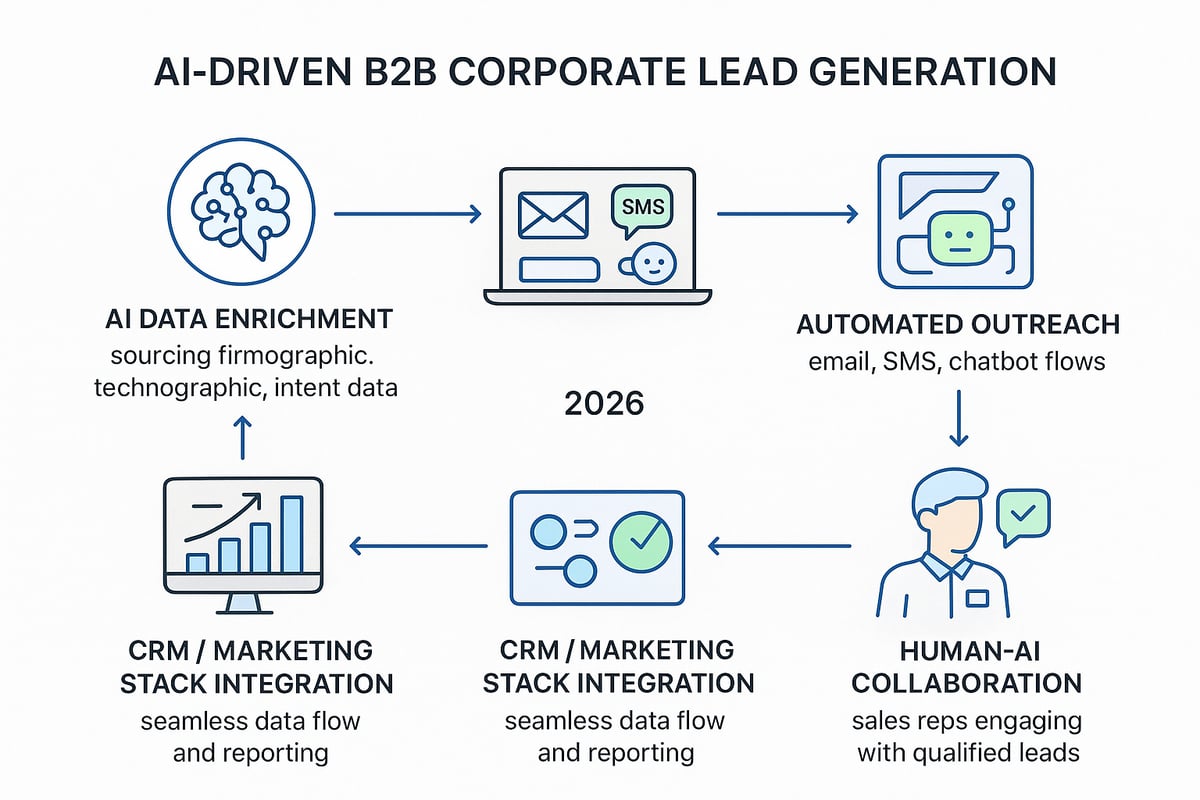
AI-Powered Data Collection and Enrichment
Modern b2b corporate lead generation starts with precise data. AI tools collect real-time firmographic and technographic insights, automatically updating records as new information emerges. Predictive modeling enables you to pinpoint buying signals, focusing your efforts where they matter most.
For example, AI systems can scan millions of data points to uncover hidden patterns in buyer behavior. This means your team spends less time on manual research and more on connecting with prospects that fit your ideal profile.
By using AI for data enrichment, companies ensure their b2b corporate lead generation efforts are always backed by the most accurate and actionable intelligence.
Automated Outreach and Lead Nurturing
Automation supercharges b2b corporate lead generation by delivering the right message at the perfect time. Intelligent drip sequences use email, SMS, and social channels to nurture leads with personalized content.
Chatbots take engagement further, qualifying prospects instantly and even booking meetings without human intervention. This always-on approach ensures no high-potential lead slips through the cracks.
Automated nurturing not only increases efficiency but also boosts conversion rates, making it essential for scaling b2b corporate lead generation efforts in the digital age.
Predictive Lead Scoring and Routing
AI-driven predictive lead scoring is transforming how organizations approach b2b corporate lead generation. Machine learning models analyze historical data, engagement patterns, and intent signals to prioritize prospects most likely to convert.
Dynamic routing then assigns these hot leads to the right sales reps based on expertise or territory. This process reduces response times and ensures that every qualified opportunity receives immediate attention.
With predictive scoring, your b2b corporate lead generation strategy becomes more targeted, driving higher close rates and maximizing sales productivity.
Integration with CRM and Marketing Stack
Seamless integration between AI tools and your CRM or marketing platforms is vital for b2b corporate lead generation success. Automated data flow keeps all teams aligned and informed, eliminating silos and manual errors.
Advanced reporting dashboards provide real-time insights into campaign performance, pipeline health, and lead quality. This transparency allows for quick adjustments and smarter decision-making.
An integrated tech stack streamlines every stage of b2b corporate lead generation, maximizing ROI and supporting scalable growth as markets evolve.
Human-AI Collaboration for Relationship Building
While AI handles repetitive and data-heavy tasks, human expertise remains at the heart of b2b corporate lead generation. Sales teams can now focus on building relationships, understanding client needs, and closing deals.
AI provides the insights and automation, but it is the personal touch that converts opportunities into long-term partnerships. By freeing up valuable time, AI empowers teams to deliver exceptional experiences that drive loyalty and trust.
In 2026, the winning formula for b2b corporate lead generation combines cutting-edge technology with human creativity and empathy.
Multi-Channel and Account-Based Marketing Tactics for 2026
Mastering b2b corporate lead generation in 2026 means embracing a blend of multi-channel and account-based strategies. Buyers are everywhere—on social, email, events, and more—so your approach must be as agile as your prospects. Let’s break down the most powerful tactics you need to dominate every stage of the buyer journey.
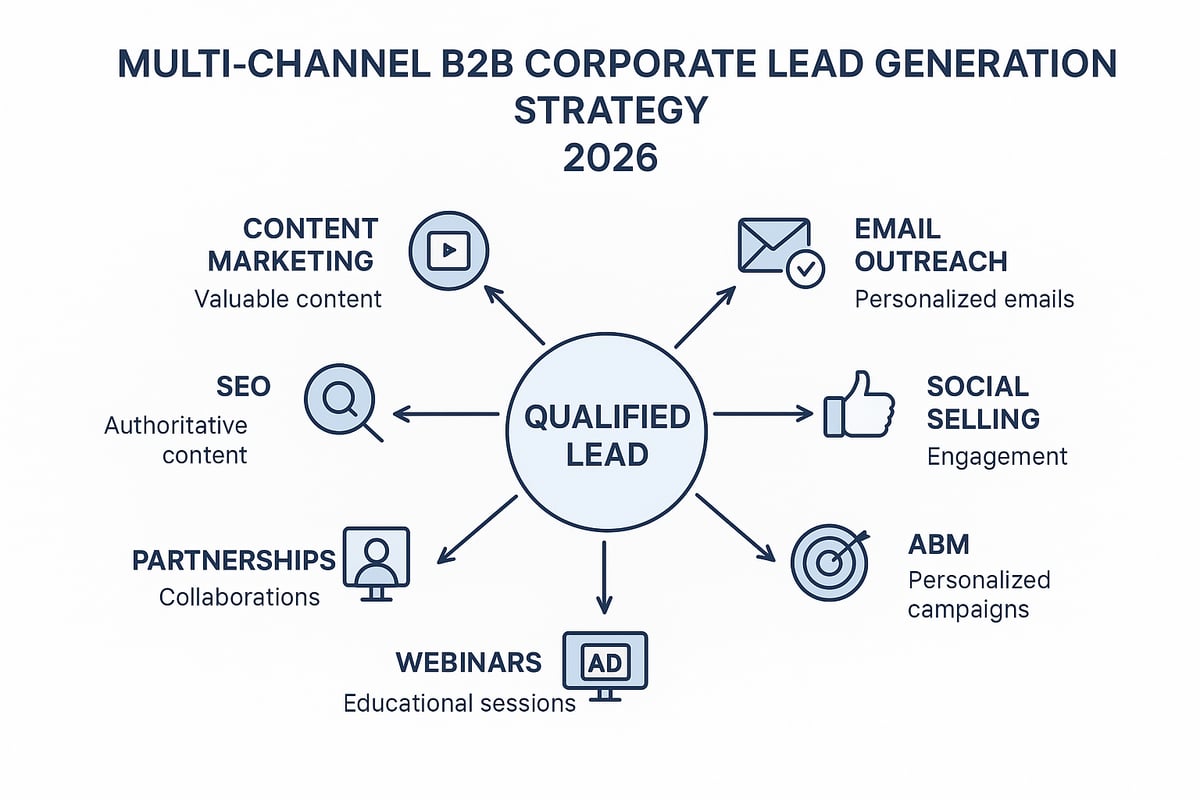
Inbound Marketing: Content, SEO, and Thought Leadership
Inbound remains the engine of b2b corporate lead generation. High-value content such as thought leadership articles, data-driven reports, and industry-specific guides draw prospects in. SEO amplifies your reach, ensuring your brand is found at crucial moments.
Video, podcasts, and interactive experiences are crucial for engagement. In fact, interactive content generates 2x more engagement compared to static formats. Diversify your content mix to win attention and trust.
- Create case studies and whitepapers
- Launch educational webinars
- Optimize blogs for long-tail keywords
Consistently publishing authoritative content positions your company as an industry leader.
Outbound: Targeted Email, Social Selling, and Cold Outreach
Outbound tactics are evolving fast in b2b corporate lead generation. Highly personalized emails and LinkedIn messages cut through noise and spark real conversations. Use sales intelligence tools to research prospects and tailor every touchpoint.
To maximize response rates, align your messaging with the recipient’s pain points and industry trends. Experiment with A/B testing subject lines, CTAs, and send times.
- Build segmented email lists
- Use video snippets in outreach
- Follow up with value-driven insights
Outbound works best when it’s relevant, timely, and focused on building relationships, not just transactions.
Account-Based Marketing (ABM) at Scale
ABM transforms b2b corporate lead generation by focusing resources on high-value accounts. Instead of casting a wide net, you orchestrate campaigns that speak directly to decision-makers in your most promising target companies.
Deploy multi-touch, multi-channel tactics—personalized emails, direct mail, LinkedIn ads, and executive events—to engage buying committees. Tailor messaging to each stakeholder’s unique priorities.
- Identify top-tier accounts with AI
- Create custom content for each account
- Coordinate sales and marketing outreach
ABM delivers outsized ROI and long-term partnerships when executed with precision and persistence.
Paid Media and Retargeting
Paid media accelerates b2b corporate lead generation by placing your message in front of high-intent prospects. LinkedIn ads, programmatic display, and remarketing campaigns ensure you reach decision-makers at key moments.
Leverage intent data to trigger ads when buyers are researching solutions. Retarget website visitors with tailored offers to nudge them back into your funnel.
- Launch account-based ad campaigns
- Use lookalike audiences for scale
- Test creative formats and landing pages
Retargeted ads are proven to boost conversion rates, making paid media essential for maximizing ROI.
Events, Webinars, and Virtual Experiences
Events and webinars are backbones of b2b corporate lead generation, especially as hybrid models gain traction. Host industry panels, roundtables, or virtual conferences to connect with prospects and showcase expertise.
Capture attendee data and follow up with personalized nurture sequences. Use event insights to refine your messaging and identify high-potential leads.
- Organize live Q&As with experts
- Offer on-demand content replays
- Integrate polls and interactive demos
Virtual experiences create lasting impressions and drive high-quality pipeline opportunities.
Partnerships and Co-Marketing Initiatives
Strategic partnerships supercharge b2b corporate lead generation by expanding your reach and credibility. Team up with complementary brands for joint campaigns, shared webinars, or bundled offers.
Co-marketing lets you tap into new audiences and pool resources for greater impact. Look for partners who share your values and target similar buyer personas.
- Launch joint research reports
- Exchange guest blog posts
- Cross-promote via newsletters
Effective partnerships often result in higher lead volume and stronger brand authority.
Measurement and Attribution for Multi-Channel Success
Measuring b2b corporate lead generation performance across channels is non-negotiable. Use multi-touch attribution models to understand which tactics drive the most value.
Set up real-time dashboards to monitor MQLs, SQLs, and pipeline velocity. Regularly audit your campaigns, analyze drop-off points, and optimize based on data.
- Implement UTM tracking for all channels
- Benchmark against industry standards
- Align marketing and sales on success metrics
Continuous measurement and attribution ensure you double down on what works and eliminate wasted spend.
Measuring, Analyzing, and Optimizing Lead Generation Performance
Accurate measurement is the foundation of b2b corporate lead generation success. Without clear visibility into your pipeline, it's impossible to improve results or justify your marketing investments. Let’s break down the key metrics, analytic strategies, and optimization techniques that will keep your campaigns ahead in 2026.
Key Metrics for B2B Lead Generation Success
Tracking the right metrics is non-negotiable for b2b corporate lead generation. Focus on Marketing Qualified Leads (MQLs), Sales Qualified Leads (SQLs), conversion rates, Customer Acquisition Cost (CAC), and pipeline velocity. Use these metrics to benchmark performance against industry standards and spot trends.
Here’s a quick comparison table to help:
| Metric | Why It Matters | 2026 Benchmark |
|---|---|---|
| MQLs | Quality of marketing pipeline | 13% conversion |
| SQLs | Sales-ready opportunities | 8% conversion |
| CAC | Efficiency of spend | $150 – $350 average |
| Pipeline Velocity | Speed to revenue | 30-60 days |
Regularly reviewing these numbers ensures your b2b corporate lead generation efforts stay on target.
Attribution and Reporting in a Multi-Touch World
Modern b2b corporate lead generation rarely follows a straight line. Buyers interact with multiple touchpoints, making attribution more complex. Adopt first-touch, last-touch, and especially multi-touch attribution models to understand which channels truly drive results.
Use advanced analytics platforms to unify reporting. Real-time dashboards help you visualize the buyer journey and optimize spend. Companies using multi-touch attribution see up to 20% higher ROI, underscoring the value of comprehensive measurement.
Continuous Improvement Through Data-Driven Insights
To maximize b2b corporate lead generation, set up feedback loops between sales and marketing. Regular pipeline and conversion audits reveal where leads drop off and where campaigns outperform. This data fuels ongoing optimization.
Leverage regular A/B testing and campaign reviews. If you’re looking for actionable ways to improve, explore proven lead generation tactics to avoid common pitfalls and accelerate your results. Continuous improvement is your ticket to sustainable growth.
Leveraging AI for Predictive Analytics and Forecasting
AI is revolutionizing b2b corporate lead generation analytics. Predictive models identify pipeline gaps and future revenue trends so you can act before problems arise. AI also recommends campaign tweaks to boost performance.
Machine learning enhances lead scoring and forecasting, improving accuracy by up to 50%. For example, AI-driven lead scoring improves efficiency by 40%, helping sales teams focus on the most promising prospects. The result: smarter decisions and faster growth.
Overcoming Common Measurement Challenges
Even the best b2b corporate lead generation strategies face measurement hurdles. Data quality issues and inconsistent definitions can derail your analytics. Prioritize CRM hygiene and align teams on reporting standards.
Host regular workshops to synchronize marketing and sales definitions. Invest in tools that automate data cleaning and reporting. By proactively tackling these challenges, you’ll ensure your b2b corporate lead generation metrics are accurate and actionable, empowering smarter business decisions.
Future Trends and Innovations in B2B Lead Generation
The future of b2b corporate lead generation is being shaped by rapid shifts in technology, buyer expectations, and regulatory demands. To stay ahead, businesses must anticipate and adapt to these emerging trends. Let’s explore the innovations that will define success in 2026 and beyond.
AI and Machine Learning Innovations
AI and machine learning are revolutionizing b2b corporate lead generation by enabling deeper intent analysis and hyper-personalization. Advanced algorithms can now predict buyer behavior, score leads with precision, and automate campaign optimization. IDC projects that AI-driven campaigns will generate 40% more leads by 2026. For a deeper dive into these advancements, explore AI-powered sales funnel strategies, which are redefining how companies approach data-driven lead generation.
Companies leveraging next-gen AI tools stand out by delivering relevant offers, reducing manual work, and uncovering new market segments. This competitive edge will become essential as more organizations adopt AI at scale.
The Rise of Conversational Marketing and Sales
Conversational marketing is taking center stage in b2b corporate lead generation. Buyers now expect instant, two-way communication through chatbots, messaging apps, and even video calls. Advanced chatbots and voice assistants provide real-time answers and gather valuable data for sales teams.
By integrating conversational insights into CRM systems, businesses can personalize outreach and streamline the sales process. Gartner predicts that by 2026, 80% of B2B interactions will occur via digital channels, making conversational tools a must-have for future-ready organizations.
Data Privacy, Trust, and Ethical Lead Generation
With stricter regulations like GDPR and CCPA, data privacy is reshaping b2b corporate lead generation. Buyers are more selective, and 65% say data privacy influences vendor choice. Companies that prioritize transparency and ethical data use will earn trust and build long-term relationships.
To thrive, businesses must adopt clear consent practices and invest in secure data management. Value-based marketing that respects privacy not only ensures compliance but also differentiates brands in crowded markets.
Integration of Offline and Online Experiences
The lines between digital and in-person experiences are blurring in b2b corporate lead generation. Hybrid events, combining webinars with physical conferences, create richer engagement opportunities. Event and intent data can be merged to build comprehensive lead profiles.
ON24 reports that hybrid events drive 25% more qualified leads compared to single-channel approaches. Companies that seamlessly blend online content with offline touchpoints will create memorable buyer journeys and improve conversion rates.
The Expanding Role of Video and Interactive Content
Video and interactive content are transforming b2b corporate lead generation by making complex information accessible and engaging. Personalized videos, interactive demos, and even AR/VR experiences help prospects understand value propositions quickly.
According to Demand Gen Report, interactive content doubles conversion rates. Forward-thinking companies are investing in multimedia strategies to capture attention and nurture leads throughout the buying journey.
The Impact of Generative AI on Content and Outreach
Generative AI is changing the landscape of b2b corporate lead generation. Marketers use AI to scale content creation, personalize messaging, and generate campaign ideas in minutes. However, maintaining authenticity and brand voice is crucial, requiring human oversight.
HubSpot found that 70% of marketers plan to increase AI use by 2026. For practical examples of how generative AI is integrated into sales processes, review AI-powered sales funnel strategies, which highlight the synergy between automation and human creativity.
Building Agile, Future-Ready Lead Generation Teams
The future of b2b corporate lead generation will belong to agile, data-savvy teams. Upskilling in AI, analytics, and digital selling is now essential. Organizations must foster a culture of experimentation, rapid iteration, and collaboration across marketing and sales.
Many leading B2B lead generation companies are already demonstrating these agile practices, helping clients adapt and thrive in a fast-changing landscape. Investing in team development and embracing innovation ensures your business remains competitive and prepared for tomorrow’s challenges.
Ready to turn these future-focused B2B lead generation strategies into real results for your business? If you’re serious about scaling with AI-driven campaigns, high-quality leads, and transparent, guaranteed growth, let’s take your plans from theory to action. I’ve seen first-hand how the right strategy can transform pipeline and revenue—and you don’t have to figure it out alone. Why not get direct, actionable insights tailored to your goals? If you want to see what’s possible for your team in 2026, Book a FREE Strategy Call and let’s map out your next big win together.