


The landscape of acquiring small business leads has transformed dramatically in recent years, and 2026 presents unprecedented opportunities for companies willing to embrace innovation. Gone are the days when cold calling and generic email blasts could sustain a healthy pipeline. Today's successful businesses leverage sophisticated systems that identify, qualify, and nurture prospects with precision, converting cold contacts into ready-to-buy customers at rates that would have seemed impossible just a few years ago. Whether you're a startup founder or an established entrepreneur, understanding how to generate consistent, high-quality leads is the difference between predictable growth and unpredictable revenue.
Why Traditional Lead Generation Fails Small Businesses
Most small business owners pour resources into lead generation tactics that simply don't work anymore. The traditional agency model promotes vanity metrics like impressions and clicks while actual revenue remains stagnant.
The fundamental problems plaguing conventional approaches include:
- Lack of alignment between marketing spend and actual business outcomes
- Dependence on outdated cold outreach methods that prospects actively ignore
- No systematic qualification process, wasting sales time on unqualified contacts
- Generic messaging that fails to resonate with specific pain points
The truth is, small business lead generation strategies must evolve beyond spray-and-pray tactics. When your competitors are still relying on purchased lists and batch-and-blast emails, you have an opportunity to differentiate through intelligent automation and personalization.
The Cost of Poor Quality Leads
Not all small business leads are created equal. A database of 10,000 contacts means nothing if only 50 are actually interested in your solution.
Consider the real costs:
Your sales team wastes hours chasing unqualified prospects. Marketing budgets evaporate on campaigns that attract the wrong audience. Revenue forecasts become impossible when lead quality fluctuates wildly. Customer acquisition costs skyrocket because conversion rates plummet.
Understanding qualified leads becomes critical when your business model depends on efficiency. Every dollar and hour matters when you're competing against larger companies with deeper pockets.
AI-Powered Systems Transform Small Business Leads
Artificial intelligence has revolutionized how businesses identify and engage potential customers. The technology now accessible to small businesses was previously exclusive to enterprise corporations with massive budgets.
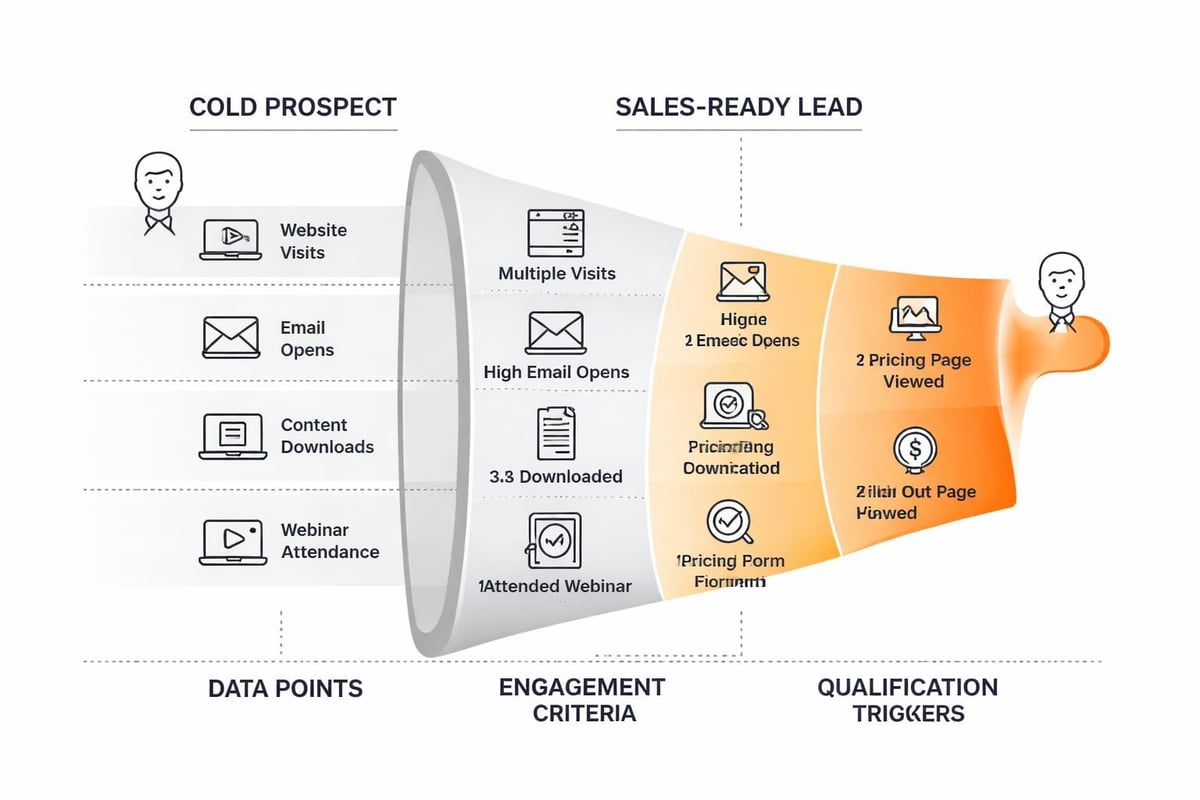
Modern AI systems analyze thousands of data points to identify prospects who match your ideal customer profile. They monitor buying signals across multiple channels, engage prospects with personalized messaging at scale, and automatically schedule appointments with qualified leads who demonstrate genuine interest.
| Traditional Approach | AI-Powered Approach | Impact |
|---|---|---|
| Manual list building | Automated prospect identification | 10x faster pipeline development |
| Generic email blasts | Personalized multi-channel outreach | 5x higher engagement rates |
| Manual qualification | AI-driven lead scoring | 70% reduction in wasted sales time |
| Inconsistent follow-up | Automated nurture sequences | 40% increase in conversion rates |
The businesses winning in 2026 aren't just using AI as a novelty. They're integrating it into every stage of their customer acquisition process, from initial awareness through final conversion.
Building Your Lead Generation Technology Stack
You don't need a massive budget to implement effective lead generation strategies. The right combination of tools creates a competitive advantage regardless of company size.
Essential components include:
- Customer data platform that unifies prospect information across touchpoints
- AI-powered enrichment tools that add valuable context to basic contact data
- Automated engagement systems that nurture prospects based on behavior
- Intelligent scheduling software that converts interest into booked appointments
- Analytics dashboards that reveal which sources produce the highest quality small business leads
When these systems work together seamlessly, you create a predictable machine for generating revenue. The key is ensuring each component communicates with the others, creating a unified view of every prospect's journey.
Strategic Content That Attracts High-Intent Prospects
Content marketing remains one of the most effective ways to generate small business leads, but only when executed strategically. Random blog posts and social media updates won't move the needle.
Your content must address specific problems your ideal customers face right now. It should demonstrate expertise while guiding prospects toward a clear next step. Every piece should serve a defined purpose in your customer acquisition funnel.
High-performing content formats for small business leads:
- Case studies showing measurable results for clients similar to your prospects
- Industry-specific guides addressing unique challenges in your target market
- Comparison content helping prospects evaluate solutions objectively
- ROI calculators demonstrating the financial impact of solving their problem
- Video demonstrations showcasing your solution in action
The businesses generating the most small business leads through content aren't creating more. They're creating strategically, focusing on topics that indicate purchase intent rather than general interest.
Optimizing Your Digital Presence for Lead Capture
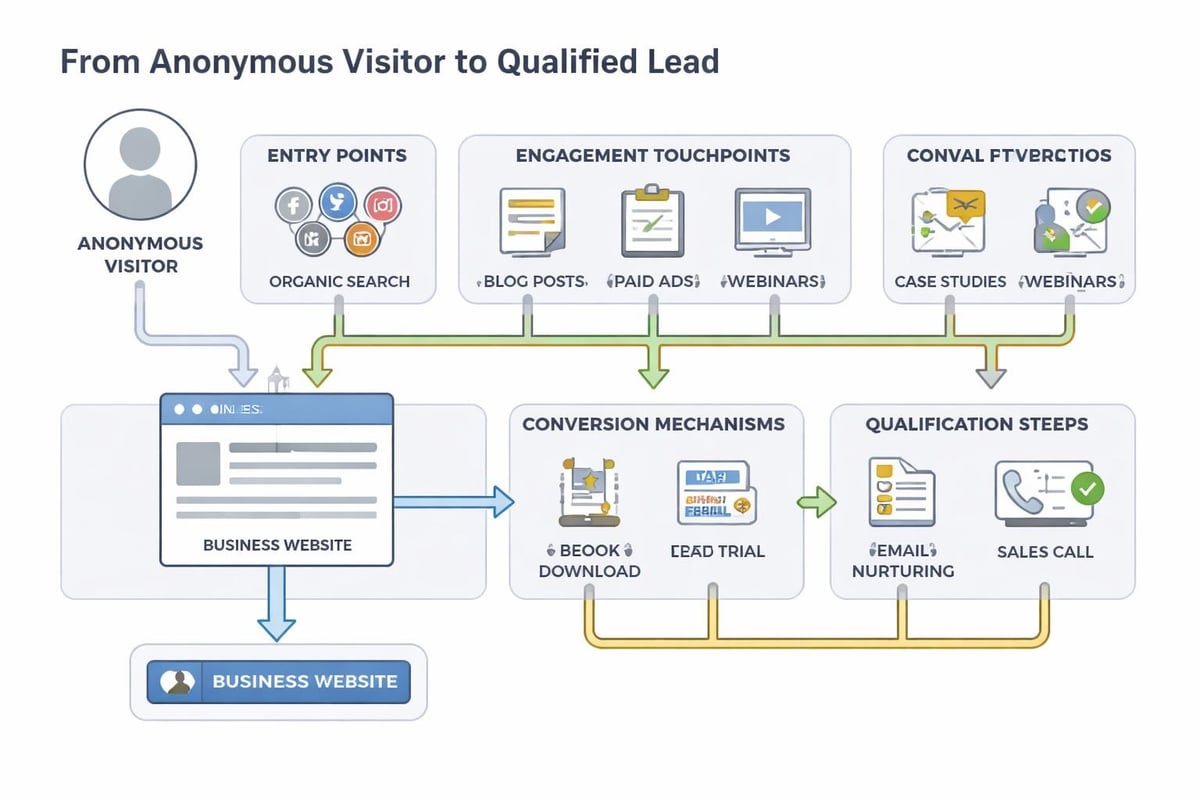
Your website is your most valuable lead generation asset, yet most small business websites fail to convert visitors into contacts. Building a lead generation website requires deliberate design choices that guide visitors toward conversion.
Every page should have a clear purpose and a compelling call-to-action. Forms should request only essential information at first contact. Landing pages must align perfectly with the campaigns driving traffic to them.
Conversion-optimized elements include:
Clear value propositions above the fold that immediately communicate benefits. Strategic placement of lead magnets offering genuine value in exchange for contact information. Social proof elements demonstrating credibility through testimonials and case studies. Live chat functionality enabling real-time engagement with interested prospects.
Leveraging Multiple Channels for Maximum Reach
Relying on a single source for small business leads creates dangerous vulnerability. Diversification isn't just smart-it's essential for sustainable growth.
The most successful businesses in 2026 orchestrate campaigns across multiple channels, creating touchpoints that reinforce messaging and build familiarity. When a prospect sees your message on LinkedIn, then receives a personalized email, then encounters your content in their search results, credibility compounds.
| Channel | Primary Benefit | Best Use Case |
|---|---|---|
| LinkedIn Outreach | Professional context and targeting | B2B service providers |
| SEO Content | Long-term organic traffic | Businesses with longer sales cycles |
| Paid Search Ads | High purchase intent traffic | Products with clear search demand |
| Email Marketing | Direct communication with interested prospects | Nurturing and re-engagement |
| Social Media Advertising | Audience targeting precision | Visual products and B2C services |
Exploring the best marketing platforms helps you identify where your ideal customers spend time and how they prefer to engage with businesses like yours.
The Power of Referral Networks
The highest quality small business leads often come from referrals. Customers who arrive through recommendations convert faster, spend more, and stay longer than those acquired through other channels.
Yet most businesses treat referrals as happy accidents rather than strategic initiatives. Building structured referral networks transforms satisfied customers into consistent lead generation partners.
Creating a referral system that works:
- Identify your most satisfied customers and most influential connections
- Make referring easy with simple processes and clear instructions
- Provide genuine value to both the referrer and the referred prospect
- Follow up promptly and keep referrers informed of outcomes
- Express gratitude publicly and privately for every referral
When you systematize referrals, you create a compounding advantage. Each new customer becomes a potential source of future small business leads, creating exponential rather than linear growth.
Data-Driven Qualification and Nurturing
Generating leads is only half the battle. Converting them into customers requires intelligent qualification and strategic nurturing.
Most small businesses lack systematic approaches to determining which prospects deserve immediate attention versus those who need more education. This results in sales teams chasing cold leads while hot prospects slip through the cracks.
Effective lead scoring considers:
- Demographic fit: Does this prospect match your ideal customer profile?
- Engagement level: How actively have they interacted with your content and outreach?
- Buying signals: Have they demonstrated specific behaviors indicating purchase intent?
- Timeline indicators: What evidence suggests when they might be ready to buy?
Advanced AI systems now automate this scoring process, continuously updating lead quality ratings based on hundreds of behavioral signals. This allows your team to focus energy where it matters most.
Nurture Sequences That Convert
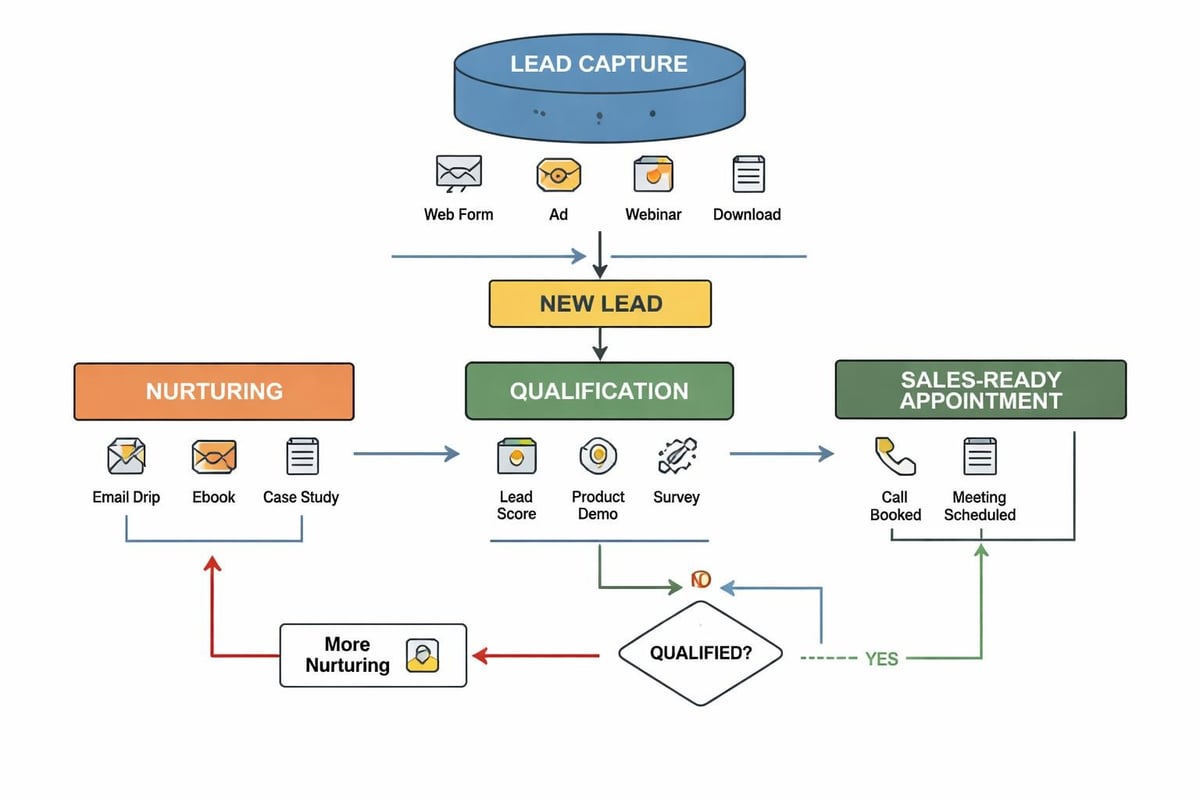
Not every lead is ready to buy immediately. The businesses that win are those that stay engaged with prospects throughout their buying journey, providing value at every stage.
Automated nurture sequences deliver relevant content based on prospect behavior and characteristics. Someone who downloaded a beginner's guide receives different follow-up than someone who requested pricing information.
Components of effective nurture campaigns:
Educational content addressing common objections and questions. Case studies relevant to the prospect's industry or situation. Timely check-ins that feel personal rather than automated. Clear pathways to book conversations when prospects are ready.
The goal isn't to overwhelm prospects with constant communication. It's to remain top-of-mind while building trust through consistent value delivery. When that prospect is finally ready to buy, you want to be the obvious choice.
Measuring What Matters for Small Business Leads
You can't improve what you don't measure. Yet many small businesses track the wrong metrics, optimizing for vanity numbers while actual revenue suffers.
Critical metrics for lead generation success:
- Cost per qualified lead: What you actually pay for prospects who meet your criteria
- Lead-to-opportunity conversion rate: Percentage of leads that become real sales opportunities
- Sales cycle length: Time from first contact to closed deal
- Customer lifetime value by source: Which channels produce the most valuable long-term customers
- Return on ad spend: Revenue generated per dollar invested in acquisition
Understanding these numbers allows you to make data-driven decisions about where to invest resources. If LinkedIn generates leads at $50 each that convert at 20%, while paid search costs $100 per lead but converts at 40%, the higher-cost channel may actually be more profitable.
Attribution Modeling for Accurate Insights
Today's buyers interact with businesses across multiple touchpoints before converting. Simple first-click or last-click attribution models miss the complete picture.
Multi-touch attribution reveals which channels and campaigns contribute to small business leads throughout the entire customer journey. This understanding prevents you from cutting effective programs simply because they don't get credit in simplified models.
Attribution approaches to consider:
Linear models giving equal credit to all touchpoints. Time-decay models weighting recent interactions more heavily. Position-based models emphasizing first and last touches. Custom models reflecting your unique sales process.
The right attribution model depends on your sales cycle complexity and the number of typical touchpoints. Businesses with longer, more complex sales benefit from sophisticated multi-touch approaches.
Automation Without Losing Personalization
The paradox of modern lead generation is this: prospects demand personalization yet expect instant responses. Humans can't scale to meet both demands simultaneously.
Intelligent automation bridges this gap, delivering personalized experiences at scale. The key is using technology to enhance human capabilities rather than replace authentic connection.
Implementing AI-powered marketing systems allows you to personalize outreach based on dozens of data points while your team focuses on high-value conversations with qualified prospects.
Automation opportunities that preserve authenticity:
Dynamic email content adapting to prospect characteristics and behavior. Chatbots handling common questions while routing complex inquiries to humans. Automated scheduling eliminating back-and-forth while maintaining flexibility. Personalized video messages created at scale using AI tools.
The businesses generating the most small business leads balance efficiency with genuine human connection. Technology handles repetitive tasks while people focus on building relationships and closing deals.
Creating Seamless Handoffs to Sales
The transition from marketing-generated lead to sales-owned opportunity often becomes a breakdown point. Leads go cold while waiting for follow-up, or sales receives insufficient context to engage effectively.
Best practices for marketing-to-sales handoffs:
Instant notifications when leads meet qualification thresholds. Complete context packages including all previous interactions and engagement history. Automated scheduling that books appointments directly on sales calendars. Clear service level agreements defining expected response times.
When this handoff works smoothly, conversion rates soar. Prospects experience seamless transitions rather than disconnected interactions, building confidence in your organization's professionalism.
Advanced Strategies for Competitive Markets
As more businesses adopt sophisticated lead generation tactics, standing out requires going beyond the basics. The strategies separating leaders from followers in 2026 demand creativity and strategic thinking.
Learning from companies generating thousands of qualified leads monthly reveals patterns worth emulating.
Advanced tactics for generating small business leads:
- Account-based marketing targeting specific high-value prospects with customized campaigns
- Strategic partnerships creating co-marketing opportunities with complementary businesses
- Industry events and webinars establishing thought leadership while capturing interested attendees
- Retargeting campaigns re-engaging prospects who showed initial interest but didn't convert
- Community building creating spaces where prospects gather, building relationships over time
These approaches require more investment than basic tactics, but the quality of resulting small business leads justifies the effort. One enterprise customer might be worth hundreds of small transactions.
Testing and Iteration as Competitive Advantage
The businesses dominating lead generation in 2026 treat it as an ongoing experiment rather than a fixed strategy. They constantly test new channels, messages, offers, and processes.
Systematic testing framework:
Establish baseline performance metrics for current approaches. Develop hypotheses about potential improvements backed by data or research. Run controlled tests changing one variable at a time. Analyze results objectively, implementing winners and abandoning losers. Document learnings to inform future testing.
This scientific approach to optimizing your lead generation strategy creates compound improvements over time. Small gains across multiple areas accumulate into substantial competitive advantages.
Ethical Considerations in Lead Generation
As technology enables increasingly sophisticated targeting and personalization, ethical boundaries become more important. The businesses building sustainable success prioritize prospect trust over short-term gains.
Ethical principles for generating small business leads:
Transparency about how prospect data is collected and used. Genuine value delivery rather than manipulative tactics. Respect for privacy and preferences including easy opt-out mechanisms. Honest representation of your capabilities and offerings.
Prospects can sense when businesses genuinely want to help versus when they're simply trying to make a sale. The companies building lasting relationships focus on solving problems first, knowing revenue follows naturally.
Building Trust Through Transparency
Traditional agencies hide their methods behind proprietary black boxes, making clients dependent and uncertain. The model that wins in 2026 embraces radical transparency.
Showing prospects exactly how you generate and qualify small business leads builds confidence. Explaining your process demonstrates expertise while setting realistic expectations. Sharing results honestly, including challenges and failures, creates authentic connections.
When you align your success with client outcomes rather than charging fees regardless of results, you transform the relationship from vendor to partner. This alignment produces better outcomes for everyone involved.
Generating consistent, high-quality small business leads in 2026 requires embracing advanced technology while maintaining authentic human connection. The strategies outlined here represent what's working now for businesses that refuse to accept the limitations of traditional approaches. If you're ready to transform your lead generation from unpredictable to systematic, Adstra specializes in building AI-powered systems that generate qualified leads and automate appointment booking, partnering with businesses to deliver guaranteed growth through aligned interests and proven strategies.