


Marketing your brand in 2026 isn't about shouting louder than your competitors or flooding social media with generic content. It's about building genuine authority, establishing trust, and creating systems that transform interest into revenue. For businesses focused on lead generation, the stakes are even higher. Your brand must communicate expertise, demonstrate value, and prove that you can deliver results before prospects ever engage with your sales process. This comprehensive guide reveals how to position your brand as the obvious choice in a crowded marketplace while building sustainable growth systems that generate qualified leads consistently.
Understanding the Foundation of Effective Brand Marketing
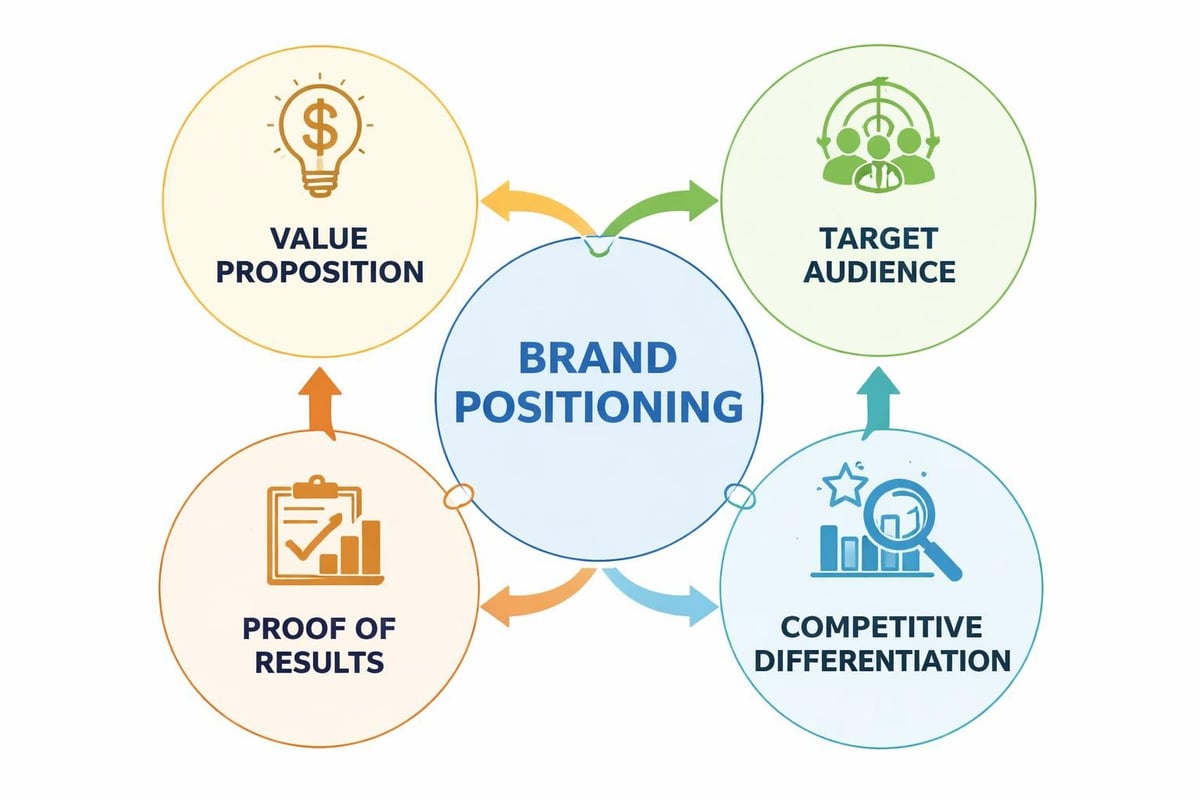
Successful brand marketing begins with clarity about who you serve and what unique value you provide. Too many businesses attempt to appeal to everyone, which means they connect with no one. Your brand positioning must speak directly to your ideal customer's pain points, aspirations, and decision-making criteria.
When marketing your brand for lead generation, you need to demonstrate authority in your niche. This means establishing credibility through authoritative sources and showcasing tangible results. Prospects evaluating lead generation solutions want evidence, not promises.
Defining Your Unique Value Proposition
Your value proposition answers one critical question: Why should someone choose your brand over alternatives? This isn't about listing features or services. It's about articulating the specific outcome you deliver and the methodology that makes you different.
Consider these elements when crafting your positioning:
- The specific problem you solve (not just generally, but the exact pain point)
- Your unique approach or methodology (what makes your process different)
- Quantifiable results (actual numbers, not vague claims)
- Risk reversal (how you protect client investments)
For businesses in the lead generation space, this might mean guaranteeing a specific number of qualified leads or offering performance-based partnerships that align interests. When prospects see you're willing to bet on your own results, trust accelerates dramatically.
Building Brand Authority Through Strategic Content
Content remains the most powerful tool for marketing your brand, but only when executed with strategic intent. Random blog posts and social media updates won't build authority. You need a systematic approach that demonstrates expertise while addressing prospect concerns at every stage of awareness.
Creating Content That Establishes Expertise
The content you publish becomes your brand's resume. Every piece either strengthens or weakens your perceived authority. Building brand authority with content marketing requires consistency, depth, and strategic topic selection.
High-authority content characteristics:
- Addresses specific, searched questions in your niche
- Provides actionable frameworks readers can implement
- Includes original research or data from your experience
- Demonstrates subject matter mastery through depth and nuance
- Cites credible sources that reinforce your points
When marketing your brand through content, focus on educational value first, promotion second. A business that teaches its methodology builds more trust than one that constantly sells. Share your market research process or reveal case study results that demonstrate your approach works.
The Role of Thought Leadership
Thought leadership separates commodity providers from premium brands. It positions you as someone who shapes industry conversation rather than simply participating in it. This matters enormously in lead generation, where prospects evaluate partners based on sophistication and forward-thinking.
| Thought Leadership Element | Impact on Brand Perception | Implementation Strategy |
|---|---|---|
| Original research/data | High credibility boost | Analyze client results, survey your market |
| Contrarian perspectives | Attention and differentiation | Challenge outdated industry practices |
| Future trend predictions | Perceived expertise | Connect current data to emerging patterns |
| Framework development | Authority and teaching position | Systematize your methodology into teachable models |
Publishing thought leadership isn't optional when marketing your brand at the premium end of any market. It's the price of entry for serious consideration.
Leveraging Social Proof and Credibility Signals
Your brand claims mean little compared to what others say about you. Social proof transforms marketing from persuasion to validation. For lead generation businesses, demonstrating that you've successfully helped similar companies achieve their goals removes the primary barrier to engagement: risk.
Types of Social Proof That Drive Conversions
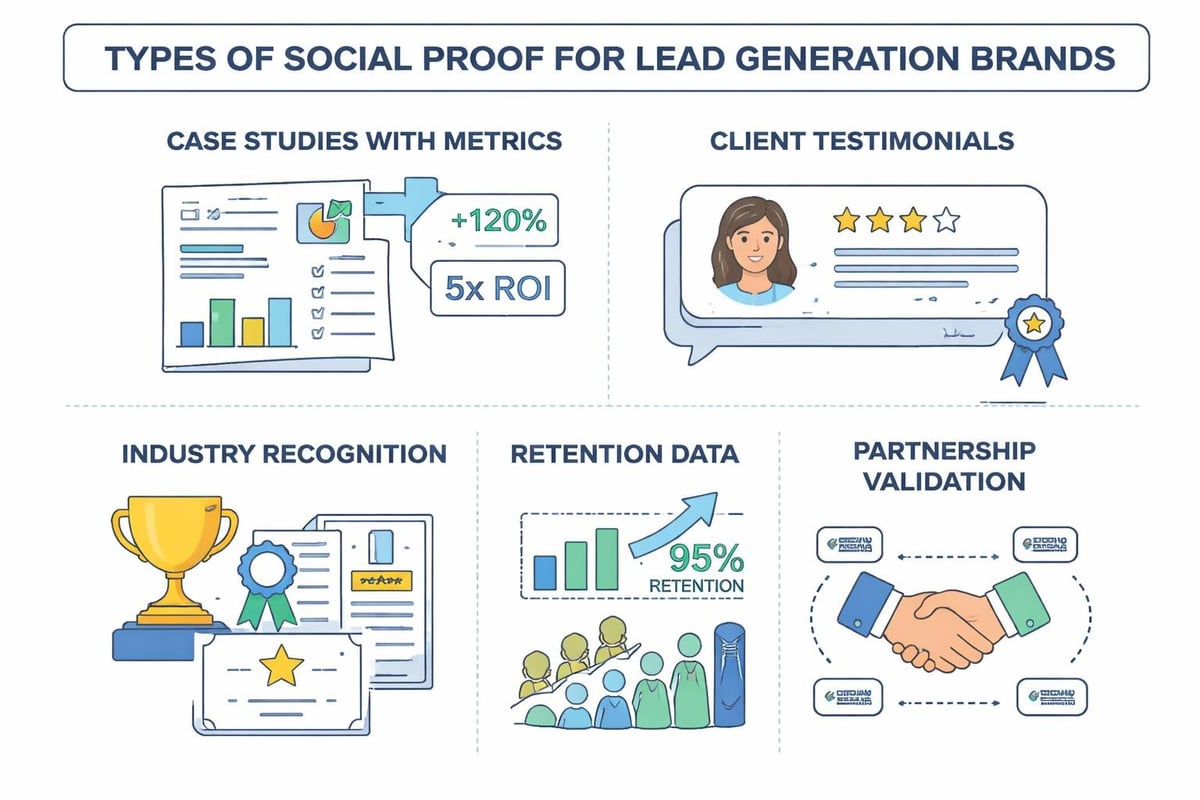
Different prospects respond to different credibility signals. A comprehensive brand marketing strategy incorporates multiple forms of validation:
- Quantified case studies showing specific results with actual numbers
- Video testimonials from recognizable clients in target industries
- Third-party recognition like awards, certifications, or media features
- Partnership logos demonstrating enterprise-level trust
- Client retention statistics proving long-term satisfaction
The most powerful social proof addresses specific objections. If prospects worry about implementation complexity, show testimonials praising your seamless onboarding. If ROI concerns dominate, present detailed case studies with clear before-and-after metrics.
When you're choosing credible sources in content marketing, the same principle applies. The quality of what you reference reflects on your brand, so prioritize authoritative, respected sources that enhance rather than diminish your credibility.
Optimizing Your Digital Presence for Brand Discovery
Marketing your brand requires ensuring prospects can find you when searching for solutions. This means strategic search engine optimization, but not the outdated keyword-stuffing approach. Modern SEO success depends on brand authority in SEO, which rewards helpful, comprehensive content from recognized experts.
Creating a Brand-Forward SEO Strategy
Your SEO approach should reinforce brand positioning rather than chase traffic for traffic's sake. Every ranking you pursue should align with your ideal customer profile and buying journey.
SEO elements that strengthen brand marketing:
- Target keywords that indicate buying intent and qualification
- Create comprehensive guides that become definitive resources
- Build topical authority through interconnected content clusters
- Earn backlinks from industry-respected publications
- Optimize for featured snippets that position you as the expert answer
For businesses focused on lead generation, selecting the best marketing platforms based on where your ideal clients search is crucial. LinkedIn might generate better leads than Instagram, while industry-specific forums could outperform both.
The Power of Educational Landing Pages
Traditional landing pages focus on conversion at the expense of value. Brand-forward landing pages educate first, convert second, and perform better long-term. When someone discovers your brand through search, a landing page that teaches them something valuable creates immediate positive association.
Consider creating landing pages around:
- Industry benchmarks and standards
- Calculation tools or assessment frameworks
- Comparison guides for different approaches
- Implementation roadmaps and timelines
These pages establish expertise while capturing leads who aren't yet ready to buy but want to stay informed.
Implementing Multi-Channel Brand Consistency
Your brand exists everywhere prospects encounter you. Marketing your brand effectively requires consistent messaging, positioning, and experience across every touchpoint. Fragmented brand presentation creates confusion and erodes trust.
Channel-Specific Brand Adaptation
Consistency doesn't mean identical. Each platform requires adapting your brand voice and content format while maintaining core positioning. Email marketing allows deeper dives. Social media demands brevity and engagement. Webinars enable demonstration and interaction.
| Channel | Brand Application | Key Success Factor |
|---|---|---|
| Educational sequences, case studies | Personalization and segmentation | |
| Thought leadership, industry insights | Professional credibility | |
| Webinars | Live demonstration, Q&A | Interactive expertise showcase |
| Podcast | Long-form discussion, interviews | Authentic voice and depth |
| Video | Visual explanation, testimonials | Production quality and clarity |
The businesses that excel at marketing their brand understand that AI in digital advertising now enables unprecedented personalization across channels. You can deliver tailored messages that feel individually crafted while maintaining brand consistency.
Creating Brand Touchpoint Mapping
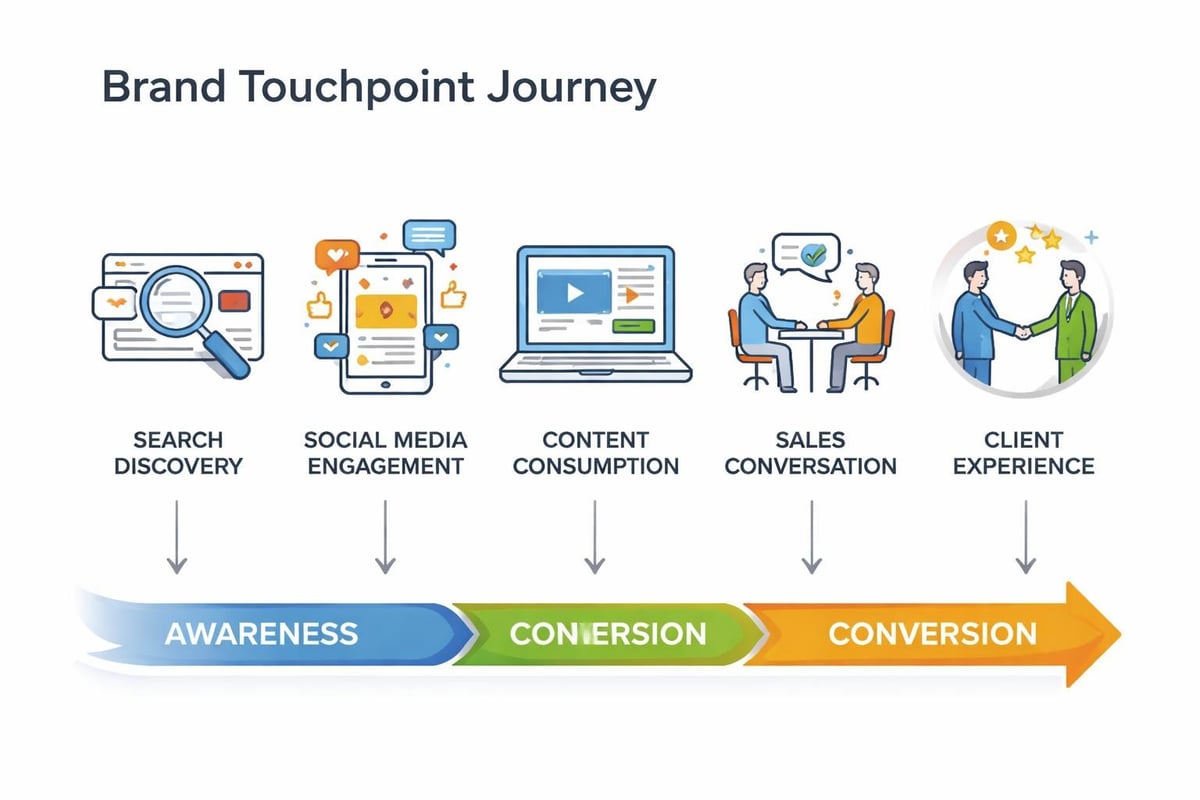
Map every potential interaction a prospect might have with your brand, from initial discovery through conversion and beyond. This exercise reveals gaps, inconsistencies, and opportunities.
Your touchpoint map should include:
- Organic search results and meta descriptions
- Social media profiles and posts
- Paid advertising creative and landing pages
- Email communications and sequences
- Sales conversations and presentations
- Client onboarding and delivery experience
Building Systems That Scale Brand Impact
Marketing your brand isn't a campaign. It's a system of repeatable processes that compound over time. Manual, one-off efforts don't scale. Automated systems that maintain brand quality while increasing reach create sustainable competitive advantage.
Automation That Enhances Brand Perception
Many businesses fear automation will make their brand feel robotic. The opposite is true when implemented correctly. Automation allows you to deliver consistent, timely, personalized experiences that manual processes can't match at scale.
High-value automation opportunities:
- Educational email sequences triggered by specific behaviors
- Personalized content recommendations based on engagement patterns
- Automated appointment booking that respects prospect preferences
- Follow-up sequences that maintain relationship momentum
- Client success check-ins at strategic milestones
For companies focused on lead generation, automating appointment bookings while maintaining brand voice is critical. The system should feel helpful and professional, never pushy or mechanical.
Measuring Brand Impact Beyond Vanity Metrics
Marketing your brand requires tracking metrics that actually predict business outcomes. Impressions and likes don't pay bills. Focus on measurements that correlate with revenue generation.
Track these brand health indicators:
- Brand search volume (how many people specifically search for you)
- Organic traffic to high-intent pages (solution and pricing pages)
- Content engagement depth (time on page, scroll depth, return visits)
- Lead quality metrics (conversion rates, sales qualified percentages)
- Customer acquisition cost trends (brand strength should reduce CAC over time)
When your brand grows stronger, you'll see increasing direct traffic, higher conversion rates at lower costs, and shorter sales cycles. These signals indicate that marketing your brand is working.
Differentiating Through Transparency and Value Alignment
The most powerful brand differentiator in 2026 is radical transparency. While competitors hide behind vague promises and standard agency models, brands that openly share their methodology, pricing philosophy, and results stand out dramatically.
The Transparency Advantage
Prospects are exhausted by marketing that obscures rather than illuminates. When you explain exactly how you work, what to expect, and what success looks like, you attract qualified buyers and repel poor fits. This efficiency is invaluable.
Consider publicly sharing:
- Your delivery methodology and process timeline
- Pricing structure and what drives costs up or down
- Realistic outcome expectations and typical results
- Situations where you're not the right fit
- Client success stories with complete context
This approach to marketing your brand might seem counterintuitive. Won't revealing your process help competitors? Perhaps. But it helps qualified prospects far more, and they're who matters. Those who want to copy your methodology instead of hiring you weren't serious buyers anyway.
Performance-Based Partnership Models
Traditional agency relationships create misaligned incentives. The agency gets paid regardless of results, while the client bears all risk. Brands that offer performance-based models or guaranteed outcomes demonstrate confidence that transforms the sales conversation.
When creating impactful content to enhance your brand’s digital authority, case studies showcasing performance partnerships are incredibly persuasive. They prove you believe in your methods enough to stake your revenue on them.
Adapting Brand Strategy to Market Evolution
Marketing your brand isn't a set-it-and-forget-it exercise. Markets evolve. Competitors emerge. Customer expectations shift. Your brand strategy must adapt while maintaining core identity.
Monitoring Market Signals
Stay attuned to changes in how your ideal customers discuss problems, evaluate solutions, and make decisions. Language shifts matter. When industry conversation moves from "lead generation" to "revenue acceleration" or from "marketing automation" to "AI-powered growth systems," your brand messaging should evolve accordingly.
Critical market signals to monitor:
- Search trend data for industry-relevant keywords
- Competitor positioning and messaging changes
- Customer feedback themes and language patterns
- Industry publication topics and discussion trends
- Social media conversation analysis
This intelligence should inform both content strategy and overall brand positioning. You're not chasing trends blindly, but rather evolving your communication to match how your market thinks and speaks.
Balancing Consistency and Innovation
Your core brand promise should remain stable, but how you communicate it must stay fresh. This balance is critical. Change too much and you confuse your market. Change too little and you seem stagnant.
Maintain consistency in:
- Your fundamental value proposition
- Visual brand identity and design language
- Core messaging pillars and positioning
- Quality standards and delivery approach
Innovate continuously in:
- Content formats and channel strategies
- Technology implementation and tools
- Service delivery mechanisms
- Proof points and case study examples
The brands that successfully navigate marketing evolution leverage B2B lead generation tools and emerging platforms while maintaining the positioning that made them successful initially.
Marketing your brand successfully requires strategic positioning, consistent execution, and systems that scale impact while maintaining quality. When you establish authority through valuable content, leverage social proof effectively, and align your interests with client success, you create a brand that attracts qualified leads naturally. Adstra specializes in building these exact systems for businesses ready to transform their lead generation through AI-powered marketing automation and performance-based partnerships. If you're prepared to move beyond traditional marketing and create predictable revenue growth, let's explore how a guaranteed growth partnership could accelerate your success.