
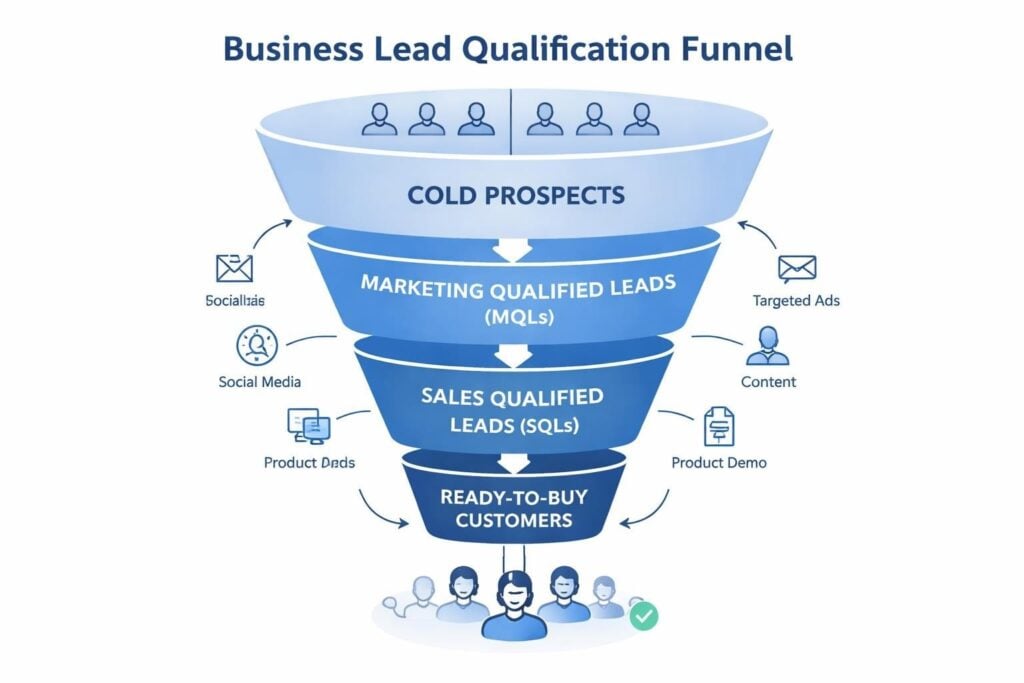
Every successful business runs on one critical resource: a steady flow of qualified prospects ready to engage with your solution. Yet most companies struggle to consistently generate the type of business lead that actually converts into revenue. The difference between companies that thrive and those that barely survive often comes down to how effectively they identify, attract, and nurture the right prospects. In 2026, with AI-driven systems and advanced automation reshaping the marketing landscape, understanding what makes a truly qualified business lead has never been more crucial. The strategies that worked five years ago are obsolete, and companies that fail to adapt will watch their competitors capture market share while they struggle with stagnant pipelines.
Understanding the Modern Business Lead Landscape
The definition of a business lead has evolved dramatically. It's no longer just a name and email address captured through a generic contact form. Today's qualified lead represents a prospect who has demonstrated genuine buying intent, fits your ideal customer profile, and has engaged with your content in meaningful ways.
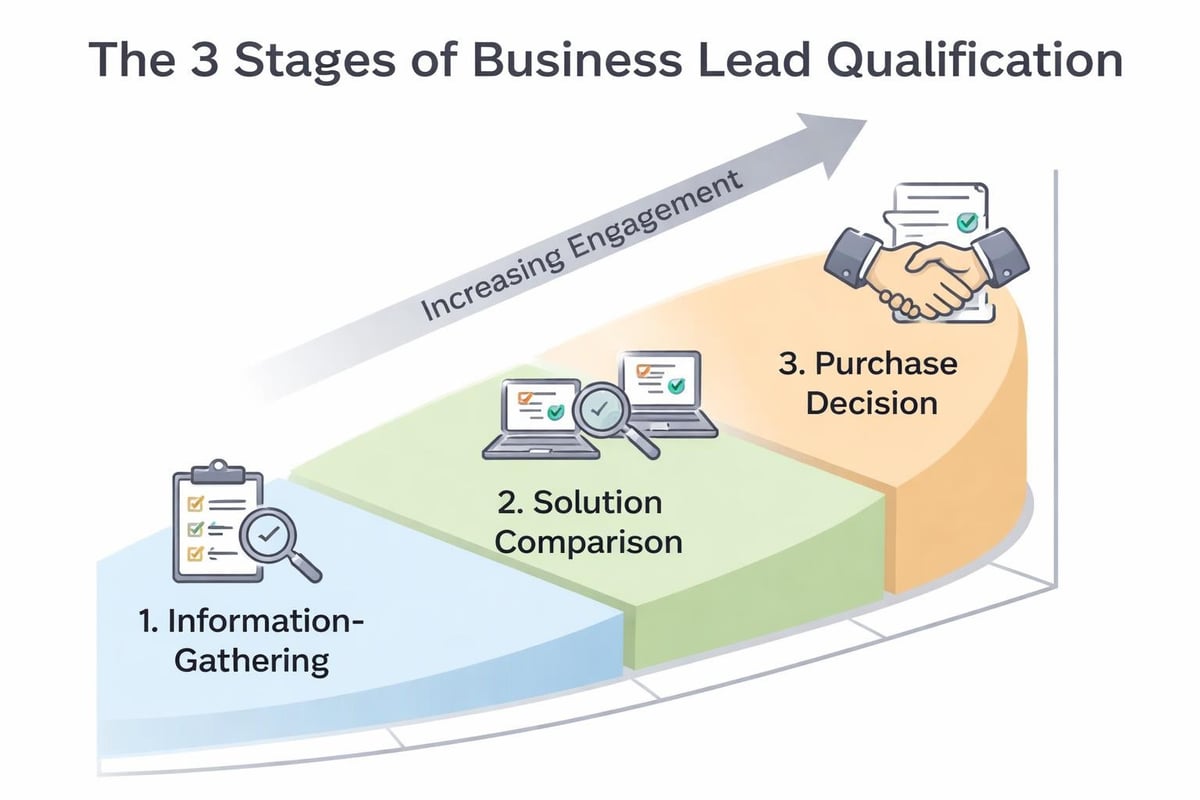
Modern business leads fall into three distinct categories:
- Information-stage leads: Prospects researching solutions but not ready to buy
- Consideration-stage leads: Actively comparing options and evaluating vendors
- Decision-stage leads: Ready to make a purchase decision within 30-90 days
Research from lead generation statistics for 2026 reveals that companies focusing on decision-stage leads see conversion rates up to 400% higher than those casting wider nets. This data underscores why qualification matters more than volume.
The Quality Over Quantity Imperative
Traditional lead generation focused on filling the pipeline with as many contacts as possible. This approach created massive inefficiencies, with sales teams wasting hours chasing unqualified prospects. According to best B2B lead generation practices, prioritizing lead quality over volume has become the defining characteristic of successful 2026 campaigns.
The shift makes financial sense. Consider these numbers:
| Metric | High-Volume Approach | Quality-Focused Approach |
|---|---|---|
| Monthly Leads | 1,000 | 200 |
| Qualification Rate | 8% | 45% |
| Qualified Leads | 80 | 90 |
| Close Rate | 15% | 35% |
| New Customers | 12 | 32 |
The quality-focused strategy delivers 166% more customers from fewer total leads. This efficiency translates directly to lower customer acquisition costs and higher ROI.
Proven Strategies for Generating Qualified Business Leads
The most effective lead generation strategies in 2026 combine technological sophistication with human psychology. Successful companies don't rely on a single channel but orchestrate multiple touchpoints that guide prospects through a carefully designed journey.
Content Marketing That Converts
Content remains the foundation of business lead generation, but generic blog posts no longer cut through the noise. Your content must address specific pain points at each stage of the buyer journey. Effective lead generation strategies emphasize creating targeted content that speaks directly to your ideal customer's challenges.
High-converting content formats include:
- Case studies with specific ROI metrics: Show exactly how customers achieved measurable results
- Interactive assessments: Let prospects self-identify their challenges and receive personalized recommendations
- Video sales letters: Build trust through personality while delivering your value proposition efficiently
- Data-driven research reports: Position your company as a thought leader with original insights
The VSL strategy that generated 50,000 leads demonstrates how concentrated, conversion-focused content outperforms scattered approaches. Rather than creating dozens of mediocre pieces, successful companies invest in fewer, higher-quality assets designed specifically to move prospects toward a decision.
AI-Powered Lead Qualification Systems
Manual lead qualification wastes valuable time and introduces inconsistencies. AI systems analyze behavioral signals, engagement patterns, and demographic data to score each business lead with unprecedented accuracy. Modern lead generation statistics show that AI-powered qualification improves conversion rates by 35-50% compared to traditional methods.
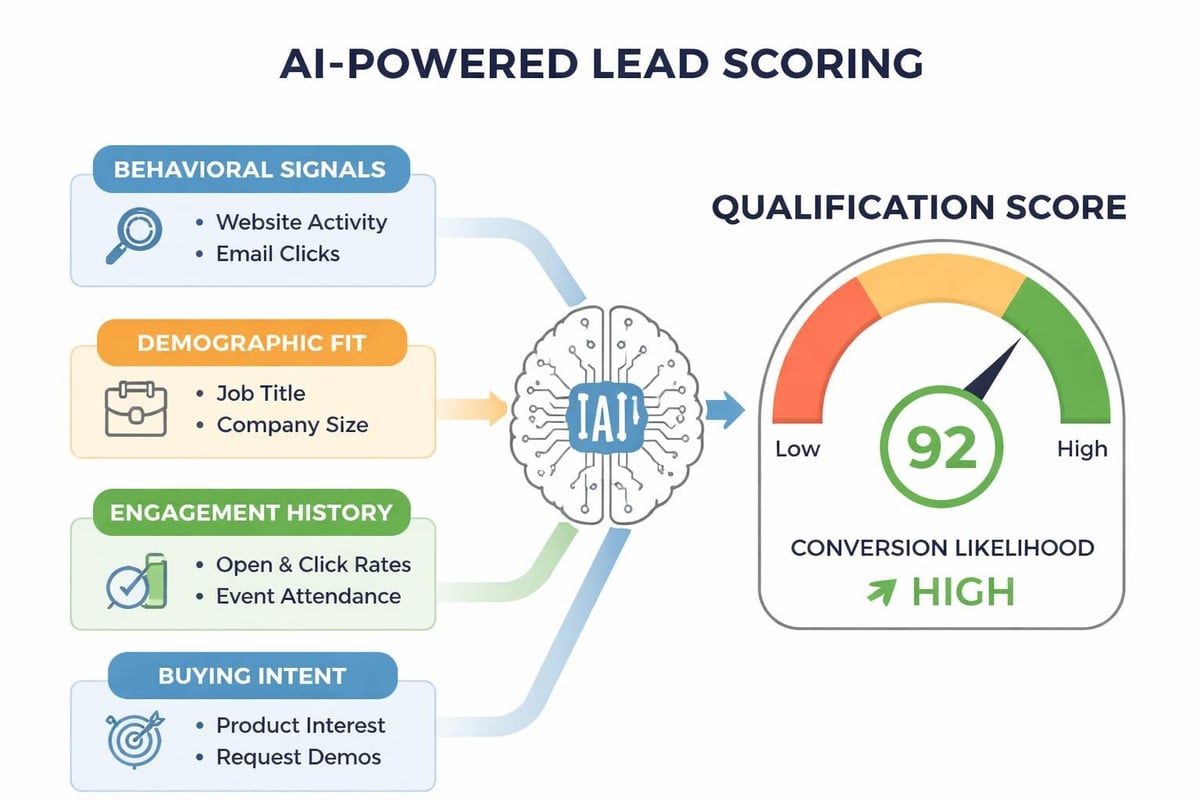
These systems track:
- Website behavior: Pages visited, time spent, content downloaded
- Email engagement: Open rates, click patterns, response timing
- Social media interactions: Comments, shares, profile completeness
- Firmographic data: Company size, industry, growth indicators
The combination creates a complete picture of each prospect's readiness to buy. Sales teams receive only leads that meet predefined qualification criteria, dramatically improving their close rates and job satisfaction.
Best Practices for Business Lead Management
Generating leads is only half the battle. How you manage and nurture those prospects determines whether they convert into customers or disappear into competitor pipelines. Lead generation best practices emphasize systematic approaches that ensure no opportunity slips through the cracks.
Immediate Response Protocols
Speed matters more than most companies realize. Research consistently shows that responding to a business lead within five minutes increases conversion probability by 900% compared to waiting 30 minutes. Yet the average company takes 42 hours to respond to new inquiries.
Implementing automated response systems that acknowledge inquiries instantly while routing qualified leads to appropriate sales representatives creates competitive advantage. The system should:
- Send immediate confirmation with helpful resources
- Notify sales teams within seconds of high-value submissions
- Schedule follow-up tasks automatically based on lead score
- Trigger nurture sequences for leads not yet ready for sales contact
Multi-Touch Nurture Campaigns
Most prospects aren't ready to buy on first contact. Effective nurture campaigns maintain engagement without being pushy, providing value while keeping your solution top-of-mind. The complete sales funnel that books 172 qualified calls per month reveals how systematic touchpoint sequences convert cold prospects into scheduled appointments.
Successful nurture campaigns include:
- Educational email sequences: 5-7 emails over 30 days addressing common objections
- Retargeting campaigns: Display ads featuring relevant case studies and testimonials
- Personalized video messages: Sales representatives send custom videos addressing specific challenges
- Event invitations: Webinars, workshops, and demos timed to prospect readiness
The key is matching message intensity to engagement level. Highly engaged prospects receive more direct sales outreach, while earlier-stage leads get purely educational content.
Avoiding Common Business Lead Generation Mistakes
Even experienced marketers make critical errors that sabotage their results. Understanding these pitfalls helps you avoid wasting budget on ineffective tactics.
The Volume Trap
Many companies celebrate hitting lead quantity goals while ignoring quality metrics. Generating 1,000 leads monthly sounds impressive until you realize only 20 are actually qualified prospects. This creates several problems:
- Sales teams become demoralized chasing dead ends
- Marketing budget gets wasted on unqualified traffic
- Company reputation suffers from inappropriate outreach
- Analytics become meaningless when most leads are worthless
Lead generation do’s and don’ts emphasize building trust and providing value over aggressive sales tactics. The companies winning in 2026 focus on attracting the right prospects rather than casting the widest possible net.
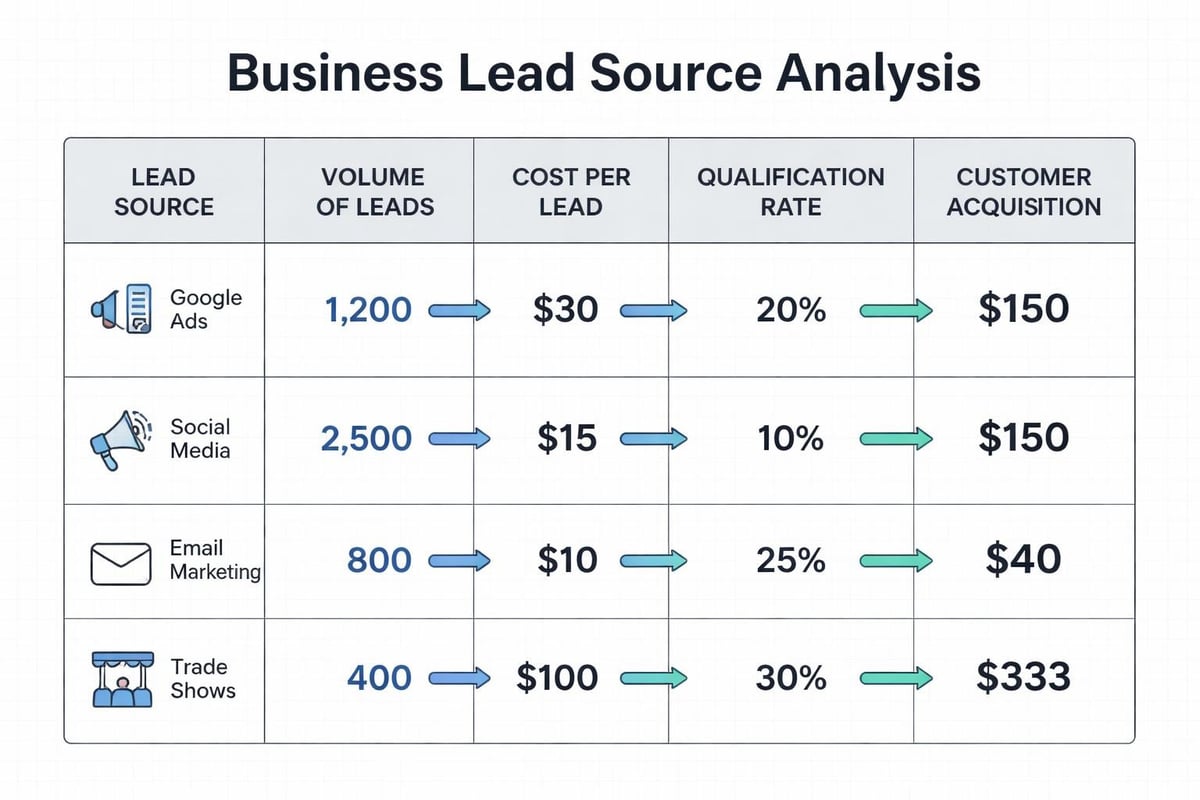
Neglecting Lead Source Analysis
Not all sources produce equally valuable leads. A business lead from an industry-specific webinar typically converts at 5-10 times the rate of generic social media traffic. Yet many companies allocate budgets based on volume rather than quality-adjusted ROI.
| Lead Source | Volume | Cost Per Lead | Close Rate | Cost Per Customer |
|---|---|---|---|---|
| Industry Webinars | 50 | $120 | 28% | $429 |
| LinkedIn Ads | 200 | $45 | 12% | $375 |
| Content Downloads | 400 | $15 | 6% | $250 |
| Generic SEO | 800 | $8 | 2% | $400 |
This analysis reveals that content downloads deliver the lowest customer acquisition cost despite having a moderate close rate. Making decisions based solely on cost per lead or volume would miss this insight.
Ignoring the Mobile Experience
Over 60% of business leads now originate from mobile devices. Yet countless companies still optimize only for desktop experiences. Forms that require excessive typing, pages that load slowly, or content that doesn't display properly on smartphones all hemorrhage potential customers.
Mobile optimization essentials:
- One-tap phone calling: Make contact frictionless
- Minimal form fields: Capture only essential information initially
- Fast load times: Pages must load in under 2 seconds
- Clear value propositions: Communicate benefits immediately without scrolling
The financial advisor lead generation strategies showcase how mobile-first approaches capture prospects that desktop-only competitors miss entirely.
Leveraging Technology for Scalable Lead Generation
Technology enables small teams to accomplish what previously required entire departments. The right tools automate repetitive tasks, provide actionable insights, and create consistent experiences across thousands of prospects.
Marketing Automation Platforms
Comprehensive platforms integrate email marketing, landing pages, lead scoring, and CRM functionality into unified systems. This integration ensures every business lead receives appropriate treatment based on their behavior and characteristics.
Key capabilities include:
- Behavioral triggers: Automatically send emails based on specific actions
- Dynamic segmentation: Group leads by engagement, demographics, and behavior
- A/B testing: Continuously optimize emails, landing pages, and nurture sequences
- Attribution reporting: Understand which touchpoints influence conversions
When evaluating the best marketing platforms, prioritize integration capabilities and ease of use over feature quantity. A simpler system your team actually uses beats a sophisticated one that sits idle.
Appointment Scheduling Automation
Converting a qualified business lead into a booked meeting requires removing friction from the scheduling process. Automated scheduling tools eliminate phone tag, reduce no-shows, and create better experiences for prospects.
Modern scheduling systems:
- Sync with calendars: Show real-time availability across team members
- Send confirmations and reminders: Reduce no-show rates by 40-60%
- Collect pre-meeting information: Help sales representatives prepare effectively
- Route to appropriate team members: Match prospects with specialists based on need
CRM Systems Built for Growth
Customer relationship management platforms serve as the central nervous system for business lead management. They provide visibility into pipeline health, track all prospect interactions, and ensure consistent follow-up. Free B2B lead generation tools offer starting points for companies new to systematic lead management, though most growing businesses quickly outgrow basic systems.
Measuring What Matters in Lead Generation
Vanity metrics feel good but don't drive business outcomes. Successful companies track metrics directly connected to revenue and profitability. Proven lead generation strategies focus on conversion-oriented KPIs rather than superficial engagement numbers.
Essential metrics to track:
- Cost per qualified lead: Total marketing spend divided by leads meeting qualification criteria
- Lead-to-opportunity conversion rate: Percentage of qualified leads that enter active sales processes
- Opportunity-to-customer conversion rate: Percentage of opportunities that close
- Customer acquisition cost: Full cost to acquire a new customer including all marketing and sales expenses
- Customer lifetime value: Total revenue a customer generates over their relationship with your company
The ratio between customer lifetime value and acquisition cost determines business model sustainability. Healthy businesses maintain ratios of at least 3:1, meaning each customer generates three times what they cost to acquire.
Pipeline Velocity
Traditional metrics ignore time, but how quickly leads move through your funnel dramatically impacts growth rates. Two companies with identical conversion rates can have vastly different revenue trajectories based on pipeline velocity.
Calculate pipeline velocity by multiplying: (Number of qualified leads × Average deal value × Win rate) ÷ Sales cycle length
Improving any factor increases revenue without requiring more leads. Shortening your sales cycle from 90 days to 60 days increases revenue velocity by 50% with zero additional marketing spend.
Advanced Tactics for Competitive Advantage
As basic lead generation becomes table stakes, advanced tactics create differentiation. These strategies require more sophistication but deliver disproportionate results.
Account-Based Marketing for High-Value Prospects
Rather than casting wide nets, account-based marketing targets specific companies with personalized campaigns. This approach makes sense when individual customers represent significant lifetime value. Creating custom content, running targeted ads, and orchestrating multi-channel outreach for a business lead from a Fortune 500 company justifies far greater investment than chasing small businesses.
ABM implementation steps:
- Identify target accounts: Use firmographic data and market research
- Map decision-makers: Understand buying committees and influence patterns
- Create personalized content: Address specific challenges facing each account
- Coordinate sales and marketing: Align outreach timing and messaging
- Measure account engagement: Track company-level behavior across all touchpoints
Referral Program Optimization
Customers acquired through referrals typically have 37% higher retention rates and 25% higher lifetime values than other sources. Yet most companies treat referrals as happy accidents rather than systematic channels. Building structured referral programs that make sharing easy and rewarding transforms satisfied customers into lead generation machines.
Effective programs provide:
- Clear value propositions: Both referrer and referee receive compelling benefits
- Simple sharing mechanisms: One-click sharing across multiple channels
- Progress tracking: Referrers see their impact and rewards
- Timely rewards: Immediate gratification beats delayed incentives
Conversion Rate Optimization
Increasing conversion rates provides leverage across all marketing efforts. A campaign generating 100 leads at 5% conversion produces 5 customers. Improving conversion to 8% delivers 8 customers from the same 100 leads, a 60% improvement with zero additional marketing spend.
Systematic testing reveals winning variations:
- Headline variations: Test benefit-focused versus curiosity-driven approaches
- Form length: Balance information capture against completion rates
- Trust signals: Test placements of testimonials, certifications, and guarantees
- Call-to-action wording: Compare directive phrases against benefit statements
Understanding why lead generation strategies fail helps you avoid common optimization mistakes and focus testing on high-impact elements.
Generating qualified business leads consistently requires strategic thinking, technological sophistication, and relentless optimization. The companies thriving in 2026 don't chase volume but engineer systematic approaches that attract ideal prospects and convert them efficiently. If you're ready to transform your lead generation from unpredictable to systematized, Adstra combines advanced AI systems with proven strategies to generate qualified leads and automate appointment booking, delivering the predictable growth your business deserves.