


Every marketing team talks about generating demand, but few actually measure what works. The difference between guessing and knowing lies in how you track, analyze, and optimize your efforts. A demand gen report isn't just another analytics dashboard-it's your strategic compass for turning marketing activities into predictable revenue streams. When you understand what moves prospects through your funnel, you gain the power to replicate success and eliminate waste. This comprehensive guide reveals how to build, interpret, and leverage demand generation reporting to transform your lead quality and accelerate business growth.
Understanding the Foundation of Demand Generation Reporting
A demand gen report serves as the central intelligence system for your marketing operations. Unlike vanity metrics that make you feel good without driving results, this reporting framework connects every marketing dollar to actual pipeline impact and revenue outcomes.
The most effective demand generation strategies focus on creating awareness and nurturing prospects through the entire buyer journey. As explained in this comprehensive introduction to demand generation, the process extends far beyond simple lead capture-it encompasses education, relationship building, and strategic positioning.
What separates amateur marketers from revenue drivers? The ability to quantify demand creation. Your demand gen report should answer critical questions: Which channels generate the highest quality leads? What content moves prospects closest to purchase? How long does it take to convert a cold contact into a sales opportunity?
Core Components Every Report Must Include
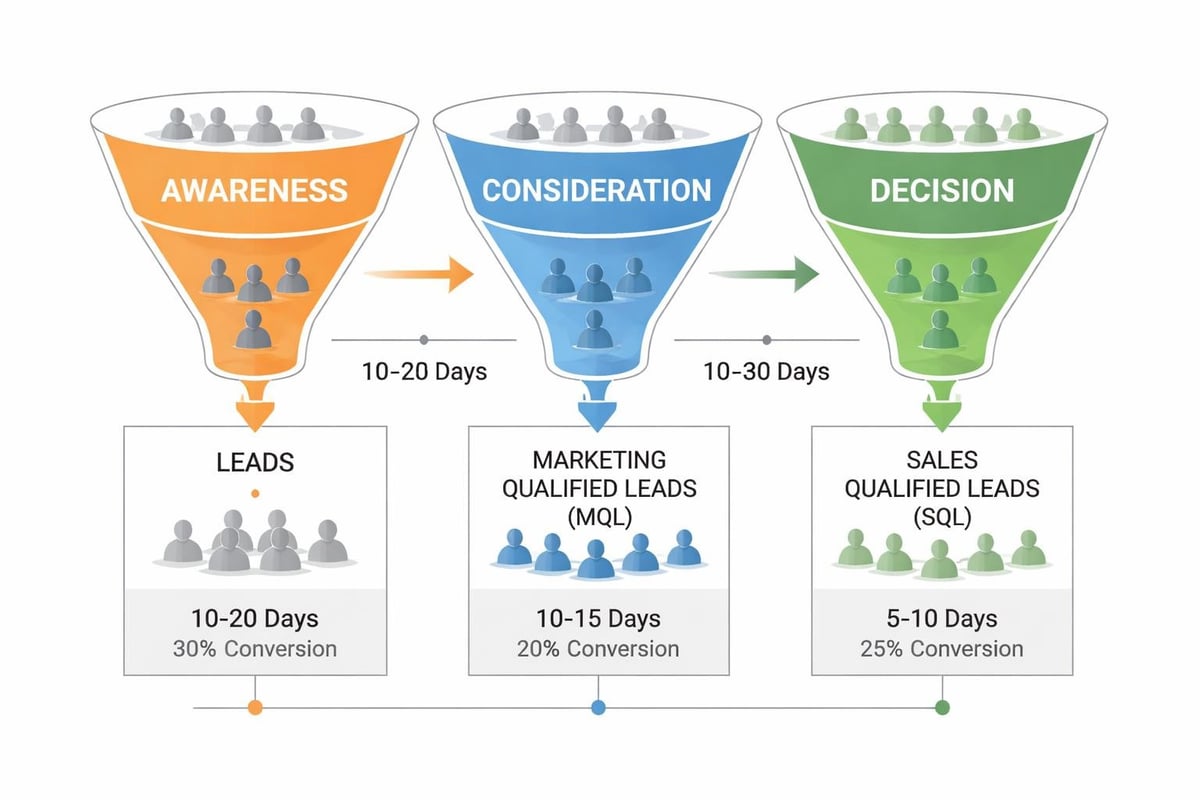
Building a robust demand gen report requires tracking specific metrics across your entire funnel. These aren't arbitrary numbers-they're the vital signs of your growth engine.
- Marketing Qualified Leads (MQLs) generated by channel and campaign
- Lead-to-opportunity conversion rates showing sales readiness
- Cost per acquisition (CPA) revealing efficiency metrics
- Pipeline velocity measuring speed from awareness to close
- Revenue attribution connecting marketing touches to closed deals
- Content engagement scores indicating prospect interest levels
- Channel performance data highlighting ROI by platform
Each metric tells part of your story. Together, they create a complete picture of how effectively you're building demand and driving qualified prospects toward purchase decisions.
Building Your Demand Gen Report Framework
Creating an actionable demand gen report starts with understanding your unique business model and sales cycle. A B2B enterprise solution requires different tracking than a high-velocity transactional service, yet both need systematic measurement.
The best practices for demand generation emphasize aligning your reporting with actual business outcomes. This means moving beyond surface-level metrics to understand the underlying drivers of revenue growth.
Step-by-Step Report Construction
Follow this proven process to build reports that actually drive decision-making:
- Define your conversion events – Map every meaningful action from first touch to closed customer
- Establish baseline metrics – Document current performance before implementing changes
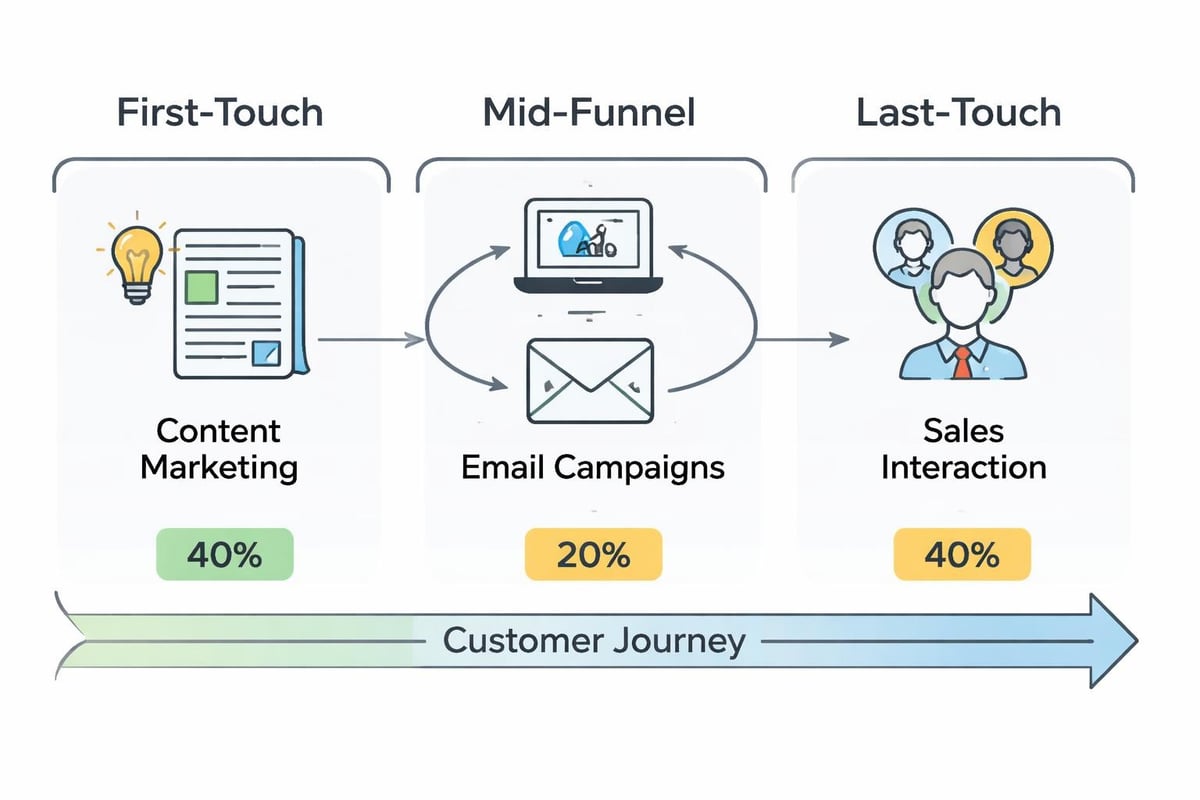
- Set up attribution modeling – Determine how to assign credit across multiple touchpoints
- Create automated data flows – Connect your CRM, marketing automation, and analytics platforms
- Design visual dashboards – Make complex data immediately understandable for stakeholders
- Schedule regular reviews – Commit to weekly tactical reviews and monthly strategic assessments
The technology infrastructure matters less than the discipline of consistent tracking. Whether you use sophisticated marketing automation platforms or basic spreadsheets, the key is capturing accurate data at every stage.
Many businesses struggle with lead generation campaigns on Facebook because they fail to track beyond initial form submissions. Your demand gen report must follow prospects through to actual revenue to understand true ROI.
Critical Metrics That Predict Revenue Growth
Not all metrics deserve equal attention in your demand gen report. Some indicators directly correlate with revenue growth, while others simply measure activity without impact.
The Five Metrics That Matter Most
| Metric | Why It Matters | Target Benchmark |
|---|---|---|
| MQL to SQL Conversion | Shows lead quality and sales alignment | 25-40% |
| Customer Acquisition Cost | Reveals sustainability of growth model | 3:1 LTV:CAC ratio |
| Time to Revenue | Indicates funnel efficiency and velocity | Industry-specific |
| Channel Attribution | Guides budget allocation decisions | Weighted by revenue |
| Pipeline Coverage | Predicts future revenue potential | 3-4x quota coverage |
Pipeline coverage deserves special attention. If your sales team needs to close $500,000 in quarterly revenue, your demand generation efforts should create $1.5-2 million in qualified pipeline opportunities. This buffer accounts for natural deal slippage and lost opportunities.
The concept of demand generation as a long-term strategy emphasizes building authority and creating problem-aware buyers. Your report should track not just immediate conversions but also the growth of your engaged audience over time.
Advanced marketers incorporate multi-touch attribution to understand how different channels work together. A prospect might discover you through organic content, engage with paid social ads, attend a webinar, and finally convert through email nurture. Your demand gen report should capture this complex journey.
Optimizing Performance Through Data-Driven Insights
Raw data becomes valuable only when you extract actionable insights. Your demand gen report should trigger specific optimization decisions, not just inform general awareness.
Identifying High-Impact Optimization Opportunities
Start by comparing performance across different segments. Break down your results by:
- Industry vertical – Which sectors respond best to your messaging?
- Company size – Do enterprise or SMB prospects convert more efficiently?
- Geographic region – Where does your value proposition resonate strongest?
- Lead source – Which channels deliver the highest quality contacts?
- Content type – What formats drive the most engagement and conversion?
These segmentation insights reveal where to double down and where to cut losses. If your demand gen report shows that webinars generate 3x more sales-qualified leads than whitepapers, shift resources accordingly.
Many businesses discover that their social media funnel performs dramatically differently across platforms. LinkedIn might generate fewer total leads but higher conversion rates, while Facebook drives volume with longer nurture cycles.
Testing should be systematic, not random. Your demand gen report guides hypothesis development. If cost per MQL increased 40% last month, investigate: Did ad costs rise? Did lead quality improve despite higher costs? Did conversion rates from MQL to opportunity change?
Advanced Reporting Techniques for 2026
The evolution of marketing technology enables increasingly sophisticated demand generation measurement. Modern demand gen reports incorporate predictive analytics, AI-powered insights, and real-time optimization capabilities.
Implementing AI for lead generation allows you to score prospects based on likelihood to convert, optimize budget allocation dynamically, and personalize nurture sequences at scale. Your reporting framework should capture these automated optimizations.
Predictive Analytics and Forecasting
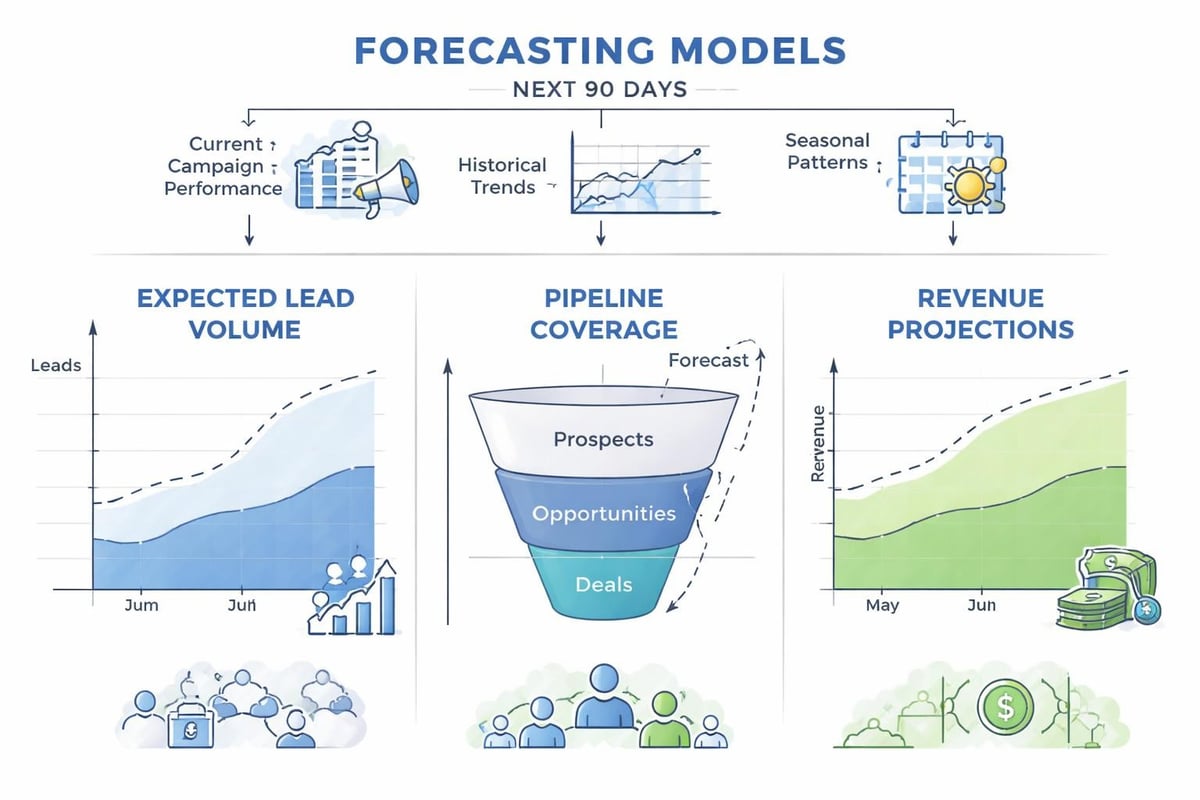
Forward-looking demand gen reports don't just show what happened-they project what's likely to happen next. By analyzing historical patterns, you can forecast:
- Expected MQL volume based on campaign spend
- Projected pipeline coverage for next quarter
- Anticipated conversion rates by lead source
- Estimated time-to-close for current opportunities
This predictive capability transforms marketing from a reactive function into a proactive revenue driver. When your report indicates insufficient pipeline for next quarter's targets, you can adjust tactics immediately rather than discovering the shortfall when it's too late.
The rise of marketing automation has fundamentally changed how we approach demand generation. This whitepaper on marketing automation effectiveness outlines best practices for leveraging technology to enhance personalization and data management.
Consider incorporating these advanced elements into your demand gen report:
- Engagement scoring models tracking cumulative prospect interest
- Content consumption patterns revealing buying stage indicators
- Competitive intelligence data showing win/loss patterns
- Account-based metrics for strategic target accounts
- Revenue influence calculations attributing marketing's revenue impact
Aligning Sales and Marketing Through Shared Reporting
The most powerful demand gen reports create alignment between marketing and sales teams. When both departments review the same metrics and share accountability for results, revenue growth accelerates.
Service Level Agreements (SLAs) formalize this alignment. Marketing commits to delivering a specific quantity and quality of MQLs, while sales commits to following up within defined timeframes and providing feedback on lead quality.
Creating Feedback Loops That Improve Results
Your demand gen report should facilitate continuous improvement through structured feedback mechanisms:
- Sales qualification data – Why did sales reject certain MQLs as unqualified?
- Opportunity progression rates – Which marketing-sourced leads advance fastest?
- Closed-won characteristics – What attributes do your best customers share?
- Closed-lost analysis – Where do qualified prospects fall out of your pipeline?
This bidirectional flow of information refines your targeting, messaging, and lead scoring over time. If sales consistently rejects leads from a particular source, either improve lead quality from that channel or reallocate budget elsewhere.
For businesses focused on financial advisor lead generation or B2B lead generation on LinkedIn, tight sales and marketing alignment proves especially critical given longer sales cycles and higher deal values.
Benchmarking and Competitive Analysis
Understanding your performance in isolation provides limited value. Your demand gen report gains context when compared against industry benchmarks and competitive performance.
| Performance Indicator | Industry Average | Top Performers | Your Target |
|---|---|---|---|
| Website Conversion Rate | 2-3% | 5-7% | 4% |
| MQL to SQL Rate | 13-25% | 30-45% | 28% |
| Email Click-Through Rate | 2.5% | 5-8% | 4.5% |
| Cost Per MQL | $150-$300 | $75-$125 | $100 |
These benchmarks vary significantly by industry, deal size, and sales cycle length. A demand gen report for enterprise software differs dramatically from one for professional services.
Accessing comprehensive demand generation reports and research helps you understand where your performance stands and identify areas for improvement. Don't just chase arbitrary improvements-focus on metrics that directly impact your business model.
Tailoring Reports for Different Stakeholders
The same underlying data should generate different views for various audiences. Your CFO cares about different metrics than your content marketing manager.
Executive Dashboard
Senior leadership needs high-level insights focused on business impact:
- Total pipeline generated and revenue attributed to marketing
- ROI by major channel category
- Trend lines showing month-over-month and year-over-year growth
- Forecast accuracy and pipeline coverage
- Budget efficiency and cost trends
Keep executive demand gen reports concise-one page with clear visualizations and minimal technical jargon.
Marketing Team Tactical Reports
Practitioners need granular data to optimize daily activities:
- Campaign-level performance with specific CTRs, conversion rates, and costs
- A/B test results and statistical significance
- Content performance metrics including engagement and conversion
- Lead scoring accuracy and refinement recommendations
- Channel-specific deep dives with actionable insights
Tactical reports should update frequently (daily or weekly) to enable rapid iteration and optimization.
Sales Team Views
Sales professionals need context on the leads they receive:
- Lead source and recent engagement history
- Behavioral signals indicating buying intent
- Company firmographic data and fit scores
- Recommended next actions based on lead characteristics
- Performance feedback loop for closed opportunities
When sales teams understand the context behind each lead, they can personalize outreach and improve conversion rates.
Automating Your Demand Gen Reporting Process
Manual report creation consumes valuable time that could be spent on optimization. Modern marketing stacks enable complete automation of data collection, analysis, and distribution.
The benefits of automation extend beyond time savings. Automated reports ensure consistency, eliminate human error, and enable real-time decision-making rather than waiting for month-end analysis.
Building automated reporting requires initial investment but pays dividends through:
- Consistent data collection without gaps or errors
- Real-time visibility into campaign performance
- Faster identification of problems and opportunities
- Reduced manual workload for marketing teams
- Standardized metrics across the organization
Many businesses leverage comprehensive marketing agency strategies that include automated reporting as a core component. The right technology infrastructure transforms reporting from a burden into a strategic asset.
Selecting the Right Tools and Platforms
Your demand gen report quality depends heavily on your technology stack. Essential components include:
- Customer Relationship Management (CRM) – Salesforce, HubSpot, or Pipedrive
- Marketing Automation Platform – Marketo, Pardot, or HubSpot Marketing Hub
- Analytics and Attribution – Google Analytics, Bizible, or Ruler Analytics
- Business Intelligence – Tableau, Looker, or Power BI
- Data Warehousing – Snowflake, BigQuery, or Redshift
The specific tools matter less than ensuring they integrate seamlessly and provide accurate data flow. A sophisticated platform with poor data quality delivers worthless insights.
Avoiding Common Reporting Pitfalls
Even experienced marketers fall into traps that undermine their demand gen report effectiveness. Recognizing these mistakes helps you avoid them.
Vanity metrics seduce us with impressive numbers that don't correlate with revenue. Website traffic, social media followers, and email list size feel good but mean nothing without conversion to qualified opportunities.
Other frequent mistakes include:
- Failing to account for lag between marketing activity and revenue impact
- Ignoring qualitative feedback from sales and customers
- Over-attributing success to last-touch interactions
- Neglecting to segment data by meaningful business dimensions
- Creating reports so complex that no one actually uses them
- Changing metrics frequently, preventing meaningful trend analysis
The Wikipedia overview of demand generation principles emphasizes the importance of systematic approaches and consistent measurement. Your reporting framework should evolve thoughtfully, not chaotically.
Attribution complexity paralyzes many marketing teams. Rather than endlessly debating perfect attribution models, implement a reasonable approach and maintain consistency. You can refine over time, but delayed insights while perfecting methodology costs more than slightly imperfect attribution.
Integrating Demand Gen Reports Into Strategic Planning
The ultimate purpose of any demand gen report extends beyond measurement-it should drive better strategic decisions. Regular review cycles turn data into action.
Establish rhythms for different planning horizons:
- Daily monitoring – Quick performance checks to catch major issues
- Weekly tactical reviews – Campaign optimization and budget reallocation
- Monthly strategic sessions – Trend analysis and program adjustments
- Quarterly planning – Budget allocation and major initiative decisions
- Annual strategy development – Market positioning and goal setting
Each planning level requires appropriate detail in your demand gen report. Daily reviews need real-time dashboards, while annual planning demands comprehensive historical analysis and market research.
Understanding lead generation for digital agencies reveals how sophisticated firms use data-driven planning to outperform competitors. Your reporting framework should enable similar strategic advantages.
Scaling Demand Generation Through Systematic Measurement
As your business grows, your demand gen report must evolve to provide continued value. What works at $1 million in revenue breaks down at $10 million and completely fails at $100 million.
Scalable reporting systems share common characteristics:
- Automated data collection requiring minimal manual intervention
- Standardized definitions preventing confusion as teams expand
- Role-based access ensuring stakeholders see relevant information
- Flexible frameworks accommodating new channels and tactics
- Clear ownership and accountability for each metric
Growth often reveals hidden bottlenecks in your demand generation engine. Your reporting should highlight these constraints before they limit revenue potential. If your demand gen report shows consistently high MQL volume but declining opportunity conversion, you've likely outgrown your sales capacity or need improved lead qualification.
Implementing systematic approaches to lead generation with proven tools enables consistent growth without proportional increases in complexity. The right infrastructure scales efficiently.
Mastering demand gen reporting transforms marketing from a cost center into a predictable revenue engine. By tracking the right metrics, creating stakeholder-appropriate views, and consistently driving optimization through data-driven insights, you'll outpace competitors still relying on intuition over intelligence. If you're ready to implement a systematic demand generation approach backed by transparent reporting and guaranteed results, Adstra leverages advanced AI systems to transform cold leads into ready-to-buy customers through our proven growth partnership model.