

The software-as-a-service industry has fundamentally transformed how businesses generate demand, moving beyond traditional lead generation tactics to create sophisticated systems that build awareness, nurture interest, and convert prospects into loyal customers. With buying committees growing larger and the customer journey becoming increasingly complex, saas demand generation requires a strategic, data-driven approach that aligns marketing and sales efforts while leveraging automation and artificial intelligence to scale efficiently. Today's most successful SaaS companies aren't just generating leads-they're creating predictable revenue engines that identify high-intent prospects, deliver personalized experiences, and accelerate the path to purchase.
Understanding the Modern SaaS Demand Generation Landscape
SaaS demand generation has evolved dramatically from its early foundations. The structural shifts happening in B2B SaaS demand generation reflect how buyer behaviors and technology capabilities have fundamentally changed the game.
Traditional lead generation focused narrowly on collecting contact information and pushing prospects toward sales conversations. In contrast, modern saas demand generation encompasses the entire buyer journey, creating awareness among people who don't yet know they have a problem, building trust through education, and nurturing prospects until they're ready to make informed purchasing decisions.
The Signal-Based Approach
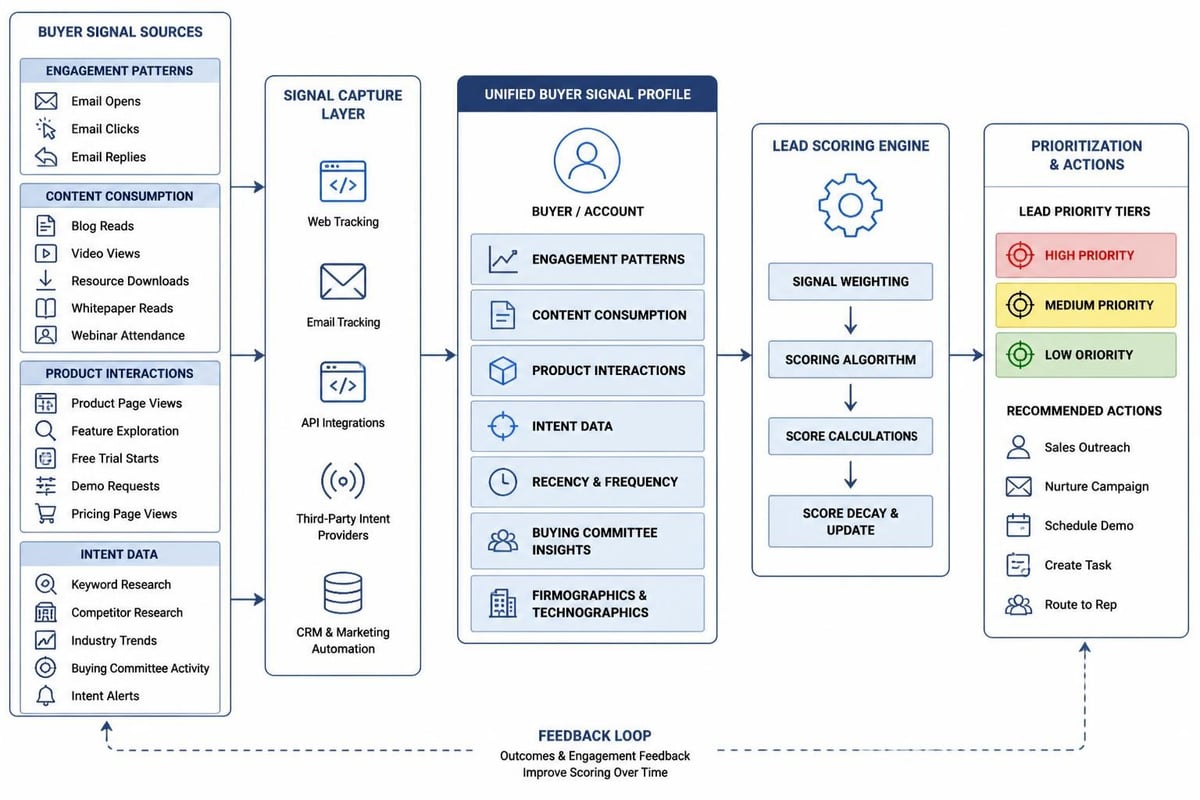
Today's most effective strategies rely on identifying and responding to buyer signals across multiple channels. This signal-based approach to SaaS demand generation allows teams to prioritize prospects showing genuine purchase intent rather than chasing every contact who downloads a whitepaper.
Key signals to monitor include:
- Website engagement patterns (specific page visits, time spent, return frequency)
- Content consumption behavior (types of resources accessed, topics explored)
- Product interactions (trial signups, feature usage, integration queries)
- Social media activity (following company accounts, engaging with posts)
- Third-party intent data (researching competitors, reading industry reviews)
By tracking these signals, your saas demand generation engine becomes more precise, focusing resources on prospects most likely to convert while nurturing others until they show stronger buying intent.
Building Your Demand Generation Foundation
The infrastructure supporting successful saas demand generation extends far beyond marketing automation platforms. It requires alignment between teams, clarity around your ideal customer profile, and systems that can scale as your business grows.
Defining Your Ideal Customer Profile
Precision in targeting determines demand generation efficiency. Companies that clearly define their ideal customer profile (ICP) achieve 67% higher conversion rates than those using broad, generic targeting.
Your ICP should specify:
- Firmographic characteristics: Company size, revenue range, industry verticals, geographic location
- Technographic details: Current technology stack, platforms in use, integration requirements
- Behavioral indicators: Content preferences, buying cycle length, decision-making process
- Pain point alignment: Specific challenges your solution addresses most effectively
When your saas demand generation strategy targets prospects matching your ICP, every dollar invested generates more qualified opportunities and shorter sales cycles.
Technology Stack Optimization
Modern demand generation requires integrated technology that connects data sources, automates workflows, and provides actionable insights. The best marketing platforms for SaaS companies share common characteristics: scalability, integration capabilities, and intelligence-driven automation.
| Tool Category | Primary Function | ROI Impact |
|---|---|---|
| Marketing Automation | Email campaigns, lead nurturing, scoring | 30-40% efficiency gain |
| Intent Data Platform | Identify in-market prospects | 25-35% conversion lift |
| ABM Platform | Account-based orchestration | 45-55% deal size increase |
| Analytics Suite | Attribution, performance tracking | 20-30% optimization uplift |
The right technology stack doesn't just execute campaigns-it provides intelligence that continuously improves your saas demand generation performance.
Content Marketing as the Demand Generation Engine
Content stands at the heart of effective saas demand generation, creating the awareness, education, and trust that move prospects through the buyer journey. The core pillars of high-performing SaaS demand generation emphasize content marketing and thought leadership as non-negotiable elements.
Strategic Content Framework
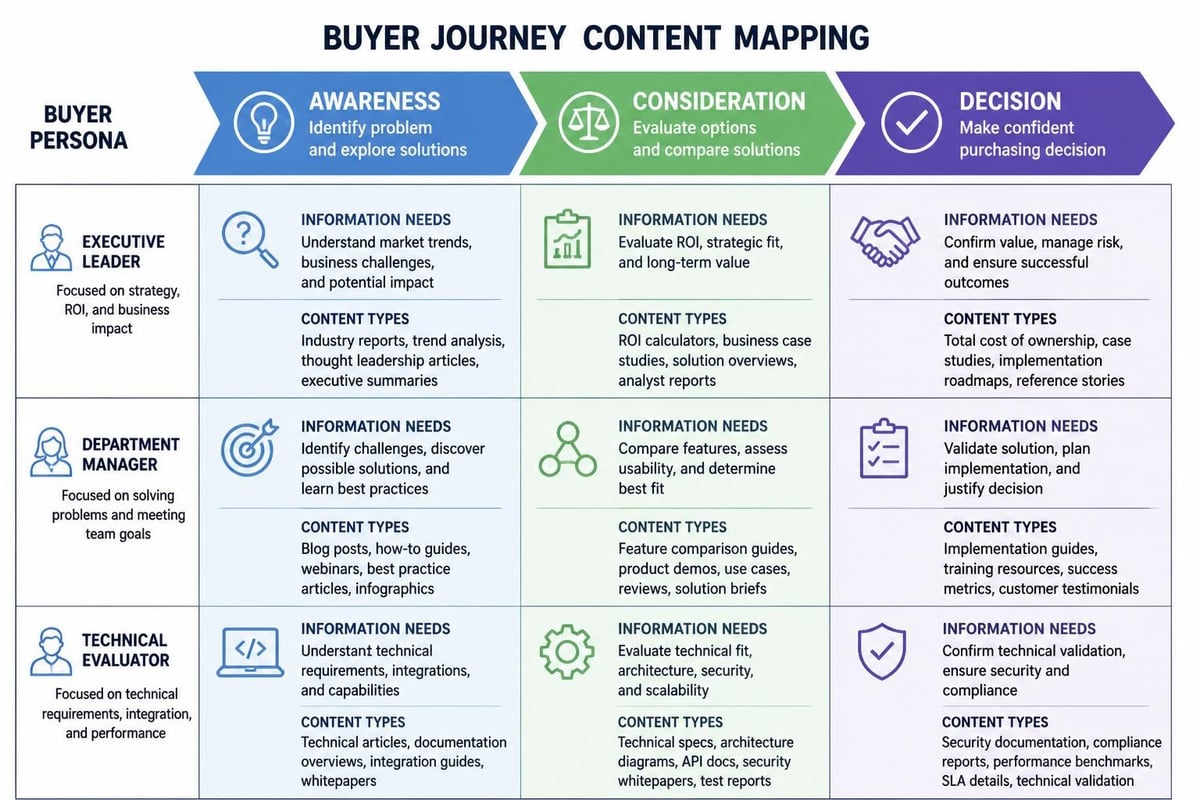
Rather than creating content randomly, successful SaaS companies map content to specific stages of the buyer journey and different personas within the buying committee.
Awareness stage content:
- Industry trend reports and original research
- Educational blog posts addressing common pain points
- Thought leadership articles from executives
- Podcast interviews and video content
Consideration stage content:
- Comparison guides and buyer's checklists
- Case studies demonstrating specific outcomes
- Product demos and walkthrough videos
- Webinars featuring customer success stories
Decision stage content:
- ROI calculators and implementation timelines
- Security and compliance documentation
- Pricing guides and service level agreements
- Reference calls and proof-of-concept opportunities
This layered approach ensures your saas demand generation system addresses prospects regardless of where they enter your ecosystem.
Leveraging AI for Content Personalization
Artificial intelligence has transformed content delivery, enabling personalization at scale that was impossible just two years ago. AI-powered advertising and marketing systems can now dynamically adjust messaging, timing, and channels based on individual prospect behavior.
Companies implementing AI-driven content personalization in their saas demand generation programs see 45-60% higher engagement rates compared to static, one-size-fits-all approaches.
Multi-Channel Orchestration Strategy
The days of relying on a single channel for demand generation have ended. Today's B2B buyers interact with an average of 11-13 touchpoints before making purchase decisions, spanning multiple channels and formats.
Channel Selection and Integration
Smart saas demand generation strategies prioritize channels based on where target audiences actually spend time and how they prefer to consume information.
High-impact channels for SaaS companies:
- Organic search: Long-term asset building through SEO-optimized content
- LinkedIn: Professional targeting for B2B decision-makers
- Email marketing: Personalized nurturing sequences and announcements
- Webinars: Interactive education and demonstration opportunities
- Podcasts: Thought leadership and industry expertise sharing
- Community building: Forums, Slack channels, user groups
The key isn't being present everywhere-it's creating consistent, valuable experiences across channels your ideal customers actually use. For businesses focused on B2B sales leads, LinkedIn and email typically generate the highest ROI, while consumer-facing SaaS products may find greater success through social media and content communities.
Dark Funnel Strategies
A significant portion of the buyer journey now happens in spaces marketers can't directly track-what industry experts call the "dark funnel." These include private Slack conversations, direct messages, podcast listening, and peer recommendation networks.
Effective saas demand generation acknowledges these hidden touchpoints by:
- Creating shareable content that prospects can forward to colleagues
- Building referral programs that incentivize word-of-mouth promotion
- Participating authentically in communities without hard-selling
- Encouraging and amplifying customer advocacy
- Developing relationships with industry influencers and thought leaders
Converting Demand into Qualified Pipeline
Generating awareness and interest means nothing without systems to convert demand into revenue opportunities. This conversion mechanism separates successful saas demand generation programs from those that produce impressive vanity metrics but limited business impact.
Lead Scoring and Qualification
Not all prospects showing interest deserve immediate sales attention. Intelligent lead scoring helps prioritize resources based on fit and intent.
Effective scoring models weight:
- Demographic fit (how closely they match your ICP): 40%
- Behavioral engagement (actions taken, content consumed): 35%
- Intent signals (timing indicators, competitive research): 25%
Companies that implement sophisticated lead scoring in their saas demand generation systems achieve 50% shorter sales cycles because sales teams focus exclusively on prospects ready for meaningful conversations.
Sales and Marketing Alignment
The handoff between marketing-generated demand and sales conversion represents a critical failure point for many organizations. Demand generation marketing succeeds only when both teams share definitions, processes, and accountability.
Alignment requirements include:
| Element | Marketing Responsibility | Sales Responsibility |
|---|---|---|
| Lead Definition | Define MQL criteria | Define SQL criteria |
| Response Time | Route leads within 5 minutes | Contact within 15 minutes |
| Lead Intelligence | Provide complete context | Add conversation notes |
| Feedback Loop | Adjust targeting based on feedback | Report lead quality weekly |
This operational excellence ensures your saas demand generation investment translates into actual pipeline growth rather than lost opportunities.
Measurement and Optimization Framework
What gets measured gets improved. The most sophisticated saas demand generation programs continuously test, measure, and optimize based on data rather than assumptions.
Essential Metrics to Track
Beyond surface-level metrics like website traffic or email open rates, focus on indicators that directly correlate with revenue generation.
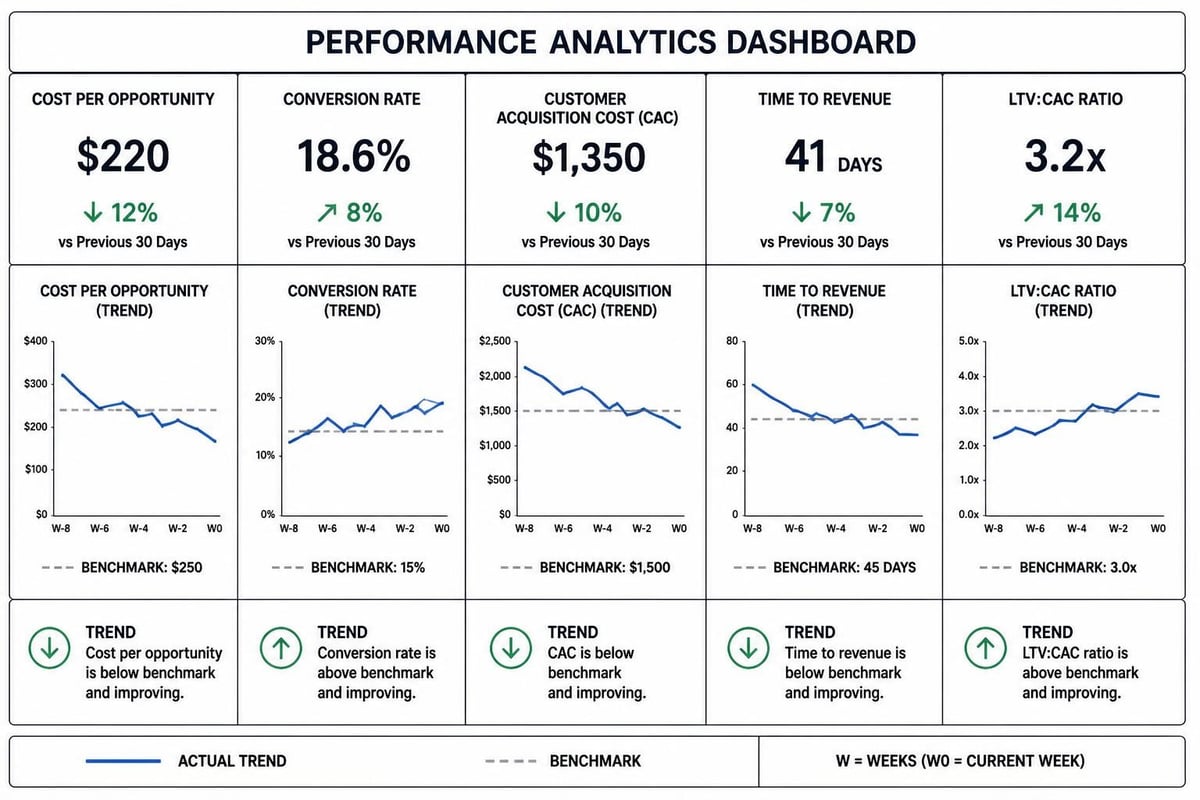
Primary demand generation metrics:
- Cost per qualified opportunity: Total program cost divided by SQLs generated
- Opportunity-to-customer conversion rate: Percentage of opportunities that close
- Customer acquisition cost (CAC): Complete cost to acquire a new customer
- Time to revenue: Days from first touch to closed deal
- Customer lifetime value (LTV): Total revenue generated per customer
- LTV:CAC ratio: Target 3:1 or higher for sustainable growth
These metrics provide the foundation for understanding which saas demand generation tactics deliver genuine business value versus those consuming resources without proportional returns.
Testing and Iteration
The most effective demand generation programs treat everything as a hypothesis to be tested. This includes messaging, channels, targeting parameters, content formats, and conversion mechanisms.
High-impact areas for testing:
- Landing page variations (headlines, CTAs, form length)
- Email subject lines and send times
- Ad creative and audience targeting
- Content formats and distribution methods
- Pricing page structures and trial offerings
Companies that implement systematic A/B testing in their saas demand generation programs see 25-40% performance improvements year-over-year through compounding optimizations.
Advanced Strategies for Accelerated Growth
Once foundational elements are operating effectively, advanced strategies can significantly accelerate saas demand generation results.
Account-Based Marketing Integration
For SaaS companies targeting enterprise accounts or specific high-value prospects, integrating account-based marketing (ABM) with broader demand generation creates powerful synergies.
ABM focuses resources on predetermined target accounts, creating personalized experiences that address specific organizational challenges. When combined with inbound demand generation, companies can both attract new prospects and systematically pursue ideal customers who haven't yet entered the funnel organically.
Product-Led Growth Strategies
The proven strategies for SaaS demand generation increasingly include product-led growth elements, where the product itself becomes the primary demand generation engine.
Product-led tactics include:
- Freemium models that let users experience value before purchasing
- Free trials with guided onboarding and activation campaigns
- Interactive demos and sandbox environments
- Viral features that encourage user-driven expansion
- Self-service upgrade paths with clear value propositions
When executed well, product-led growth dramatically reduces customer acquisition costs while improving conversion rates and expansion revenue.
Community-Driven Demand
Building authentic communities around your product or industry creates sustainable demand generation advantages that compound over time. Community members become advocates, content creators, and referral sources-essentially extending your demand generation reach organically.
Successful SaaS communities share common elements: valuable exclusive content, opportunities for peer networking, recognition programs for active participants, and direct access to product teams and leadership.
Adapting to Evolving Buyer Behavior
The evolving landscape of SaaS demand generation requires continuous adaptation as buyer expectations and preferences shift. In 2026, several trends are reshaping how effective programs operate.
Buying committees have expanded to an average of 6-10 stakeholders for mid-market SaaS purchases, requiring content and messaging that addresses multiple personas with different priorities. Your saas demand generation strategy must account for technical evaluators, financial decision-makers, executive sponsors, and end users-each with distinct concerns and information needs.
Self-service preferences have intensified, with 73% of B2B buyers preferring to research independently rather than engage with sales representatives early in their journey. This shift demands comprehensive educational resources, transparent pricing information, and accessible product information.
For businesses offering specialized services similar to how Rise Reign Rule provides strategic consultancy for scaling operations, the demand generation approach must balance education with relationship building, recognizing that complex services require trust development that transactional products don't.
Implementation Roadmap
Starting or improving your saas demand generation program requires systematic implementation rather than scattered tactical execution.
Quarter 1: Foundation Building
- Refine ideal customer profile and buyer personas
- Audit existing technology stack and fill gaps
- Establish baseline metrics and tracking systems
- Align sales and marketing on definitions and processes
Quarter 2: Content and Channel Development
- Create buyer journey content mapping
- Launch 2-3 primary channel strategies
- Implement lead scoring and qualification systems
- Begin systematic A/B testing program
Quarter 3: Optimization and Expansion
- Analyze performance data and optimize underperforming elements
- Expand to additional channels based on results
- Implement advanced personalization and automation
- Develop customer advocacy and referral programs
Quarter 4: Scale and Innovation
- Scale successful tactics and channels
- Test advanced strategies (ABM, product-led growth)
- Build predictive models for forecasting
- Plan next year's strategic initiatives
This phased approach allows organizations to build capability progressively while generating results throughout the implementation period.
Learning from Real-World Success
Examining actual saas demand generation outcomes provides valuable insights. The case study of RepairDesk’s demand generation success demonstrates how targeted strategy reduced cost per lead by 91% through audience refinement, message optimization, and channel focus.
Similarly, reviewing B2B demand generation case studies across various industries reveals common success patterns: clear targeting, consistent testing, sales-marketing alignment, and patience to let programs mature before judging results.
These real-world examples reinforce that saas demand generation success comes from systematic execution rather than clever tactics or silver bullets.
Mastering saas demand generation requires strategic thinking, systematic execution, and continuous optimization based on data rather than assumptions. By building integrated systems that attract, engage, and convert your ideal customers, you create predictable revenue growth that scales with your business. Aletto specializes in transforming these strategies into reality through AI-powered lead generation and appointment automation systems designed specifically for businesses seeking guaranteed growth partnerships. Our proven frameworks convert cold prospects into qualified opportunities ready for your sales team, eliminating the guesswork from demand generation while aligning our success directly with yours.