
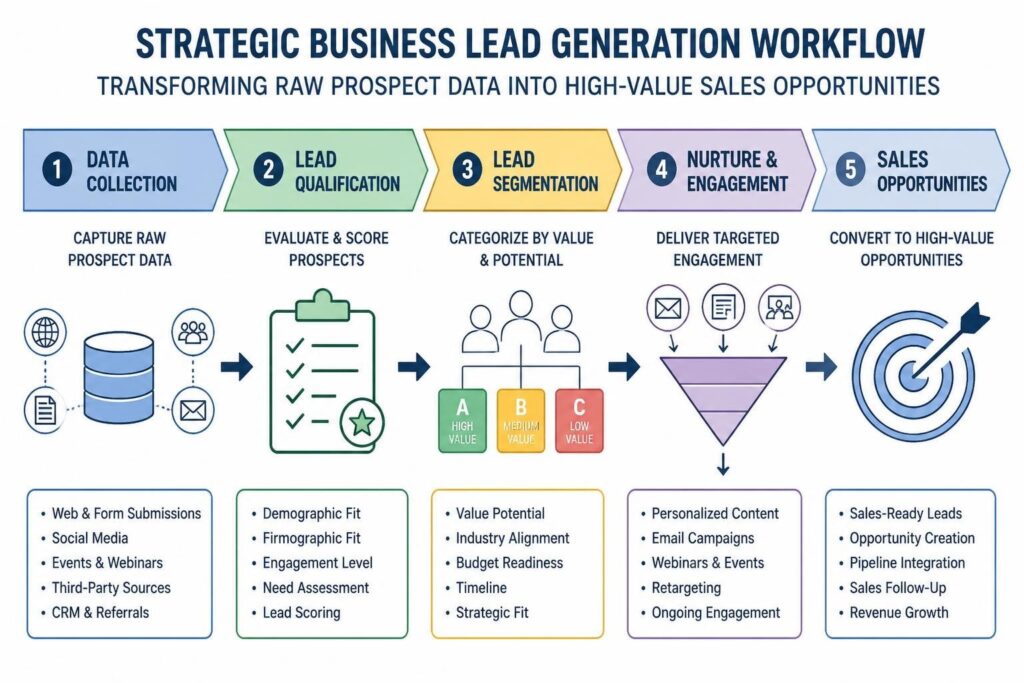
Every business knows that growth depends on a steady stream of qualified prospects. Yet the difference between companies that scale predictably and those that struggle often comes down to one critical asset: high-quality business lead lists. In 2026, the landscape of lead generation has transformed dramatically, with AI-powered tools and sophisticated data platforms enabling unprecedented targeting precision. The question isn't whether you need business lead lists but rather how to build and leverage them for maximum conversion rates. This comprehensive guide reveals proven strategies to create lead lists that fuel sustainable growth and deliver measurable ROI.
Understanding the Foundation of Business Lead Lists
Business lead lists represent more than simple contact databases. They're strategic assets that connect your solution with decision-makers actively seeking answers to their challenges.
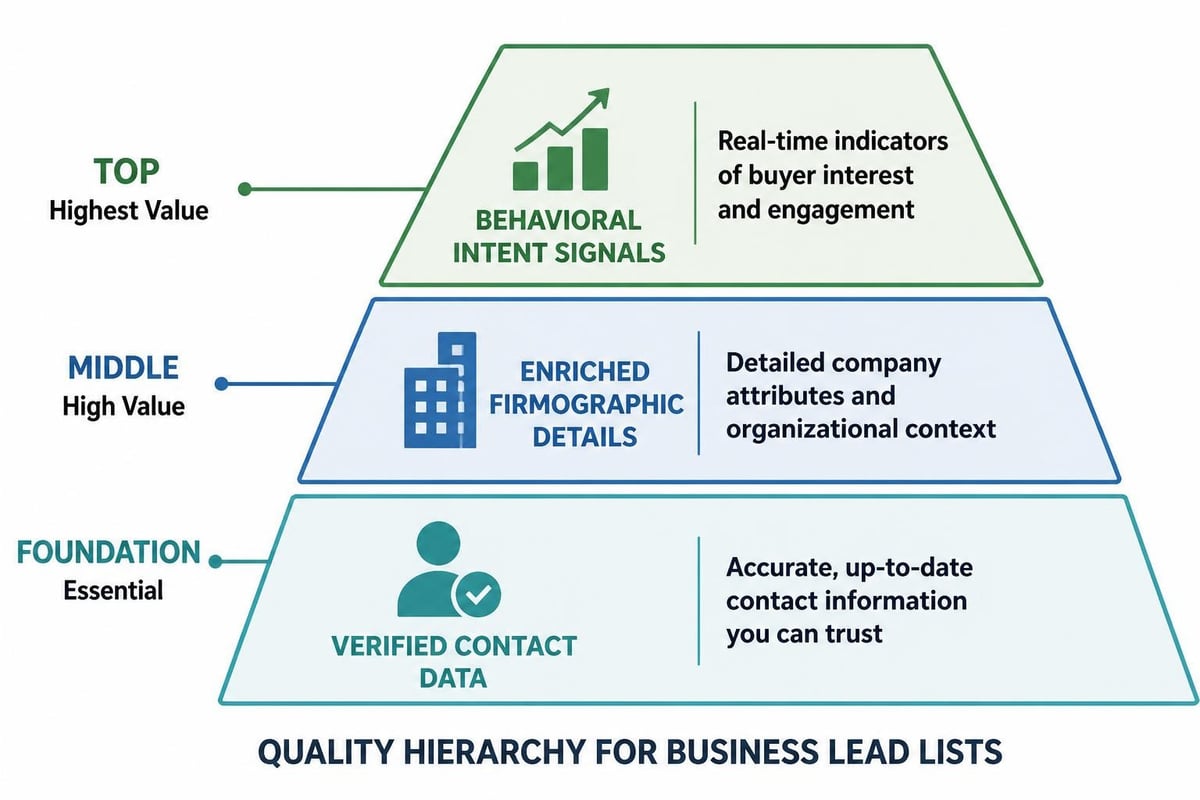
A well-constructed lead list includes:
- Contact information (verified email, phone, LinkedIn profile)
- Firmographic data (company size, industry, revenue)
- Technographic insights (current tools and platforms)
- Intent signals (recent searches, content engagement)
- Behavioral patterns (website visits, social media activity)
The evolution of lead generation technology has elevated expectations around data quality and relevance. Modern buyers expect personalized outreach based on genuine understanding of their business needs. Generic, outdated lists no longer cut through the noise.
Data Quality Determines Success Rates
Poor data quality costs businesses an average of 15-25% of their revenue annually. When your sales team wastes hours chasing disconnected numbers and bounced emails, they're not closing deals.
According to comprehensive research on building lead lists that convert, successful companies prioritize data accuracy over list size. A smaller list of 500 verified, engaged prospects outperforms a bloated database of 10,000 questionable contacts every time.
| Data Quality Metric | Impact on Conversion | Industry Benchmark 2026 |
|---|---|---|
| Email Deliverability | 3.5x higher open rates | 95%+ accuracy |
| Phone Accuracy | 4x more conversations | 90%+ verification |
| Job Title Precision | 2.8x response rates | 92%+ current data |
| Company Information | 2.2x qualified meetings | 88%+ enriched profiles |
Building Your Ideal Customer Profile
Before compiling business lead lists, you must define exactly who you're targeting. Your Ideal Customer Profile (ICP) serves as the blueprint for every prospecting decision.
Start by analyzing your best existing customers. Which characteristics do they share? What pain points brought them to your solution? Creating highly targeted lead lists requires deep understanding of these patterns.
Defining Firmographic Criteria
Firmographic segmentation provides the framework for identifying prospects most likely to convert.
Essential firmographic filters include:
- Company size (employee count and revenue range)
- Industry vertical and sub-sectors
- Geographic location and market presence
- Growth trajectory and funding stage
- Technology infrastructure and existing tools
For B2B companies, understanding business leads means recognizing that decision-making processes vary dramatically by organization size. Enterprise buyers require different messaging and longer sales cycles than mid-market prospects.
Incorporating Behavioral Intent Data
Static firmographic data tells you who might buy. Intent data reveals who's actively researching solutions right now.
Modern business lead lists integrate behavioral signals like content downloads, competitor comparisons, and pricing page visits. These indicators transform cold prospects into warm opportunities, dramatically improving conversion rates and shortening sales cycles.
Strategic Sourcing Methods for Lead Lists
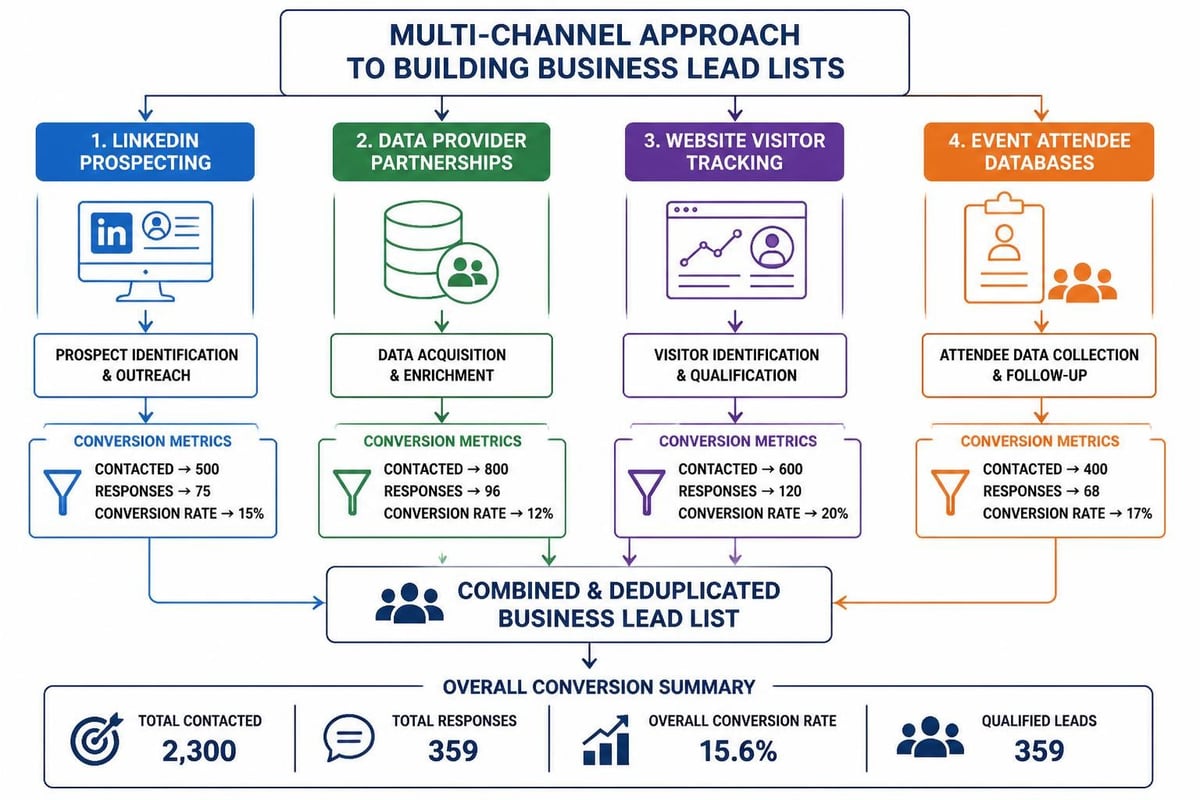
Multiple channels exist for building business lead lists. The optimal approach combines several sources to create comprehensive, verified databases.
LinkedIn Sales Navigator for B2B Targeting
LinkedIn has become the premier platform for B2B prospecting. With over 900 million professionals, it offers unparalleled access to decision-makers across industries.
Building LinkedIn lead lists involves sophisticated Boolean searches and strategic filtering. Sales Navigator enables precise targeting based on job function, seniority level, company growth, and recent job changes.
Advanced LinkedIn sourcing tactics:
- Target companies posting job openings (signals growth)
- Focus on recent promotions (new budgets and priorities)
- Engage with content before cold outreach
- Export and enrich data through integration platforms
Data Provider Partnerships
Third-party data providers offer access to millions of verified contacts. However, quality varies significantly between vendors.
When evaluating data providers, examine their verification processes, update frequency, and compliance standards. Data compliance considerations have become increasingly critical as privacy regulations expand.
| Sourcing Method | Data Freshness | Cost Efficiency | Targeting Precision | Best Use Case |
|---|---|---|---|---|
| LinkedIn Sales Navigator | Excellent | Moderate | Excellent | Executive targeting |
| Data Providers | Good | High | Good | Scale prospecting |
| Web Scraping | Variable | Very High | Moderate | Niche industries |
| Industry Events | Excellent | Low | Excellent | Relationship building |
| Website Visitors | Real-time | Very High | Excellent | Inbound conversion |
Owned Data and First-Party Sources
Your most valuable business lead lists come from prospects who've already shown interest in your brand. Website visitors, webinar attendees, content downloaders, and trial users demonstrate intent that purchased lists cannot match.
Implementing robust tracking systems captures behavioral data that enriches every profile. When someone spends 12 minutes reading your pricing page, that signal deserves immediate follow-up. Modern marketing platforms integrate these signals automatically, triggering personalized outreach at optimal moments.
Lead Scoring and Prioritization Systems
Not all leads deserve equal attention. Lead scoring models help sales teams focus energy on prospects most likely to convert.
Effective scoring combines explicit data (company size, industry, budget) with implicit behaviors (email opens, content engagement, website visits). The result is a prioritized queue that maximizes conversion rates while minimizing wasted effort.
Implementing AI-Powered Scoring
Traditional rule-based scoring systems require constant manual adjustment. AI-powered models analyze thousands of data points to identify patterns humans miss.
Machine learning algorithms examine your historical conversion data, identifying which combinations of attributes and behaviors predict closed deals. These systems improve continuously, adapting as market conditions and buyer behaviors evolve.
Key advantages of AI scoring:
- Processes complex multi-variable relationships
- Identifies non-obvious predictive patterns
- Updates automatically based on new outcomes
- Reduces human bias in qualification
- Scales effortlessly across massive databases
For companies leveraging AI tools in marketing, predictive scoring represents a competitive advantage that compounds over time.
Data Enrichment and Maintenance Strategies
Business lead lists decay rapidly. Email addresses change, professionals switch jobs, and companies get acquired. Without ongoing maintenance, even premium lists lose value within months.
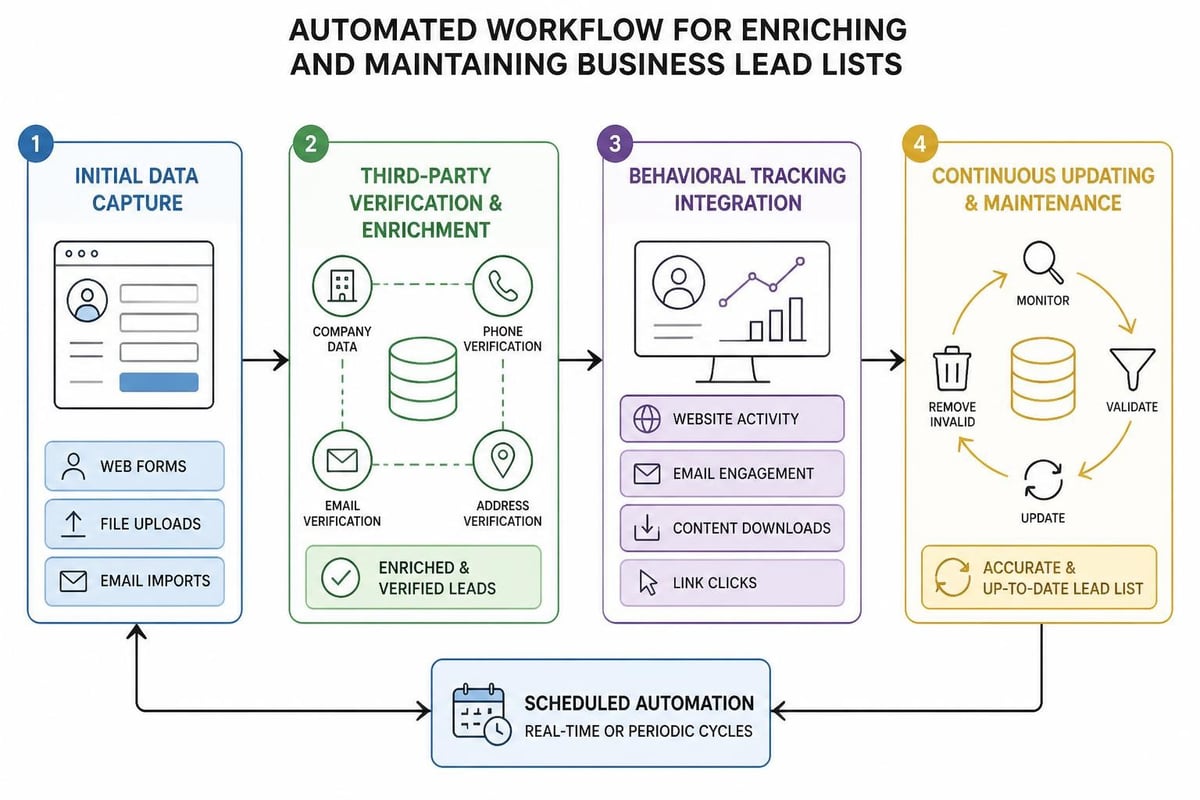
Comprehensive lead list building guides emphasize that enrichment is continuous, not a one-time event. Top-performing organizations implement automated processes that verify and update contact information regularly.
Automated Verification Workflows
Email verification services validate addresses before sending campaigns, protecting sender reputation and improving deliverability. Phone verification systems confirm numbers remain active and correctly attributed to contacts.
Essential enrichment data points:
- Email address verification status
- Direct dial phone numbers
- Mobile numbers (with opt-in status)
- LinkedIn profile URLs
- Recent job changes or promotions
- Company news and funding events
- Technology stack updates
- Intent signals and buying triggers
Regular data hygiene prevents your business lead lists from becoming liabilities. Bounced emails damage sender reputation, while outdated information wastes sales team time and frustrates prospects.
Compliance and Legal Considerations
Data privacy regulations have transformed how businesses collect, store, and use contact information. Non-compliance carries severe financial penalties and reputational damage.
Understanding data compliance requirements is non-negotiable for companies building business lead lists in 2026. GDPR, CCPA, CAN-SPAM, and TCPA each impose specific obligations around consent, opt-out mechanisms, and data protection.
Building Compliant Lead Lists
Purchased lists often create compliance headaches because consent status remains unclear. Did contacts explicitly agree to receive communications from third parties? Can you document their consent?
First-party data collection through opt-in forms, content gates, and event registrations provides clear consent trails. When prospects voluntarily provide information in exchange for value, you establish legitimate interest and permission to engage.
Compliance best practices:
- Implement double opt-in for email subscriptions
- Maintain detailed consent records and timestamps
- Provide clear, accessible unsubscribe mechanisms
- Honor opt-out requests within required timeframes
- Segment by consent type and communication preferences
- Regular compliance audits of data sources and usage
Companies that prioritize ethical data practices build stronger relationships and avoid costly penalties. Transparency and respect for privacy preferences differentiate trustworthy brands from spammers.
Segmentation Strategies for Maximum Relevance
Generic outreach generates generic results. The power of business lead lists multiplies when you segment strategically and personalize messaging.
Effective segmentation goes beyond basic demographics. It considers buyer stage, pain points, competitive context, and decision-making authority. Each segment receives tailored messaging that addresses their specific situation.
Multi-Dimensional Segmentation Models
Advanced segmentation combines multiple variables to create highly specific micro-segments. A software company might segment by industry, company size, technology stack, growth stage, and content engagement level simultaneously.
Common segmentation dimensions:
- Vertical industry and sub-sector
- Company size and revenue
- Geographic territory
- Buyer persona and job function
- Sales cycle stage
- Engagement level and recency
- Product fit score
- Competitive displacement opportunity
When generating leads for business growth, precision targeting dramatically improves response rates. A personalized message referencing specific challenges in their industry converts 6-8x better than generic pitches.
Integration with Sales and Marketing Systems
Isolated business lead lists deliver limited value. Integration with CRM platforms, marketing automation, and sales engagement tools creates seamless workflows that maximize conversion.
Modern tech stacks enable sophisticated orchestration across multiple touchpoints. When a prospect downloads content, attends a webinar, and visits your pricing page, coordinated systems trigger appropriate follow-up automatically.
Workflow Automation for Lead Nurturing
Not every qualified lead is ready to buy immediately. Automated nurture sequences maintain engagement while providing value until prospects enter active buying cycles.
Email sequences, retargeting campaigns, and personalized content recommendations keep your solution top-of-mind. When buying intent signals spike, sales teams receive real-time notifications to engage while momentum exists.
| Integration Type | Primary Benefit | Implementation Complexity | ROI Timeline |
|---|---|---|---|
| CRM Sync | Unified contact records | Low | Immediate |
| Marketing Automation | Nurture workflows | Moderate | 1-3 months |
| Sales Engagement | Cadence execution | Moderate | 1-2 months |
| Analytics Platforms | Attribution tracking | High | 3-6 months |
| Intent Data Feeds | Buying signal alerts | Moderate | 1-3 months |
Measuring List Performance and Optimization
What gets measured gets improved. Tracking key performance indicators reveals which sources, segments, and tactics generate highest-quality business lead lists.
Critical metrics to monitor:
- Contact accuracy rate (deliverability percentage)
- Response rate by segment and channel
- Meeting booking rate from outreach
- SQL (Sales Qualified Lead) conversion rate
- Deal close rate by lead source
- Average deal size by segment
- Sales cycle length by source
- Customer lifetime value correlation
Regular analysis identifies high-performing segments deserving expanded investment and underperforming sources requiring adjustment or elimination. Optimization is continuous, responding to changing market conditions and buyer behaviors.
A/B Testing for Continuous Improvement
Systematic testing reveals what resonates with your target audience. Test subject lines, messaging angles, calls-to-action, and outreach timing to optimize every variable.
Even small improvements compound significantly. A 2% increase in response rate multiplied across thousands of monthly touches generates dozens of additional opportunities. Over quarters and years, these incremental gains create substantial competitive advantages.
Advanced Tactics for 2026
The frontier of lead list development continues expanding. Forward-thinking organizations experiment with emerging technologies and methodologies that provide early-mover advantages.
Predictive analytics platforms analyze billions of data points to identify companies entering buying cycles before they engage publicly. Technographic intelligence reveals technology stack gaps your solution addresses. Account-based marketing orchestration coordinates personalized campaigns across multiple stakeholders simultaneously.
AI-Driven Prospect Research
Artificial intelligence dramatically accelerates prospect research that previously required hours of manual effort. AI systems analyze company websites, news mentions, financial filings, and social media to generate comprehensive opportunity briefings.
Sales representatives enter conversations armed with deep context about business challenges, recent initiatives, and strategic priorities. This preparation transforms cold outreach into relevant, value-focused conversations that respect prospect time and intelligence.
Building effective business lead lists requires strategic planning, quality data sources, and ongoing optimization. Success depends on understanding your ideal customers deeply, maintaining data accuracy rigorously, and personalizing outreach thoughtfully. Aletto leverages advanced AI systems to generate qualified sales leads and automate appointment bookings, transforming these strategies into predictable revenue growth. Our guaranteed partnership model aligns our success with yours, ensuring optimal outcomes through transparent, value-driven marketing that converts cold prospects into ready-to-buy customers.