
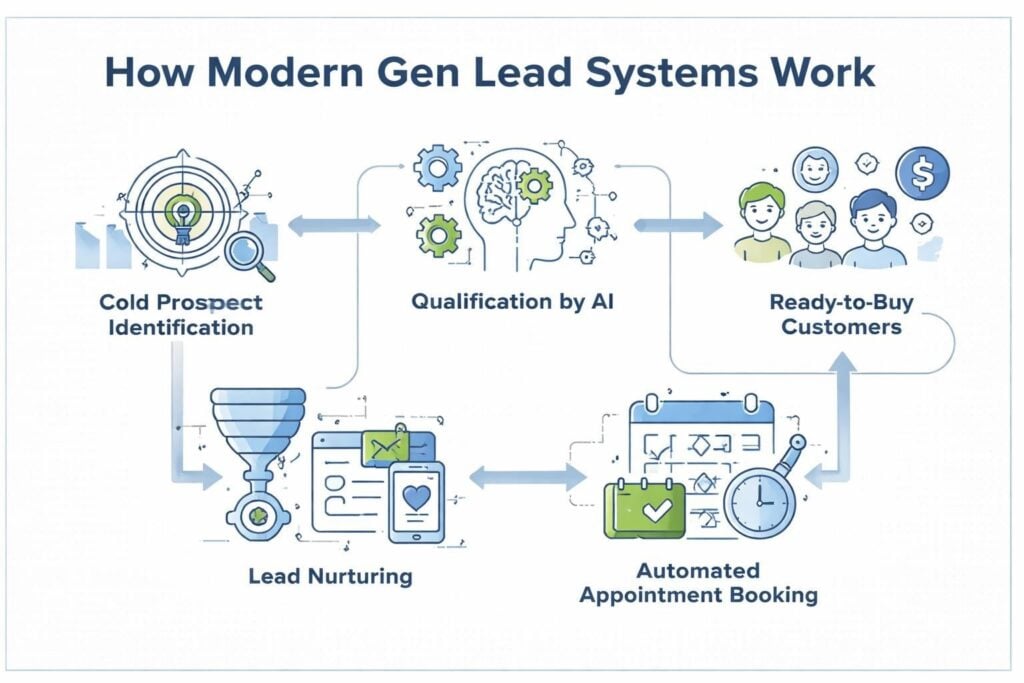
The landscape of business development has fundamentally changed. Traditional marketing tactics that once worked reliably now yield diminishing returns, leaving sales teams frustrated and revenue targets unmet. The modern gen lead approach represents a strategic evolution that combines advanced technology, data-driven insights, and automated systems to create predictable revenue growth. Companies that master this new paradigm aren't just generating more leads-they're creating systematic processes that transform cold prospects into ready-to-buy customers while eliminating wasted effort and expense.
Understanding the Modern Gen Lead Framework
The concept of gen lead has evolved far beyond simple contact collection. Today's sophisticated approach integrates multiple touchpoints, behavioral analysis, and intelligent automation to identify and nurture prospects who demonstrate genuine buying intent. This represents a significant departure from legacy methods that prioritized volume over quality.
Modern gen lead systems focus on three critical components:
- Qualification accuracy that identifies prospects with genuine buying potential
- Automated nurturing sequences that move prospects through the sales funnel efficiently
- Appointment booking automation that eliminates friction in the conversion process
When these elements work together seamlessly, businesses experience dramatically improved conversion rates and shortened sales cycles. The key differentiator lies in understanding that not all leads deserve equal attention-strategic prioritization based on data-driven signals separates top performers from struggling competitors.
The Technology Revolution Behind Gen Lead Success
Advanced AI systems have fundamentally transformed how businesses approach lead generation. AI tools in marketing now analyze thousands of data points to predict which prospects are most likely to convert, enabling sales teams to focus their energy where it matters most. This technological capability wasn't available even two years ago, creating a competitive advantage for early adopters.
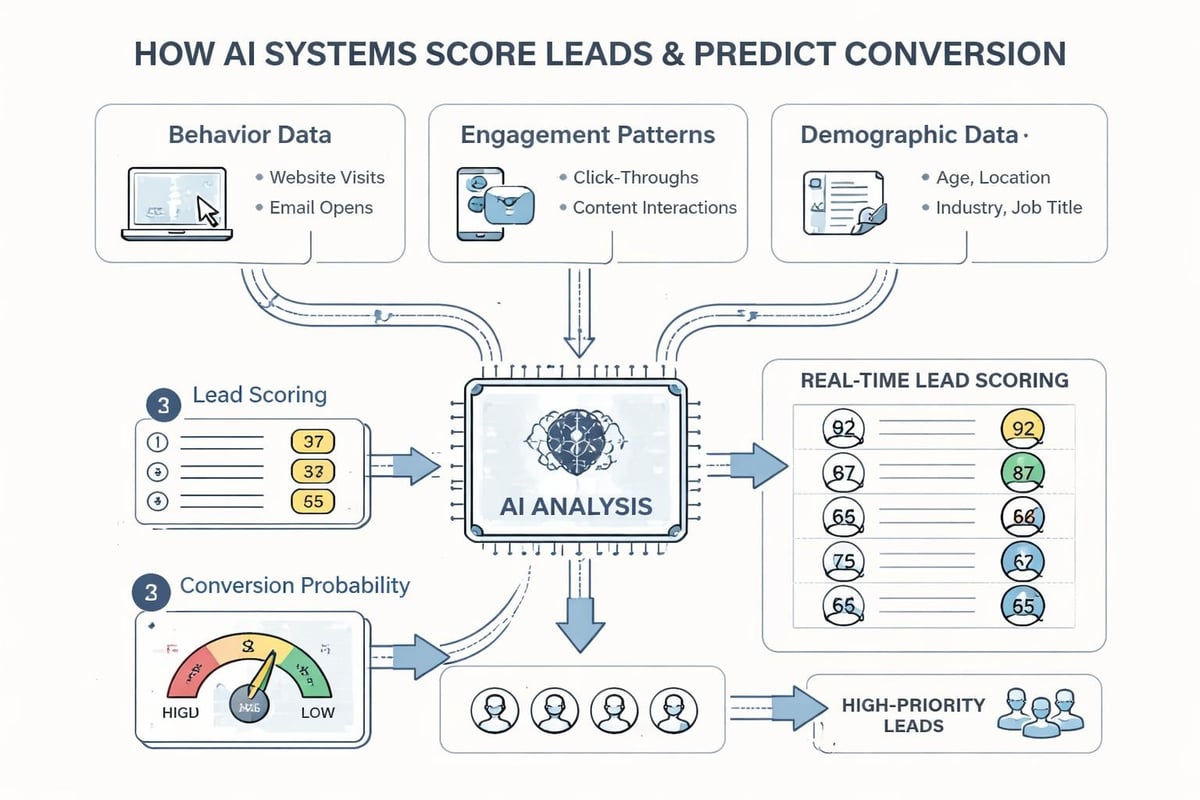
Machine learning algorithms continuously improve their accuracy by analyzing which leads actually convert, creating a feedback loop that makes gen lead systems smarter over time. This means your lead generation becomes more efficient month after month, driving down acquisition costs while increasing quality.
Building a High-Performance Gen Lead System
Creating an effective gen lead infrastructure requires careful planning and strategic implementation. The most successful businesses approach this as a comprehensive system rather than isolated tactics. According to comprehensive lead generation best practices, proper lead routing and assignment rules can increase conversion rates by up to 300%.
| System Component | Traditional Approach | Modern Gen Lead Approach |
|---|---|---|
| Lead Identification | Manual research, purchased lists | AI-powered prospect discovery |
| Qualification | Sales team phone calls | Automated behavioral scoring |
| Nurturing | Periodic email blasts | Dynamic, personalized sequences |
| Appointment Setting | Manual scheduling calls | Automated booking systems |
| Follow-up | Inconsistent, manual | Systematic, automated triggers |
The transformation from traditional to modern approaches eliminates bottlenecks that previously slowed revenue growth. More importantly, it creates consistency that makes revenue predictable rather than volatile.
Strategic Lead Sourcing That Actually Works
The foundation of any gen lead system starts with identifying the right prospects. Lead generation in the US requires understanding regional market dynamics, industry-specific buying patterns, and seasonal fluctuations that impact prospect readiness. Successful businesses invest heavily in market research that informs every subsequent step of their gen lead process.
Effective sourcing strategies include:
- Intent signal monitoring that identifies prospects actively researching solutions
- Strategic content placement that attracts prospects during their buying journey
- Partnership networks that provide warm introductions to qualified prospects
- Retargeting campaigns that re-engage prospects who showed initial interest
Each sourcing channel requires different messaging, timing, and follow-up protocols. The businesses that excel at gen lead understand these nuances and customize their approach accordingly rather than applying one-size-fits-all tactics.
Qualification: The Critical Gen Lead Multiplier
The single biggest mistake companies make with gen lead is treating all prospects equally. Understanding what makes leads qualified separates businesses that thrive from those that struggle. Qualification isn't about finding people who might be interested-it's about identifying prospects who have the budget, authority, need, and timeline to actually purchase.
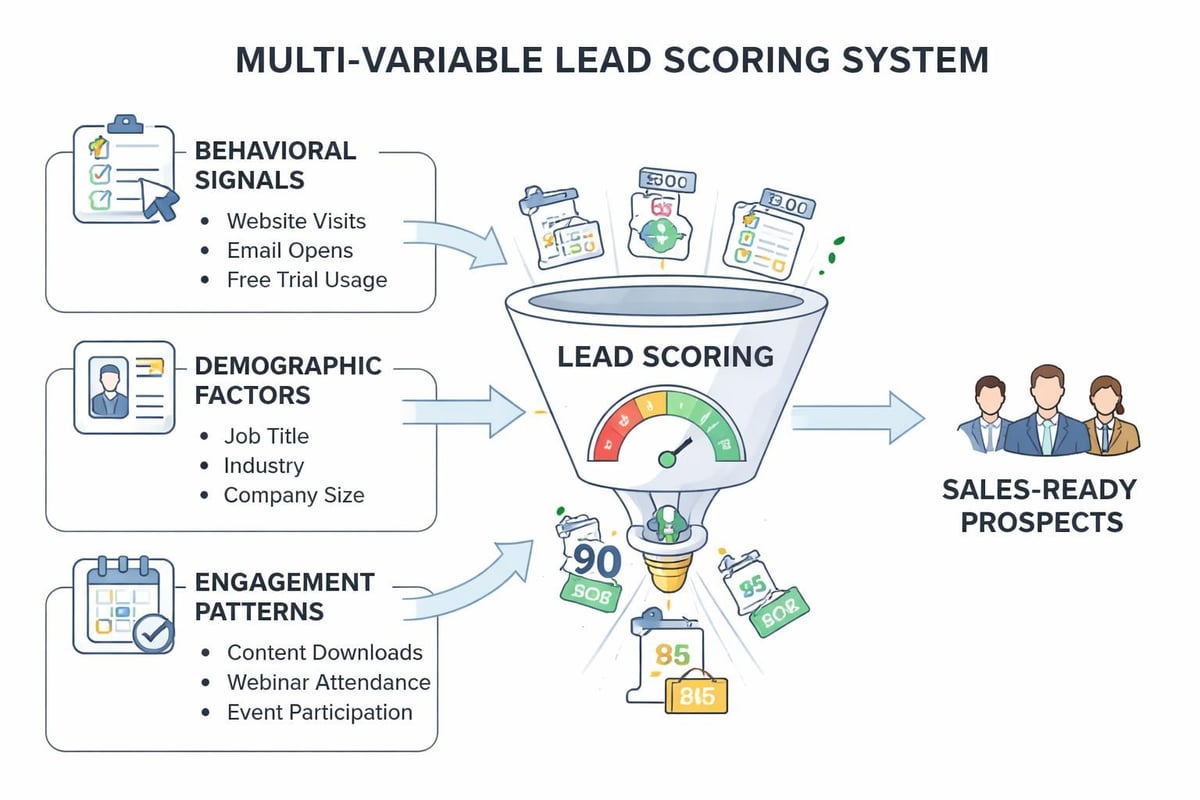
Sophisticated qualification frameworks evaluate prospects across multiple dimensions simultaneously. Behavioral signals like website engagement, email opens, and content downloads combine with firmographic data such as company size, industry, and technology stack to create comprehensive prospect profiles.
Advanced Scoring Models That Predict Conversion
Modern gen lead systems implement multi-variable scoring models that assign point values to specific prospect actions and characteristics. A prospect who visits your pricing page three times in one week scores higher than someone who opened a single email. Someone whose job title includes "Director" or "VP" receives more points than an individual contributor.
Key scoring criteria include:
- Engagement recency: Recent activity indicates active buying interest
- Engagement depth: Multiple touchpoints suggest serious consideration
- Role appropriateness: Decision-makers and influencers score higher
- Company fit: Size, industry, and growth stage alignment matters
- Technology indicators: Current solutions and pain points revealed through behavior
These scoring models become the engine that drives efficient gen lead operations. Sales teams work exclusively with high-scoring prospects while automated nurturing continues developing lower-scoring leads until they demonstrate readiness.
Automated Nurturing That Converts Cold to Ready-to-Buy
The gap between initial interest and purchase readiness represents the most significant opportunity in gen lead. Most prospects aren't ready to buy when you first connect with them. As explained in effective lead generation strategies, nurturing these relationships systematically transforms prospects from curious observers into active buyers.
Automated nurturing sequences deliver targeted content based on prospect behavior and characteristics. Someone who downloaded a pricing guide receives different follow-up than someone who read a thought leadership article. This personalization creates relevance that generic campaigns cannot match.
Building Nurture Sequences That Actually Engage
Effective nurture sequences combine education, social proof, and gentle persuasion across multiple channels. Email remains foundational, but SMS, direct mail, and retargeting ads create the repetition necessary for message penetration. The key is providing value at every touchpoint rather than simply asking for meetings.
Successful nurture sequences include:
- Educational content that addresses specific pain points
- Case studies demonstrating outcomes similar prospects achieved
- Social proof including testimonials and customer success stories
- Product demonstrations showing solutions in action
- Limited-time offers creating appropriate urgency
Each touchpoint should advance the prospect's understanding while building trust in your capability to solve their problem. The businesses excelling at gen lead recognize that nurturing is relationship-building, not bombardment.
The Appointment Booking Breakthrough
Converting nurtured prospects into booked appointments represents the final critical step in effective gen lead systems. Traditional approaches requiring phone tag and email exchanges create unnecessary friction that costs conversions. Modern automated booking systems eliminate this friction entirely.
B2B SaaS qualified demo strategies demonstrate how removing booking friction can double conversion rates. When prospects can instantly schedule appointments at their convenience without human intervention, conversion rates skyrocket while administrative overhead plummets.
| Booking Method | Average Time to Schedule | Conversion Rate | Administrative Cost |
|---|---|---|---|
| Phone tag | 3-7 days | 12-18% | High |
| Email coordination | 2-5 days | 15-22% | Medium |
| Automated scheduling | Immediate | 35-45% | Minimal |
The data clearly demonstrates that automation isn't just more efficient-it's dramatically more effective. Prospects who want to move forward can do so immediately while their interest peaks rather than waiting days for scheduling coordination.
Integration with CRM and Sales Systems
Gen lead systems achieve maximum effectiveness when integrated seamlessly with existing CRM platforms and sales workflows. According to lead generation methodology, proper integration ensures no prospects fall through cracks while providing sales teams complete visibility into each lead's journey and readiness signals.
Modern integration capabilities automatically sync prospect data, engagement history, and qualification scores directly into sales systems. This eliminates manual data entry while ensuring sales teams have complete context before every conversation. The result is more productive sales interactions and higher close rates.
Measuring Gen Lead Performance That Matters
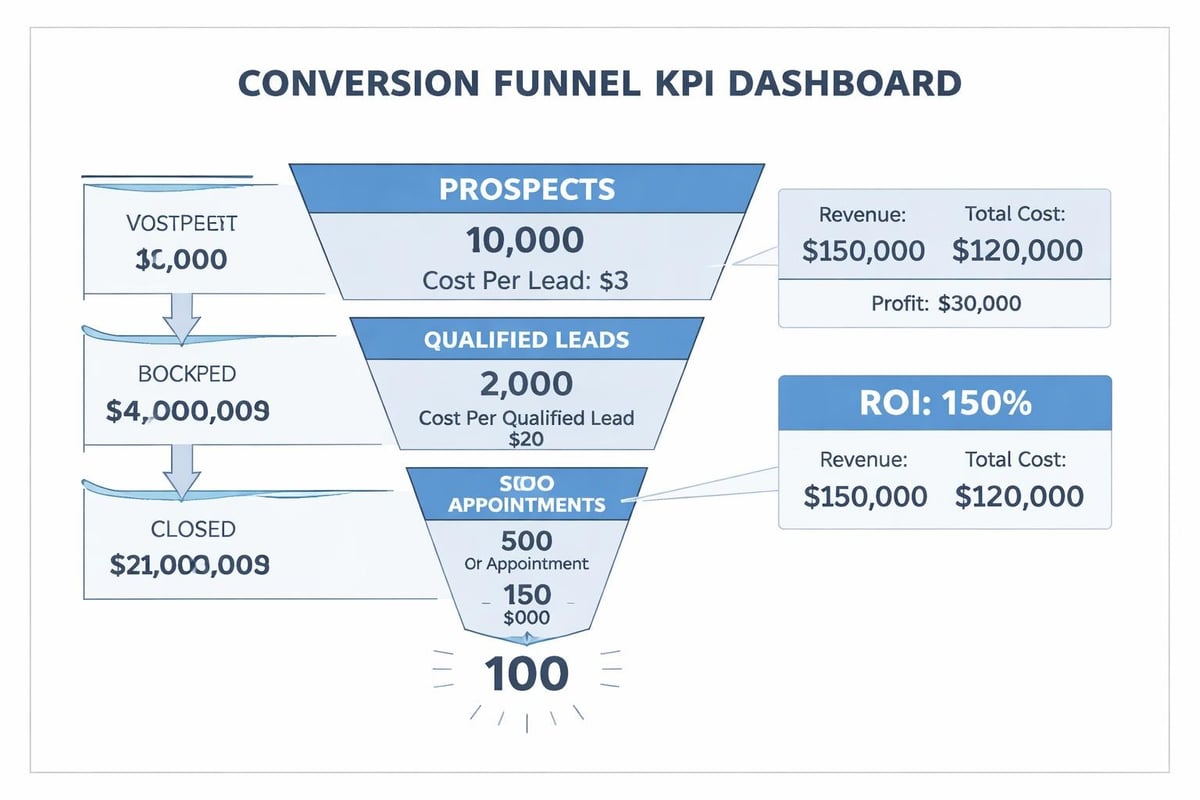
What gets measured gets improved. Successful gen lead programs establish clear metrics that track both leading and lagging indicators of performance. Volume metrics like total leads generated matter far less than quality metrics like conversion rates and revenue per lead.
Essential gen lead metrics include:
- Cost per qualified lead: What you actually pay for sales-ready prospects
- Lead-to-opportunity conversion rate: Percentage advancing to sales pipeline
- Opportunity-to-close rate: How many sales-ready leads actually purchase
- Time to conversion: How long from first touch to closed deal
- Customer acquisition cost: Total investment required to gain customers
- Return on investment: Revenue generated versus marketing spend
These metrics create accountability while revealing opportunities for optimization. End-to-end marketing approaches that track prospects from initial awareness through closed sale provide the visibility necessary for continuous improvement.
Continuous Optimization Through Testing
The most sophisticated gen lead systems implement systematic testing protocols that continuously improve performance. A/B testing different messaging, offers, and nurture sequences reveals what resonates most effectively with target audiences. Small improvements compound over time, creating substantial competitive advantages.
Testing should extend across every system component from initial ad creative through nurture email subject lines to appointment booking page design. According to conversion optimization best practices, companies that test systematically achieve 20-40% better results than those relying on assumptions.
Common Gen Lead Mistakes That Kill Results
Even sophisticated businesses make critical errors that undermine gen lead effectiveness. Understanding these pitfalls helps you avoid expensive mistakes that slow growth and waste resources. The most damaging mistakes stem from prioritizing speed over quality or technology over strategy.
Avoid these common gen lead errors:
- Purchasing lead lists instead of generating organic interest
- Treating all leads identically regardless of qualification level
- Implementing automation without clear strategy or proper setup
- Neglecting follow-up speed when prospects demonstrate buying intent
- Focusing exclusively on volume rather than conversion quality
- Failing to align marketing and sales teams on definitions and processes
Many businesses implement gen lead tactics without the underlying strategy necessary for sustainable success. Technology amplifies both good and bad processes-automation of broken workflows simply creates faster failure.
The Attribution Challenge
Accurately attributing revenue to specific gen lead activities remains challenging but essential. Modern buyers interact with multiple touchpoints across extended timeframes before purchasing, making simple last-touch attribution misleading. Multi-touch attribution models provide more accurate understanding of which activities truly drive conversions.
Sophisticated businesses invest in attribution technology that tracks the entire customer journey from initial awareness through final purchase. This visibility reveals which gen lead investments deliver actual returns versus those consuming budget without results. Understanding which marketing platforms perform best requires this level of analytical sophistication.
Scaling Gen Lead Systems for Predictable Growth
Once your gen lead system proves effective at smaller volumes, scaling becomes the natural next step. However, scaling requires different capabilities than initial implementation. Systems that work well generating fifty leads monthly often break when attempting five hundred.
Successful scaling requires infrastructure investments in technology, personnel, and processes before demand overwhelms capacity. Companies that scale reactively rather than proactively experience quality deterioration that damages brand reputation and conversion rates.
Scaling considerations include:
- Technology capacity: Can your systems handle 10x current volume?
- Team resources: Do you have personnel to manage increased prospect flow?
- Quality maintenance: Will rapid growth compromise qualification standards?
- Financial investment: Can you fund the increased lead flow sustainably?
- Process documentation: Are workflows standardized and repeatable?
Transforming appointment-based businesses into high-revenue operations demonstrates how systematic scaling approaches create predictable revenue growth rather than chaotic expansion.
Partnership Models That Accelerate Results
Many businesses find that partnering with specialized gen lead providers accelerates results while reducing risk. Rather than building internal capabilities from scratch, partnerships provide immediate access to proven systems, experienced teams, and established processes. The guaranteed growth partnership model aligns provider and client interests, ensuring both parties succeed together.
This approach particularly benefits businesses with limited marketing infrastructure or those seeking rapid market entry. Free B2B lead generation tools can supplement partnership approaches, but sophisticated systems require professional implementation and ongoing optimization that partnerships provide.
The Future of Gen Lead Innovation
The gen lead landscape continues evolving rapidly as new technologies and methodologies emerge. Artificial intelligence capabilities expand monthly, enabling increasingly sophisticated prospect identification, qualification, and nurturing. Businesses that stay current with these innovations maintain competitive advantages over those relying on outdated approaches.
Predictive analytics now forecast which prospects will convert weeks before they demonstrate obvious buying signals. Natural language processing analyzes prospect communications to detect subtle intent signals that human reviewers miss. Computer vision technology evaluates prospect website engagement patterns to understand true interest levels versus casual browsing.
Emerging gen lead technologies include:
- Predictive lead scoring using machine learning algorithms
- Conversational AI that pre-qualifies prospects through natural dialogue
- Intent monitoring across the entire web, not just your properties
- Hyper-personalization that customizes every touchpoint automatically
- Cross-channel orchestration that optimizes message timing and sequencing
These innovations will separate market leaders from followers over the coming years. Early adoption creates first-mover advantages that become difficult for competitors to overcome. According to lead generation process frameworks, companies implementing advanced technologies achieve 2-3x better results than those using traditional methods.
Mastering gen lead in 2026 requires strategic thinking, technological capability, and relentless optimization that most businesses struggle to build internally. The companies achieving breakthrough results combine proven methodologies with cutting-edge automation to create predictable revenue engines. Adstra specializes in implementing these sophisticated gen lead systems for businesses ready to transform their growth trajectory, leveraging advanced AI to generate qualified leads and automate appointment bookings with guaranteed results. If you're ready to stop guessing about your pipeline and start building predictable revenue growth, Adstra's partnership model ensures we succeed together.