


The insurance industry faces unprecedented challenges in 2026, with consumers more informed and skeptical than ever before. Traditional cold calling and purchased lead lists no longer deliver the results agents need to build sustainable practices. To get insurance leads that actually convert into paying customers, you need a strategic, multi-channel approach that combines digital marketing, automation, and relationship building. This guide reveals the most effective methods insurance professionals are using right now to generate qualified prospects and transform them into booked appointments.
Understanding the Modern Insurance Lead Landscape
The way consumers shop for insurance has fundamentally changed over the past few years. Gone are the days when people would simply call the first agent they found in the Yellow Pages or accept whatever policy their parents recommended.
Today's insurance shoppers conduct extensive online research before ever speaking with an agent. They compare quotes across multiple platforms, read reviews, and seek recommendations from their social networks. This shift in buyer behavior means your lead generation strategy must meet prospects where they already spend their time.
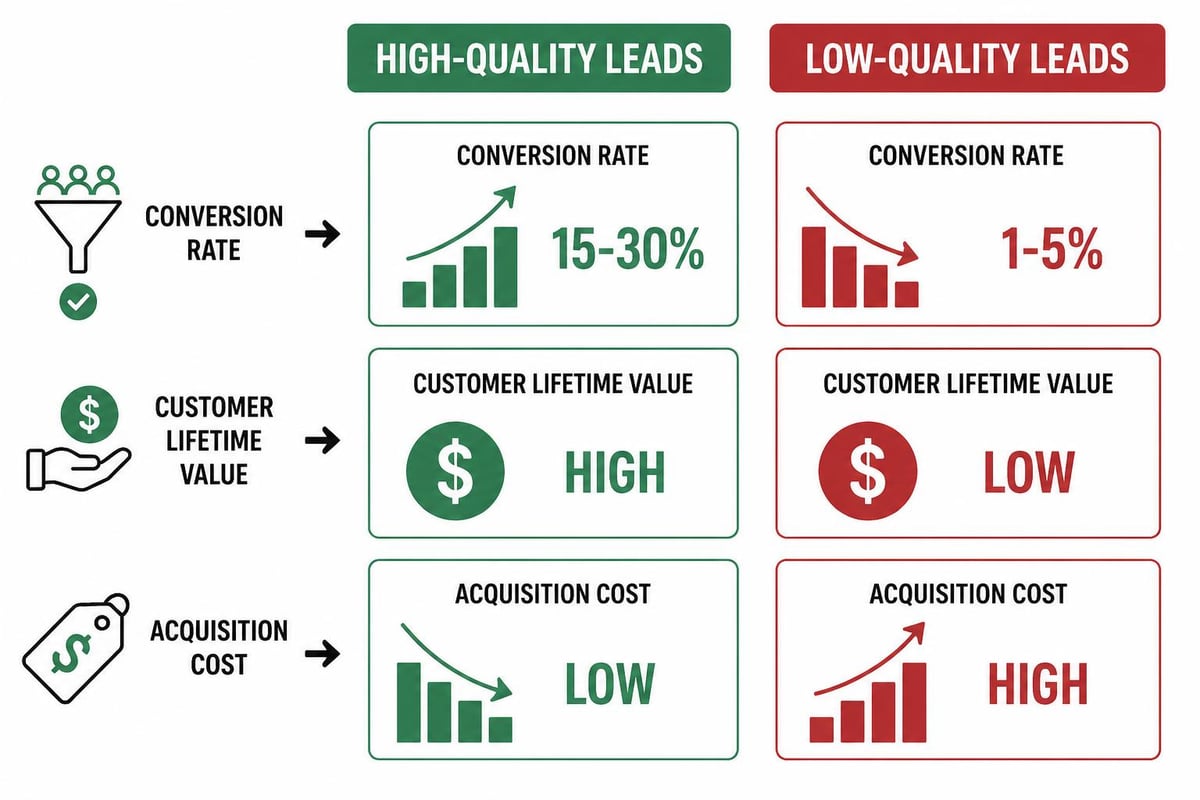
The insurance agents who thrive in this environment understand that generating leads is no longer about volume alone. Quality matters more than quantity. A single highly qualified lead who's actively shopping for coverage is worth more than fifty cold contacts who have no immediate need.
The Cost of Low-Quality Leads
Many agents waste thousands of dollars each year on lead sources that deliver poor results. Purchased leads often come with significant drawbacks:
- Shared with multiple competitors who contact the same prospect simultaneously
- Outdated contact information leading to wasted follow-up time
- Unqualified prospects with no genuine interest or budget
- Compliance risks from unclear consent and data sourcing
Understanding these pitfalls helps you focus your efforts on strategies that actually work. Modern approaches to lead generation with AI can help you identify genuinely interested prospects while filtering out time-wasters.
Digital Marketing Strategies That Get Insurance Leads
Digital channels have become the primary battlefield for insurance lead generation. The agents who master these platforms consistently outperform their competitors who rely on outdated methods.
Search Engine Optimization for Local Visibility
When someone searches "car insurance near me" or "best life insurance agent," you want your name appearing at the top of those results. Local SEO has become one of the most cost-effective ways to get insurance leads from people actively seeking coverage.
Start by claiming and optimizing your Google Business Profile. Complete every section with detailed information about your services, operating hours, and specialties. Encourage satisfied clients to leave reviews, as these significantly impact your local search rankings.
Your website needs location-specific content that addresses the unique insurance needs of your community. Create pages targeting searches like "homeowners insurance in [your city]" or "commercial liability coverage [your state]." This targeted approach helps you capture prospects with high purchase intent.
Effective insurance lead generation strategies often incorporate content marketing that answers common questions prospects have during their research phase.
Paid Advertising for Immediate Results
While organic strategies build long-term value, paid advertising delivers immediate visibility. Google Ads and Facebook campaigns can put your services in front of prospects the moment they start shopping for coverage.
The key to profitable insurance advertising is precise targeting and compelling offers. Rather than casting a wide net, focus on specific demographics and life events that trigger insurance needs:
- Young families shopping for life insurance
- New homeowners requiring property coverage
- Small business owners seeking commercial policies
- Retirees evaluating Medicare supplements
Create dedicated landing pages for each campaign that speak directly to that audience's concerns. A generic homepage won't convert nearly as well as a page specifically designed for, say, first-time homebuyers worried about protecting their investment.
| Advertising Channel | Average Cost Per Lead | Conversion Rate | Best For |
|---|---|---|---|
| Google Search Ads | $45-$150 | 8-12% | High-intent shoppers |
| Facebook Ads | $25-$75 | 5-9% | Demographic targeting |
| LinkedIn Ads | $80-$200 | 6-10% | Commercial insurance |
| Display Retargeting | $15-$40 | 3-7% | Nurturing awareness |
Content Marketing That Establishes Authority
Publishing valuable content positions you as a trusted advisor rather than just another salesperson. This approach helps you get insurance leads from prospects who already view you as an expert in your field.
Start a blog addressing common insurance questions and concerns. Write about topics like "How much life insurance do I really need?" or "5 coverage gaps homeowners often overlook." Each piece of content should provide genuine value while naturally leading readers toward requesting a consultation.
Video content performs exceptionally well for insurance topics. Short educational videos explaining complex concepts in simple terms can be shared across social media, embedded in your website, and included in email campaigns. People connect with faces and voices more readily than text alone.
Similar to strategies used in B2B lead generation, educational content builds trust before the sales conversation even begins.
Leveraging Technology to Get Insurance Leads Efficiently
Technology has transformed how successful agents generate and manage leads. The right tools can dramatically increase your efficiency while improving conversion rates.
CRM Systems and Lead Management
A robust Customer Relationship Management system serves as the foundation of modern lead generation. It ensures no prospect falls through the cracks and enables you to provide timely, personalized follow-up.
The best insurance CRMs automatically capture leads from multiple sources-your website, social media, referrals, and purchased lists-into a single database. They track every interaction and remind you when it's time to follow up. Insurance lead management best practices emphasize the importance of responding to inquiries within five minutes to maximize conversion rates.
Advanced systems can segment your leads based on their source, insurance type, and readiness to buy. This segmentation allows you to customize your approach for each group. Someone who just requested a quote needs a different message than someone who downloaded an educational guide three months ago.
Marketing Automation and Email Sequences
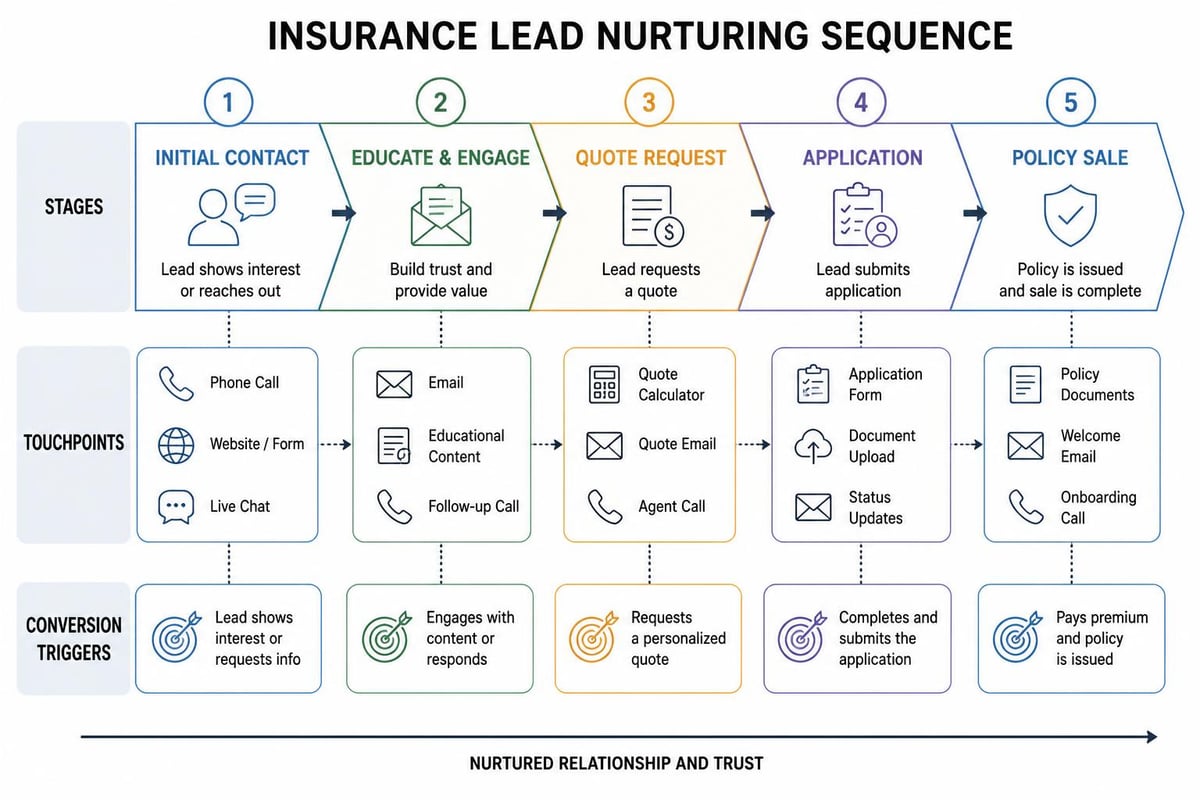
Email marketing remains one of the highest-ROI channels for insurance lead nurturing. Automated sequences allow you to stay top-of-mind with prospects without manually sending individual messages.
Create different email journeys for different lead types:
- New quote requests: Immediate quote delivery, followed by educational content about their coverage type
- Website visitors: Nurture sequence highlighting your expertise and unique value proposition
- Renewal opportunities: Proactive outreach before current policies expire
- Cross-sell prospects: Targeted campaigns introducing additional coverage options
The key is providing value in every message. Share tips for reducing premiums, explaining coverage options, or highlighting changes in insurance regulations that might affect them. When you consistently deliver helpful information, prospects welcome your emails rather than ignoring them.
AI-Powered Lead Qualification
Artificial intelligence has revolutionized how agents identify which leads deserve immediate attention. AI systems analyze hundreds of data points to predict which prospects are most likely to purchase and which policies they'll need.
These systems can score leads based on factors like:
- Engagement with your content and website
- Demographic characteristics and life stage
- Online behavior and search patterns
- Responsiveness to outreach attempts
- Economic indicators and purchasing power
By focusing your efforts on the highest-scoring leads, you dramatically improve your conversion rates while reducing wasted time on prospects who aren't ready to buy. Companies like Adstra specialize in leveraging advanced AI systems to identify and nurture qualified insurance leads.
Building Referral Networks That Generate Consistent Leads
While digital strategies attract new prospects, referral relationships provide a steady stream of pre-qualified leads from sources who already trust you.
Strategic Partnerships With Complementary Businesses
Real estate agents, mortgage brokers, financial advisors, and attorneys all work with clients who need insurance. Building reciprocal referral relationships with these professionals creates a consistent lead source.
The key is providing exceptional value to their clients. When a mortgage broker refers a homebuyer to you, that's their reputation on the line. Deliver outstanding service, competitive rates, and responsive communication. Make them look good for the referral, and they'll send more business your way.
Formalize these relationships with clear expectations. Some agents offer referral fees where legally permitted, while others rely on mutual reciprocity. Regular communication keeps you top-of-mind when partners encounter clients needing coverage.
Client Referral Programs
Your happiest clients represent your best potential lead source. People trust recommendations from friends and family more than any advertising message.
Create a structured referral program that makes it easy and rewarding for clients to introduce you to their networks. Some effective approaches include:
- Referral rewards: Gift cards, premium discounts, or charitable donations for successful referrals
- Simplified process: Pre-written introduction emails or digital referral cards clients can share
- Recognition: Public acknowledgment of top referrers (with permission)
- Exceptional experiences: Service so remarkable that clients naturally want to share it
Insurance lead generation strategies consistently show that referred leads convert at higher rates and have greater lifetime value than leads from other sources.
Community Involvement and Local Networking
Becoming a recognized community figure naturally generates leads through visibility and trust. Sponsor local sports teams, participate in chamber of commerce events, and volunteer for causes aligned with your values.
These activities rarely produce immediate leads, but they build the long-term brand recognition that keeps your name in mind when someone needs insurance. People prefer working with agents they've met and who demonstrate genuine investment in the community.
Optimizing Your Lead Generation Funnel
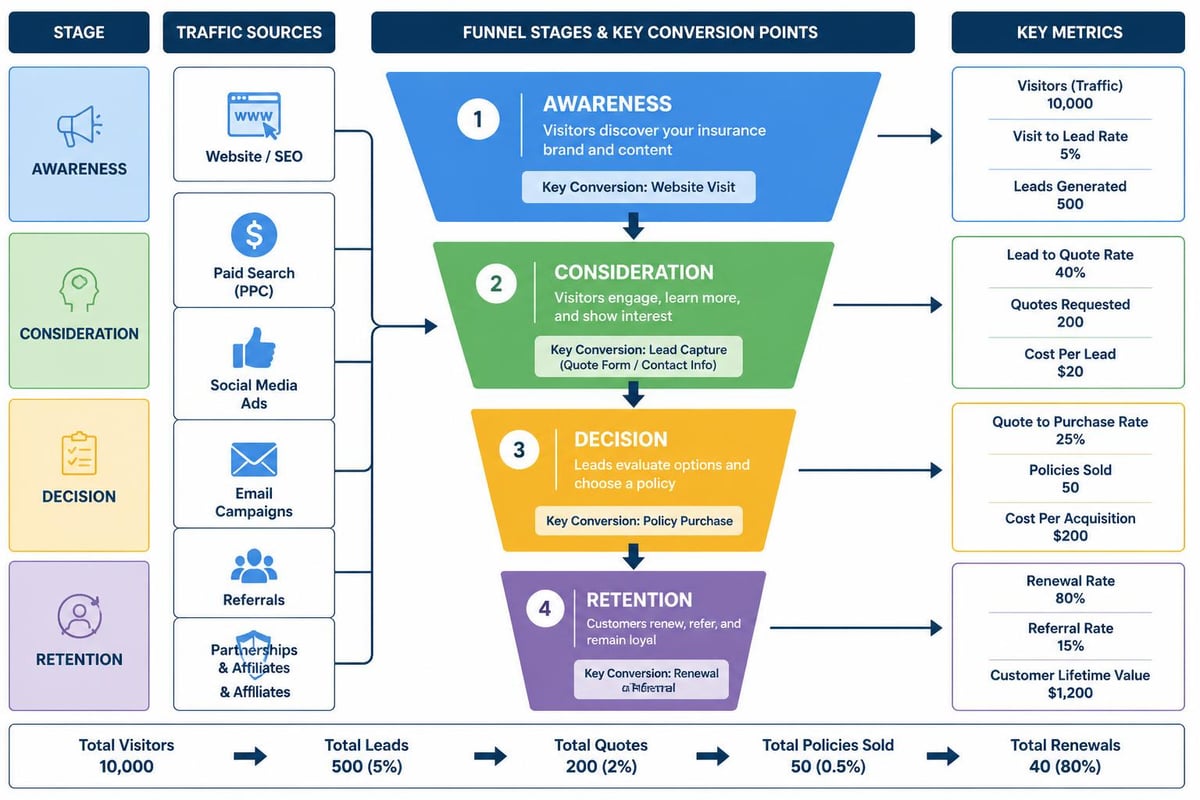
Understanding the customer journey from initial awareness to closed sale allows you to optimize each stage for maximum conversion.
Awareness Stage: Capturing Attention
At the top of the funnel, prospects don't know you exist. Your goal is creating enough value that they willingly exchange their contact information for something useful.
Effective lead magnets for insurance include:
- Free insurance needs assessment tools
- Coverage comparison calculators
- Downloadable guides on specific insurance topics
- Risk evaluation checklists
- Video training series on protecting assets
These resources should require an email address to access, allowing you to begin nurturing the relationship. Make sure your lead magnets address specific pain points and provide genuine value, not thinly veiled sales pitches.
Consideration Stage: Building Trust
Once someone enters your database, your mission is demonstrating why they should choose you over competitors. This stage requires consistent communication that educates while subtly highlighting your unique advantages.
Share case studies showing how you've helped similar clients. Explain your process for finding the best coverage at competitive rates. Highlight any specialized credentials, carrier relationships, or service guarantees that differentiate you.
Social proof becomes critically important during consideration. Testimonials, reviews, and success stories show prospects that others have trusted you and received excellent results. According to winning insurance lead generation strategies, leveraging client testimonials can significantly increase conversion rates.
Decision Stage: Converting to Customers
When prospects are ready to buy, remove every possible friction point. Make requesting quotes simple and fast. Respond immediately to inquiries. Offer multiple communication channels (phone, email, text, video chat) to match their preferences.
This stage requires persistence without pressure. Many prospects need multiple touchpoints before committing. Follow up consistently, but always provide value in each interaction rather than simply asking "are you ready to buy yet?"
| Funnel Stage | Goal | Key Metrics | Optimization Tactics |
|---|---|---|---|
| Awareness | Capture contacts | Traffic, conversion rate | A/B test lead magnets, improve page speed |
| Consideration | Build trust | Email open rates, engagement | Segment messaging, increase personalization |
| Decision | Close sales | Quote-to-sale ratio | Reduce response time, simplify application |
| Retention | Increase lifetime value | Policy renewals, cross-sells | Proactive service, annual reviews |
Measuring and Improving Your Lead Generation Results
What gets measured gets improved. Tracking the right metrics helps you identify which strategies deliver the best return on investment.
Essential Lead Generation Metrics
Don't just count total leads. Measure quality indicators that predict actual revenue:
- Cost per qualified lead: Total marketing spend divided by leads meeting your qualification criteria
- Lead-to-appointment ratio: Percentage of leads who schedule consultations
- Appointment-to-sale conversion: How many consultations result in policies sold
- Customer acquisition cost: Total cost to generate a paying customer
- Average policy value: Revenue per new customer
- Lifetime value: Total expected revenue from each client over their relationship with you
These metrics reveal which lead sources provide the best ROI. You might discover that Facebook leads cost less but convert poorly, while Google search leads cost more but have three times the conversion rate.
Attribution and Source Tracking
Understanding which marketing channels deserve credit for each sale allows you to allocate budget effectively. Implement tracking systems that follow prospects from their first interaction through purchase.
Use unique phone numbers for different campaigns. Create separate landing pages for each traffic source. Include source tracking in your CRM. This data shows the complete customer journey, revealing which touchpoints matter most.
Many sales require multiple touchpoints across several channels. Someone might discover you through a Google search, subscribe to your email list, see your Facebook ads, and finally call after receiving a targeted mail piece. Attribution modeling helps you understand how different channels work together.
Continuous Testing and Optimization
The most successful insurance lead generation programs never stop improving. Implement a systematic testing process:
- Identify a variable to test (headline, offer, targeting, creative)
- Create variations maintaining all other elements
- Split traffic evenly between versions
- Gather statistically significant data (usually 100+ conversions)
- Implement the winner and test the next variable
Small improvements compound over time. A 10% increase in landing page conversion rates, combined with a 15% improvement in email open rates, and a 20% boost in consultation-to-sale conversion creates exponentially better results.
Tools and platforms used in modern lead generation provide the analytics infrastructure needed to measure and optimize your insurance marketing effectively.
Compliance and Ethical Considerations
Generating insurance leads requires careful attention to regulatory requirements and ethical standards. Violations can result in significant penalties and damage to your reputation.
Data Privacy and Consumer Protection
Insurance marketing falls under numerous regulations including TCPA, CAN-SPAM, and state insurance codes. Before contacting prospects, ensure you have proper consent for your communication method.
Key compliance requirements:
- Obtain explicit consent before sending marketing texts or making automated calls
- Provide clear opt-out mechanisms in all email communications
- Maintain do-not-call compliance with federal and state registries
- Protect consumer data with appropriate security measures
- Disclose material information accurately in all marketing materials
Working with reputable lead sources becomes crucial. Verify that any purchased leads include proper consent documentation. The short-term gain from questionable lead sources isn't worth the long-term risk to your license and business.
Transparency in Marketing
Today's consumers value authenticity and transparency. Be honest about what you can deliver. Don't promise unrealistic savings or coverage that doesn't exist just to generate leads.
Building a sustainable insurance practice requires trust. One misleading advertisement might generate short-term leads, but it damages your reputation and creates customer service headaches when reality doesn't match promises.
Focus on your genuine strengths. If you specialize in complex commercial policies, emphasize that expertise. If you excel at helping families navigate life insurance, highlight those success stories. Authenticity attracts ideal clients who value what you actually offer.
Advanced Strategies to Get Insurance Leads in Competitive Markets
When basic tactics reach saturation, these advanced approaches help you stand out in crowded markets.
Niche Specialization
Rather than trying to serve everyone, consider specializing in a specific insurance niche. This focus allows you to develop deep expertise, create highly targeted content, and build a reputation as the go-to expert.
Potential niches include:
- Specific professions: Doctors, contractors, real estate investors
- Life situations: Families with special needs children, high-net-worth individuals
- Business types: Restaurants, technology companies, medical practices
- Coverage types: Classic car insurance, cyber liability, professional liability
Specialization makes your marketing more effective. You know exactly where your ideal prospects spend time online, what concerns keep them awake at night, and what language resonates with them. This precision dramatically improves conversion rates while reducing wasted marketing spend.
Retargeting and Multi-Touch Campaigns
Most prospects don't convert on their first interaction with your business. Strategic retargeting keeps you visible throughout their decision-making process.
Install tracking pixels on your website to build audiences of people who visited specific pages. Create retargeting ads that speak directly to the content they viewed. Someone who read your article about term life insurance sees ads offering a free needs assessment for life coverage.
Combine retargeting across multiple platforms. Someone might see your Facebook ad, receive a targeted email, encounter your Google display ad, and get a personalized mail piece, all reinforcing the same message. This coordinated approach creates the repetition needed to convert skeptical prospects.
Video Marketing and Webinars
Video content humanizes your business and explains complex insurance concepts more effectively than text. Create a YouTube channel addressing common insurance questions, host Facebook Live sessions, or produce short educational videos for social media.
Webinars work particularly well for commercial insurance and specialized personal lines. Host online workshops on topics like "Essential Insurance Coverage for Growing Businesses" or "Protecting Your Assets During Retirement." These events position you as an expert while generating highly qualified leads from attendees.
Recording and repurposing these videos extends their value. A single webinar becomes blog posts, social media clips, email content, and podcast episodes, maximizing your content creation investment.
Successfully generating insurance leads in 2026 requires combining digital marketing excellence, technological tools, relationship building, and constant optimization. The agents who thrive understand that quality trumps quantity and that today's prospects expect value-driven education before they're ready to buy. If you're ready to transform your insurance lead generation with advanced AI systems that identify qualified prospects and automate appointment booking, Adstra provides a guaranteed growth partnership model designed specifically to turn cold leads into ready-to-buy customers. Our transparent, results-driven approach aligns our success with yours, delivering predictable revenue growth without the typical agency overhead.