
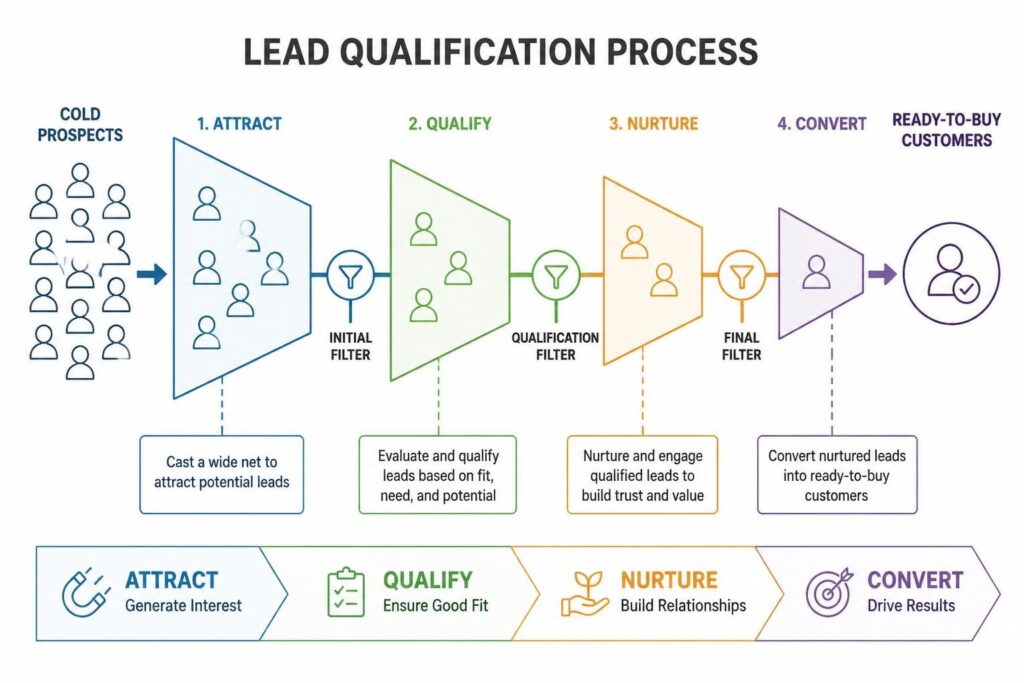
Finding the best leads isn't about collecting the most contacts or casting the widest net. It's about identifying prospects who genuinely need your solution, have the budget to invest, and are ready to make a buying decision. In 2026, businesses face increasing competition for attention, making lead quality more critical than revenue growth. The difference between struggling with low conversion rates and building a predictable sales pipeline comes down to one crucial factor: your ability to recognize and prioritize the best leads for your specific business model. This comprehensive guide will show you exactly how to identify high-quality prospects, implement proven qualification frameworks, and build systems that consistently deliver ready-to-convert opportunities.
Understanding What Makes the Best Leads
The best leads share specific characteristics that make them significantly more valuable than average prospects. These aren't just people who downloaded a whitepaper or attended a webinar. They're individuals or organizations actively searching for solutions, equipped with decision-making authority, and operating within your ideal customer profile.
Quality leads demonstrate these key attributes:
- Clear alignment with your ideal customer profile (ICP)
- Active engagement with your content and communications
- Budget authority or significant influence over purchasing decisions
- Demonstrated pain points that your solution addresses
- Timeline for implementation or purchase
According to Salesforce’s comprehensive lead generation guide, successful businesses focus on attracting leads that match their ideal buyer personas rather than pursuing volume-based strategies. This targeted approach yields conversion rates up to 300% higher than broad-spectrum lead generation.
The Financial Impact of Lead Quality
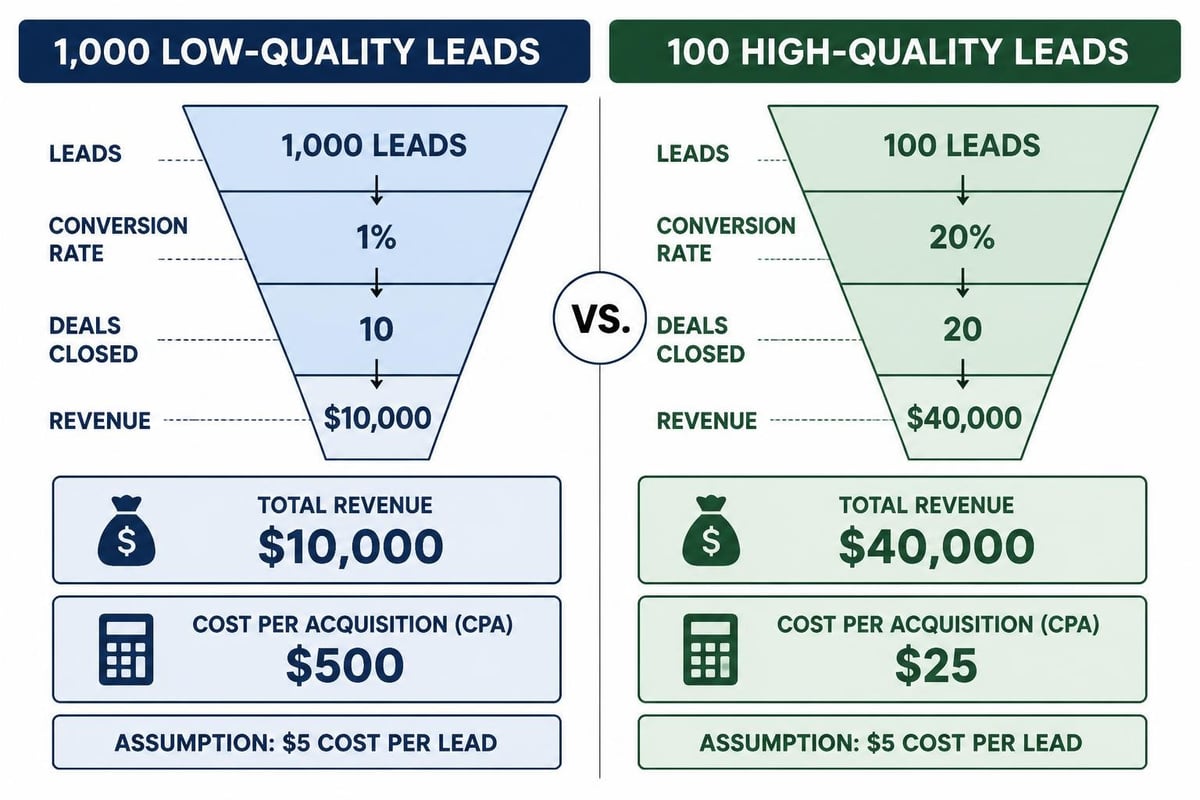
Consider this: acquiring 1,000 unqualified leads costs roughly the same as generating 100 highly qualified prospects, but the conversion dynamics tell a completely different story. Unqualified leads typically convert at 0.5-2%, meaning you might close 5-20 deals. The best leads convert at 15-30%, potentially delivering 15-30 sales from a smaller pool.
| Lead Type | Quantity | Conversion Rate | Deals Closed | Cost Per Deal |
|---|---|---|---|---|
| Low Quality | 1,000 | 1.5% | 15 | $333 |
| Best Leads | 100 | 20% | 20 | $250 |
| Premium Leads | 50 | 30% | 15 | $333 |
The mathematics favors quality every time. Effective lead generation strategies emphasize attracting the right audience rather than the largest audience, fundamentally changing how modern businesses approach growth.
Identifying Your Best Lead Sources
Not all lead sources produce equal results. The best leads typically come from channels where prospects demonstrate high intent and genuine interest in solving specific problems. Understanding which sources consistently deliver quality requires systematic tracking and analysis.
High-Intent Lead Channels
Referral networks consistently produce the best leads because they come pre-validated by trusted sources. When existing customers recommend your services, prospects arrive with established credibility and reduced skepticism. These leads convert 4-5 times faster than cold prospects.
Content marketing targeting specific pain points attracts prospects actively researching solutions. Someone reading a detailed guide about solving a particular business challenge is demonstrably more qualified than someone clicking a generic advertisement. For specialized industries, lead generation for IT companies requires technical content that demonstrates deep expertise.
Strategic partnerships and integrations create natural lead flow from complementary services. When you solve problems adjacent to another company's offerings, their customers become your best leads because they're already invested in similar solutions.
Measuring Source Quality
Track these metrics to identify which channels produce your best leads:
- Lead-to-opportunity conversion rate (percentage advancing to sales qualification)
- Opportunity-to-customer conversion rate (percentage closing as revenue)
- Average deal size per source
- Sales cycle length from first contact to closed deal
- Customer lifetime value (LTV) segmented by acquisition source
The 8-stage lead generation process outlined by CIENCE emphasizes tracking performance at every funnel stage, enabling data-driven optimization of your lead sources.
Building a Lead Scoring Framework
Lead scoring transforms subjective qualification into objective, repeatable processes. The best leads reveal themselves through behavioral signals and firmographic data that indicate genuine buying intent and strong product fit.
Demographic and Firmographic Scoring
Start by assigning point values based on how closely prospects match your ideal customer profile:
- Company size: Award maximum points for organizations within your sweet spot (typically based on employee count or revenue)
- Industry vertical: Prioritize sectors where you've achieved proven success
- Geographic location: Score higher for regions you actively serve
- Technology stack: Bonus points for companies using complementary solutions
- Growth indicators: Companies actively hiring or expanding represent better opportunities
Behavioral Engagement Scoring
Actions speak louder than demographics. The best leads demonstrate engagement patterns indicating active research and buying intent:
- Visiting pricing pages (20 points)
- Downloading case studies or ROI calculators (15 points)
- Attending webinars or product demonstrations (25 points)
- Requesting consultations or audits (30 points)
- Engaging with multiple team members (10 points per interaction)
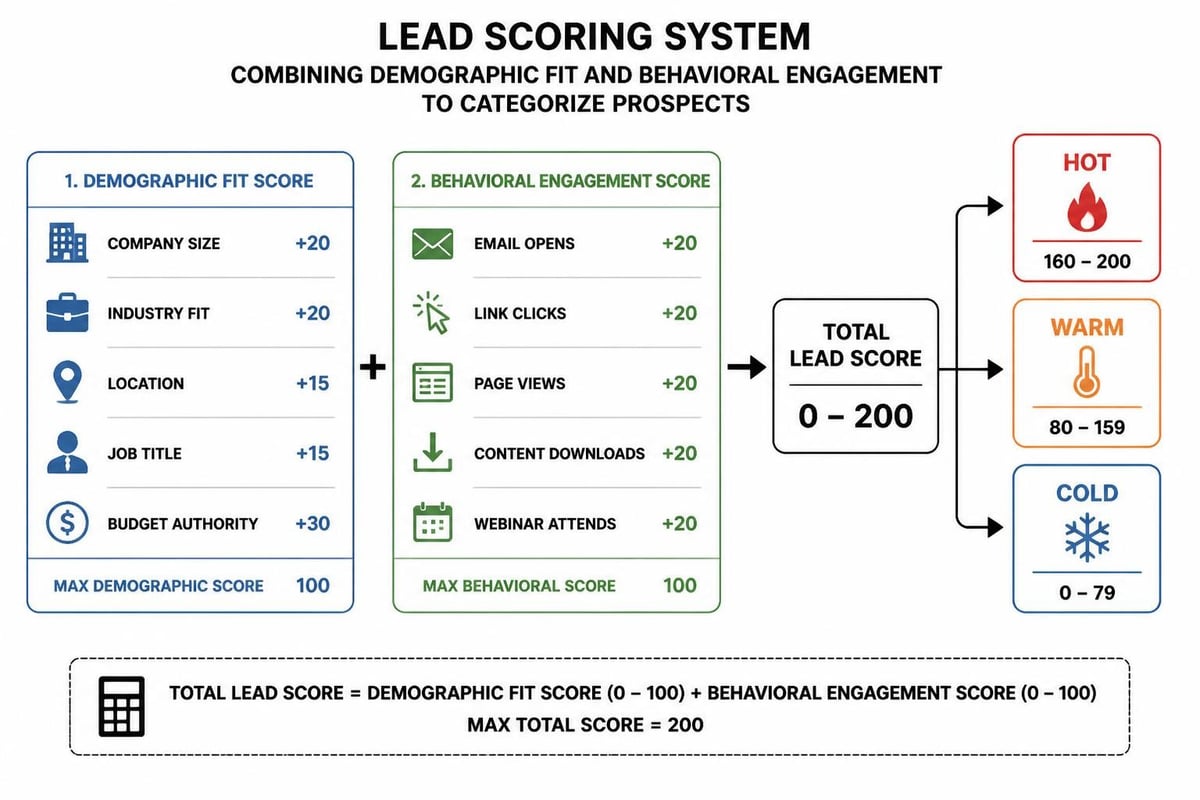
Understanding demand generation strategies helps you create content and campaigns that naturally attract high-scoring behaviors. When prospects engage deeply with educational content, they self-qualify as serious buyers.
Qualification Frameworks That Work
Multiple proven frameworks help sales teams identify the best leads quickly and consistently. Choosing the right methodology depends on your sales cycle complexity, average deal size, and organizational structure.
BANT: Budget, Authority, Need, Timeline
This classic framework remains effective for straightforward B2B sales:
- Budget: Does the prospect have allocated funds or can they access budget?
- Authority: Are you speaking with decision-makers or influencers?
- Need: Do they have a clear pain point your solution addresses?
- Timeline: When do they plan to implement a solution?
The best leads score positively on all four dimensions. Prospects missing even one element require nurturing before advancing to sales.
MEDDIC: More Sophisticated Enterprise Selling
For complex enterprise deals, MEDDIC provides deeper qualification:
- Metrics: Quantifiable business impact the prospect expects
- Economic Buyer: Identified individual with budget authority
- Decision Criteria: Understanding how they'll evaluate solutions
- Decision Process: Mapped timeline and approval requirements
- Identify Pain: Specific, urgent problems requiring solutions
- Champion: Internal advocate actively promoting your solution
According to research on B2B sales leads, enterprises using MEDDIC frameworks report 25-40% higher win rates because they focus resources on genuinely qualified opportunities.
CHAMP: The Modern Alternative
CHAMP reorders priorities for modern buying processes:
- Challenges: What specific problems are they trying to solve?
- Authority: Who makes the final decision?
- Money: What budget is available?
- Prioritization: How urgent is solving this problem?
This framework acknowledges that the best leads often emerge from urgent challenges rather than available budget. Pain-driven buying creates faster sales cycles and higher close rates.
Leveraging AI and Automation for Lead Quality
Advanced technology transforms how businesses identify and prioritize the best leads. AI-powered systems analyze thousands of data points to predict which prospects will convert, enabling sales teams to focus energy where it matters most.
Predictive Lead Scoring
Modern AI systems examine historical data from won and lost deals, identifying patterns that human analysts miss. These algorithms consider:
- Website behavior sequences that correlate with purchases
- Email engagement patterns of successful customers
- Content consumption that indicates buying stage
- Company growth signals from public data sources
- Social media activity suggesting active problem-solving
The best marketing platforms now incorporate predictive analytics as standard features, automatically flagging high-potential prospects for immediate follow-up.
Intent Data Integration
Third-party intent data reveals when prospects research solutions similar to yours across the web. Companies demonstrating search behavior around your keywords become identifiable as the best leads even before they visit your website.
Intent signals include:
- Reading competitor reviews and comparisons
- Downloading industry-specific research reports
- Attending virtual events about relevant topics
- Searching for implementation guides and best practices
- Engaging with thought leadership content
Combining intent data with your CRM creates powerful targeting opportunities. When a company matching your ICP shows active research behavior, they deserve immediate outreach with personalized messaging addressing their specific interests.
Creating Lead Magnets That Attract Quality
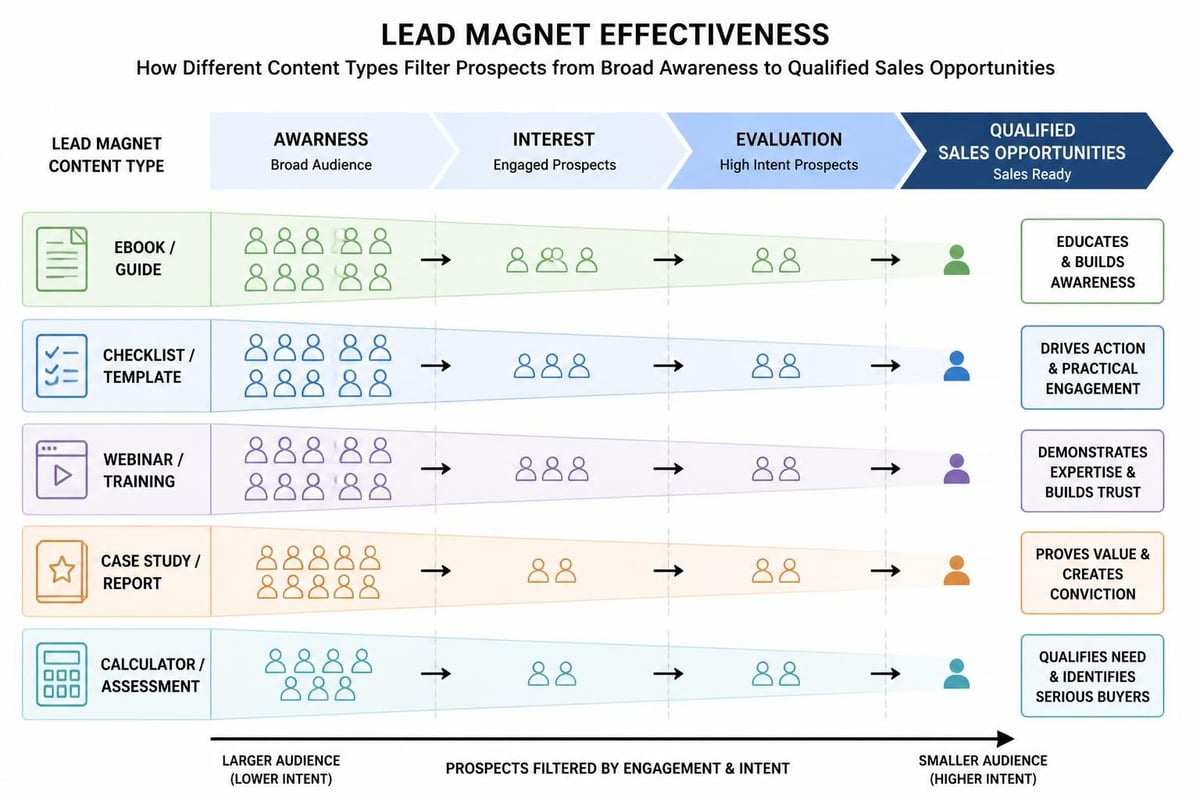
The best leads don't appear randomly. They respond to strategic content designed to attract serious buyers while filtering out casual browsers. Your lead magnets should require meaningful commitment, ensuring only genuinely interested prospects enter your pipeline.
High-Value Content Assets
Generic ebooks and basic checklists attract everyone, including unqualified prospects who'll never convert. Instead, create premium content addressing specific, advanced challenges:
- ROI calculators requiring detailed business information
- Customized audits or assessments analyzing their current situation
- Implementation roadmaps showing exactly how to achieve results
- Industry benchmarking reports requiring company data submission
These resources naturally filter for the best leads because only serious prospects invest time providing detailed information. Casual researchers bounce, leaving you with quality over quantity.
Webinar and Workshop Strategies
Live events create exceptional qualification opportunities. The best leads not only register but actually attend, ask questions, and engage with presented material.
Structure webinars to maximize qualification:
- Registration forms capturing firmographic data
- Pre-event surveys understanding specific challenges
- Interactive Q&A sessions revealing urgency and authority
- Post-event assessments measuring implementation intent
- Follow-up conversations scheduled during the event
According to lead generation best practices, webinar attendees convert at 2-3x the rate of download-only leads because they've demonstrated significant time commitment.
Optimizing Your Lead Nurturing Process
Even the best leads rarely convert immediately. Strategic nurturing transforms interested prospects into ready-to-buy customers by delivering relevant information at each decision stage.
Segmentation Strategies
Generic email campaigns waste opportunities with high-quality prospects. Segment the best leads into specialized nurture tracks:
- Industry-specific sequences addressing vertical challenges
- Role-based content speaking to different stakeholders
- Buying stage tracks matching their decision journey
- Engagement-triggered workflows responding to specific actions
- Account-based sequences for enterprise opportunities
Advanced segmentation requires robust data collection and CRM hygiene, but the conversion improvements justify the investment. Companies using sophisticated segmentation report 50-75% higher engagement rates.
Multi-Channel Nurturing
The best leads engage across multiple touchpoints. Effective nurturing combines:
| Channel | Purpose | Frequency | Content Type |
|---|---|---|---|
| Primary education | 2-3x monthly | Articles, case studies | |
| Professional engagement | Weekly | Industry insights | |
| Retargeting | Awareness reinforcement | Daily impressions | Success stories |
| Direct mail | High-value standout | Quarterly | Personalized gifts |
| Phone | Relationship building | As warranted | Consultative calls |
Understanding how to acquire leads across multiple channels creates redundancy in your system. When prospects miss one touchpoint, others maintain engagement momentum.
Aligning Sales and Marketing on Lead Definitions
Internal disagreement about what constitutes the best leads destroys revenue potential. Marketing generates opportunities that sales dismisses as unqualified, creating frustration, wasted resources, and missed revenue.
Service Level Agreements (SLAs)
Formal SLAs between marketing and sales teams establish mutual accountability:
Marketing commitments:
- Deliver X qualified leads monthly meeting agreed criteria
- Achieve minimum lead scores before sales handoff
- Provide complete context and interaction history
- Respond to sales feedback on lead quality
Sales commitments:
- Contact qualified leads within specified timeframes
- Follow prescribed nurturing and follow-up processes
- Provide detailed feedback on lead quality
- Update CRM with disposition and outcome data
Research from effective B2B lead generation strategies shows organizations with formal SLAs achieve 34% higher revenue growth than those without structured agreements.
Regular Quality Reviews
Schedule monthly meetings analyzing lead quality metrics:
- Review conversion rates by source and campaign
- Examine feedback on lead quality from sales team
- Analyze deals won and lost for pattern identification
- Adjust scoring criteria based on actual outcomes
- Refine ideal customer profile definitions
These sessions ensure your definition of the best leads evolves with market conditions, competitive dynamics, and product development. Static qualification criteria become obsolete as your business grows.
Conversion Rate Optimization for Lead Quality
Improving conversion rates often matters more than increasing lead volume. When you convert the best leads at higher rates, you achieve revenue goals with fewer total prospects, reducing acquisition costs and improving profitability.
Landing Page Best Practices
Your landing pages directly impact both lead quantity and quality. Optimization focuses on attracting the right visitors while discouraging poor fits:
- Specific value propositions clearly stating who benefits and how
- Qualification questions within forms filtering inappropriate prospects
- Social proof from similar customers reinforcing relevance
- Clear next steps setting expectations for the sales process
- Trust indicators including security badges and testimonials
Pages designed for the best leads deliberately sacrifice some volume for superior quality. A landing page converting at 8% with highly qualified prospects outperforms one converting at 15% with marginal fits.
Form Optimization
Progressive profiling balances information gathering with conversion rate optimization. Initial forms capture essential contact data plus one or two qualifying questions. Subsequent interactions collect additional details, building complete profiles without overwhelming prospects.
Essential initial questions:
- Company name and size
- Primary challenge or goal
- Timeline for solution implementation
Progressive profiling additions:
- Current solutions in use
- Budget parameters
- Decision-making process
- Additional stakeholders involved
The strategies outlined in practical lead generation strategies emphasize starting simple and adding complexity as relationships develop, maximizing conversions while gathering qualification data.
Measuring and Improving Lead Quality Over Time
Continuous improvement requires systematic measurement of lead quality metrics and willingness to adjust strategies based on data rather than assumptions.
Key Performance Indicators
Track these metrics monthly to understand lead quality trends:
- MQL to SQL conversion rate: Percentage of marketing qualified leads accepted by sales
- SQL to opportunity conversion rate: Leads advancing to active sales cycles
- Opportunity to customer conversion rate: Final close rate
- Average deal size by source: Revenue quality of different channels
- Sales cycle length: Time from first contact to closed deal
- Customer acquisition cost (CAC): Total investment per new customer
- Lead velocity rate: Month-over-month growth in qualified pipeline
Analyzing these metrics by source, campaign, and segment reveals which activities generate the best leads and deserve increased investment.
A/B Testing for Quality Improvement
Systematic testing optimizes every element of your lead generation:
- Offer testing: Compare different lead magnets for conversion and quality
- Messaging variations: Test value propositions appealing to different personas
- Form length experiments: Balance conversion rate against qualification depth
- Follow-up timing: Determine optimal contact cadence for different segments
- Content format testing: Identify which formats attract your best leads
Document all tests and results in a centralized system. Small incremental improvements compound over time, dramatically improving overall lead quality. Businesses committed to continuous testing report 20-30% annual improvements in conversion efficiency.
Common Mistakes That Repel the Best Leads
Even sophisticated organizations make fundamental errors that drive away high-quality prospects while attracting poor fits.
Overlooking Response Time
The best leads expect prompt, professional responses. Studies consistently show contact within five minutes of inquiry increases conversion likelihood by 900% compared to 30-minute delays. Yet many companies take hours or days to respond, allowing competitors to capture opportunities.
Implement automated acknowledgment systems confirming receipt of inquiries while routing to appropriate sales representatives. For the highest-value prospects, consider premium response protocols guaranteeing immediate contact.
Generic, Impersonal Communication
High-quality prospects expect personalized engagement reflecting their specific situations. Generic email templates, boilerplate proposals, and one-size-fits-all presentations signal low value and limited expertise.
Invest in understanding each prospect's unique context before initiating contact. Reference specific challenges they face, mention industry trends affecting their business, and customize recommendations based on their situation. This approach resonates with the best leads while efficiently filtering those seeking commodity solutions.
Neglecting Lead Nurturing
Approximately 50% of the best leads aren't ready to buy immediately but will purchase within 18 months. Companies focusing exclusively on immediate opportunities abandon massive revenue potential.
Build comprehensive nurturing programs maintaining engagement with prospects across extended decision cycles. Provide ongoing value through education, industry insights, and relationship development. When these leads reach buying readiness, you've established trusted advisor status rather than starting from scratch.
Identifying and converting the best leads requires strategic thinking, systematic processes, and commitment to quality over quantity. By implementing proven qualification frameworks, leveraging modern technology, and continuously optimizing your approach, you create predictable revenue growth fueled by high-quality prospects genuinely ready to buy. Aletto specializes in transforming these strategies into reality, using advanced AI systems to generate qualified sales leads and automate appointment bookings that fill your pipeline with ready-to-convert opportunities. Our guaranteed growth partnership model ensures we're invested in your success, delivering the best leads that drive measurable revenue growth for your business.