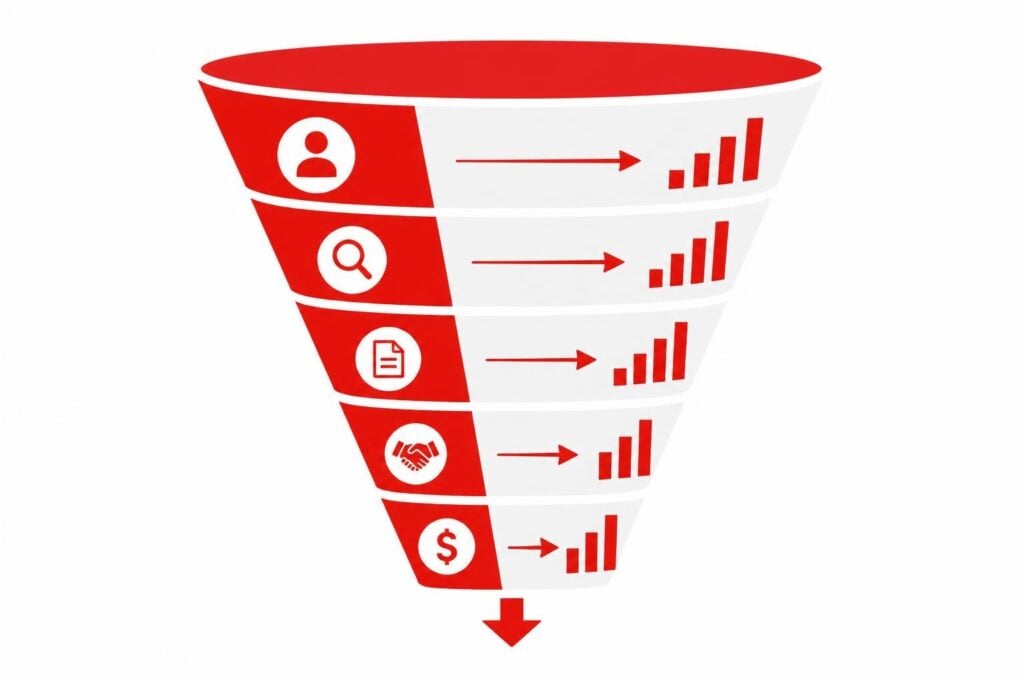
A pipeline funnel is a visual model that tracks prospects through sequential sales stages from first contact to closed deal, quantifying opportunities and conversion rates at each step. For B2B sales teams, the pipeline funnel serves as both a forecasting tool and a diagnostic instrument, revealing where prospects stall, which stages need improvement, and what revenue leaders can expect in coming quarters.
The term combines two related concepts: the sales pipeline (a linear view of all active opportunities) and the sales funnel (a conversion-focused view of how prospects narrow at each stage). Together, they create a framework that modern revenue teams use to organize their selling process, allocate resources, and identify bottlenecks before they damage quarterly numbers.
Why Do B2B Sales Teams Need a Pipeline Funnel?
Sales teams operating without a structured pipeline funnel are flying blind. They chase random opportunities, cannot predict next month's revenue, and lack visibility into what actually converts prospects into customers.
The pipeline funnel solves three critical problems. First, it creates predictable revenue forecasting by quantifying exactly how many opportunities exist at each stage and what percentage typically converts. Second, it identifies process bottlenecks by revealing which stages have abnormally low conversion rates or extended cycle times. Third, it enables resource optimization by showing where sales reps should focus their time for maximum impact.
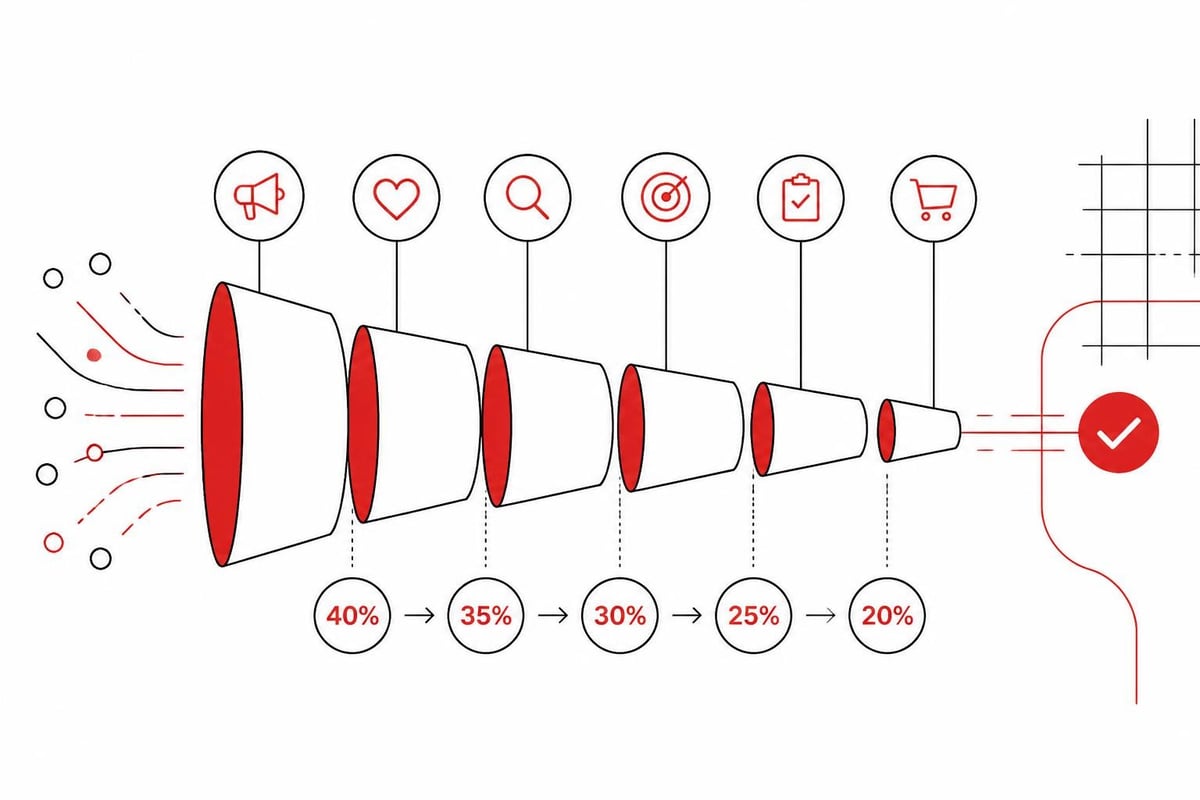
Consider a B2B SaaS company selling project management software. Without a pipeline funnel, their sales team knows they have "a bunch of demos scheduled" but cannot answer basic questions: How many demos typically become trials? What percentage of trials convert to paid accounts? How long does each stage take? With a properly instrumented pipeline funnel, they know that 100 discovery calls yield 40 demos, 40 demos produce 15 trials, and 15 trials convert to 5 customers over an average 47-day cycle.
According to Forrester’s research on business buying behavior, 67% of B2B buyers prefer to research independently before engaging sales, making the early funnel stages more critical than ever. Your pipeline must account for self-service research, content engagement, and digital touchpoints before traditional sales activities begin.
The Anatomy of an Effective Pipeline Funnel
A functional pipeline funnel requires specific components working together. You need clearly defined stages with entry and exit criteria, measurable conversion rates between stages, average time spent in each stage, and total opportunity value at each level.
Essential pipeline funnel components:
- Stage definitions: Precise criteria for what qualifies a prospect to enter each stage
- Conversion metrics: Historical percentage of prospects advancing from each stage to the next
- Velocity tracking: Average days prospects spend in each stage before advancing or dropping
- Value quantification: Total dollar amount of opportunities currently in each stage
- Activity requirements: Specific actions reps must complete before advancing a prospect
Most B2B pipeline funnels contain 5-7 stages. Fewer stages create ambiguity; more stages create administrative burden without analytical value. Common stages include: Lead (unqualified contact), Marketing Qualified Lead (MQL), Sales Qualified Lead (SQL), Opportunity (active deal), Proposal, Negotiation, and Closed Won.
The difference between a pipeline and a funnel becomes important here. The pipeline shows all opportunities in progress (your current inventory of deals). The funnel shows conversion rates as prospects narrow through stages (your efficiency at moving deals forward). Both views matter. A healthy pipeline full of stalled opportunities indicates funnel problems. An efficient funnel with few opportunities indicates pipeline generation problems.
How Do You Build a Pipeline Funnel That Actually Works?
Building an effective pipeline funnel starts with mapping your actual buyer journey, not copying a template. Shadow 10 recent deals from first contact through close. Document every touchpoint, decision point, and milestone. Identify natural breakpoints where prospects demonstrate increased commitment or readiness.
Step-by-step pipeline funnel construction:
- Map the real journey: Document how your last 20 customers actually bought, not how you wish they bought
- Define stage gates: Establish objective criteria for advancing (meeting scheduled, budget confirmed, technical evaluation completed)
- Set baseline metrics: Calculate current conversion rates and cycle times using historical data
- Assign ownership: Determine whether marketing, SDRs, or AEs own each stage
- Instrument tracking: Configure your CRM to capture stage changes, timestamps, and activity completions
- Establish review cadence: Schedule weekly pipeline reviews to inspect stage health and forecast accuracy
The most common mistake is creating stages based on seller actions rather than buyer commitment. A stage called "Demo Completed" describes what your rep did, not where the buyer stands. A stage called "Solution Fit Confirmed" describes buyer progress. This distinction matters because pipeline funnels should track buyer advancement, not seller activity.
For B2B companies selling complex solutions, the pipeline funnel must account for multiple decision-makers and extended evaluation periods. A single "Opportunity" stage is insufficient when deals involve technical validation, security reviews, legal negotiations, and procurement processes. Your funnel stages should mirror the actual decision-making structure your prospects navigate.
Common Pipeline Funnel Mistakes That Kill Revenue
The biggest pipeline funnel error is optimistic stage advancement. Reps move opportunities forward based on hope rather than evidence. They mark a prospect as "Proposal" after sending a proposal, even though the buyer never confirmed budget or timeline. This creates a bloated pipeline full of dead deals that destroy forecast accuracy.
Revenue-killing funnel mistakes:
- Stage skipping: Advancing prospects without completing required activities or obtaining commitments
- Zombie opportunities: Keeping stalled deals in the pipeline to inflate forecasts rather than closing them as lost
- Inconsistent definitions: Allowing different reps to interpret stage criteria differently
- No exit velocity: Failing to measure how long deals sit in each stage before dying
- Top-funnel neglect: Obsessing over late-stage deals while ignoring declining early-stage volume
Aletto has observed this pattern across hundreds of B2B clients: companies focus entirely on closing current opportunities while their top-of-funnel lead generation atrophies. Three months later, they face a pipeline crisis because they stopped feeding new prospects into early stages. Our research on B2B SaaS lead generation shows that consistent top-funnel activity matters more than late-stage optimization for long-term revenue stability.
Another critical mistake is treating the pipeline funnel as a reporting tool rather than a diagnostic instrument. The funnel should tell you where to fix your sales process. If 60% of opportunities die at the proposal stage, you have a pricing problem, a qualification problem, or a differentiation problem. The funnel identifies the symptom; your job is diagnosing and fixing the disease.
Harvard Business Review’s analysis of sales funnel limitations argues that traditional funnels over-simplify complex B2B buying journeys and ignore how buyers move non-linearly through evaluation. This is valid criticism. Your pipeline funnel should accommodate backwards movement, re-engagement, and multi-threading with different stakeholders, not force-fit reality into a linear model.
What Metrics Actually Matter in Your Pipeline Funnel?
Track too many metrics and you drown in data. Track too few and you miss critical signals. The right pipeline funnel metrics balance leading indicators (what predicts future results) and lagging indicators (what actually happened).
Start with stage conversion rates: the percentage of prospects advancing from each stage to the next. If your SQL-to-Opportunity conversion is 35%, you know that 100 SQLs will yield approximately 35 opportunities. This enables mathematical forecasting. When conversion rates drop, you know exactly where the process broke.
| Metric | What It Measures | Target Benchmark | Why It Matters |
|---|---|---|---|
| Stage Conversion Rate | % advancing to next stage | Varies by stage | Identifies bottlenecks and process failures |
| Win Rate | % of opportunities closing | 20-35% for B2B | Overall funnel efficiency and deal quality |
| Average Deal Size | Revenue per closed deal | Industry dependent | Revenue capacity and targeting accuracy |
| Sales Cycle Length | Days from lead to close | 30-180+ days B2B | Velocity and forecasting precision |
| Pipeline Coverage | Pipeline value ÷ quota | 3-5x quota | Whether you have enough to hit targets |
Sales velocity combines multiple metrics into a single number representing how quickly you generate revenue. The formula is: (Number of Opportunities × Average Deal Value × Win Rate) ÷ Sales Cycle Length. Improving any variable increases velocity. This metric matters more than pipeline size because a smaller, faster-moving pipeline often produces more revenue than a large, stagnant one.
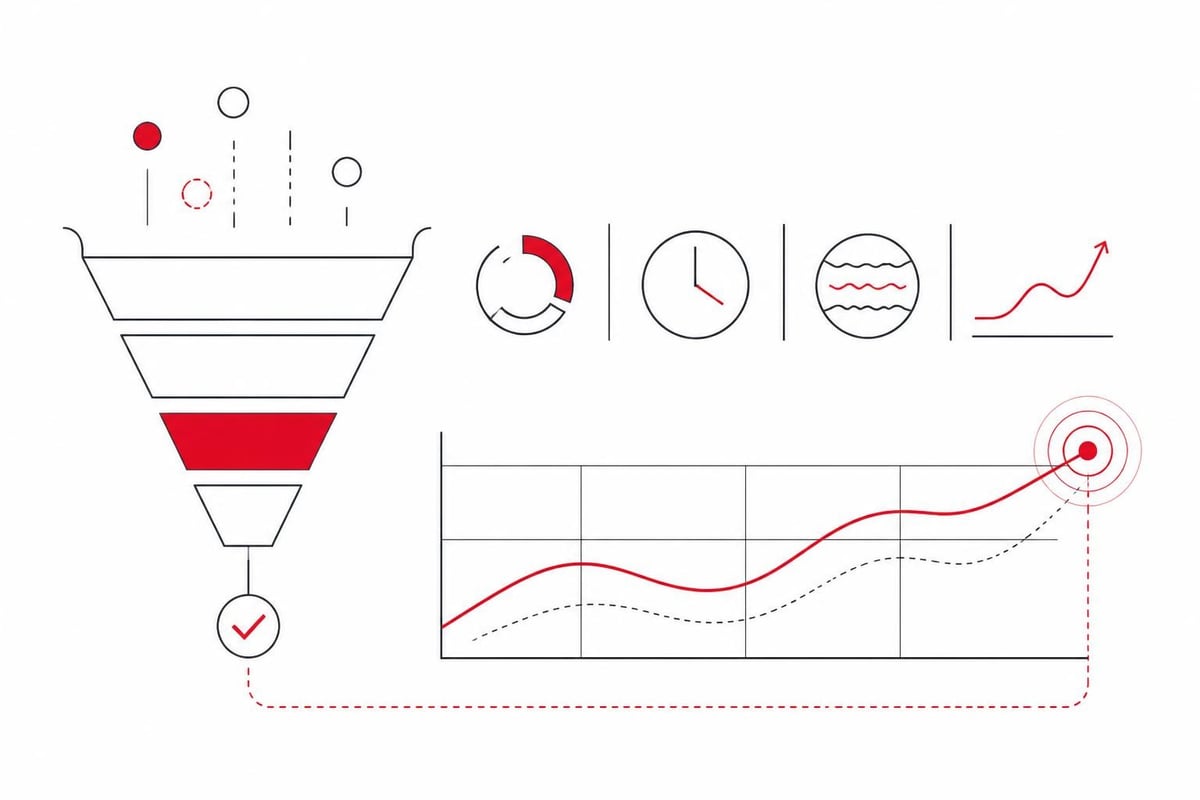
Pipeline coverage ratio tells you if you have enough opportunities to hit quota. The formula is: Total Pipeline Value ÷ Revenue Target. Most B2B teams need 3-5x coverage because only 20-30% of opportunities close. If your team has a $1M quarterly quota and a 25% win rate, you need $4M in pipeline. Falling below 3x coverage is an early warning signal that you will miss targets.
Watch for stage duration anomalies. If deals typically spend 14 days in "Proposal" but you have three opportunities stuck there for 45+ days, those deals are dying. Either force a decision meeting or mark them closed-lost. Stalled deals consume rep mental energy and distort forecasts without contributing to revenue.
The mistake here is tracking everything your CRM can measure. Focus on metrics that drive decisions. Conversion rates tell you where to improve process. Velocity tells you if improvements are working. Coverage tells you if you are generating enough top-funnel volume. Everything else is noise.
How Do You Fix a Broken Pipeline Funnel?
Diagnosis precedes treatment. Run a pipeline funnel audit by calculating conversion rates for each stage over the past 90 days. Identify the stage with the lowest conversion rate. That is where you start fixing.
If early-stage conversion is the problem (MQL to SQL or SQL to Opportunity), you have a lead quality or qualification issue. Your marketing is generating volume but not intent, or your SDRs are advancing unqualified prospects to protect their activity metrics. Tighten your lead scoring criteria and require stronger qualification evidence before advancing prospects.
If mid-funnel conversion suffers (Opportunity to Proposal), you have a discovery or fit issue. Reps are creating opportunities with prospects who do not have budget, authority, need, or timeline. Implement MEDDIC or BANT qualification frameworks and do not advance opportunities until reps can answer every question.
If late-funnel conversion fails (Proposal to Close), you have a value proposition, pricing, or competitive issue. Prospects like you enough to request proposals but not enough to buy. This requires messaging work, better competitive positioning, or pricing adjustments. Record proposal calls and analyze exactly where prospects disengage.
Fixing funnel conversion by stage:
- Top-funnel (Lead to MQL): Improve targeting, content relevance, and lead source quality
- Early-funnel (MQL to SQL): Tighten qualification criteria and response time
- Mid-funnel (SQL to Opportunity): Strengthen discovery process and fit assessment
- Late-funnel (Opportunity to Close): Sharpen value proposition and handle objections better
Velocity problems require different fixes than conversion problems. If conversion rates are acceptable but deals take too long, you need to remove friction. Identify steps that add time without adding value: unnecessary approval layers, extended evaluation periods, or delayed proposal delivery. Cut them.
Many B2B companies have discovered that traditional outbound approaches like cold calling and cold emailing no longer work effectively. When your pipeline funnel shows declining top-funnel volume or increasing cost per SQL, it is time to rethink your lead generation approach entirely.
How Does AI Change the Pipeline Funnel?
Artificial intelligence transforms pipeline funnels from manual tracking systems into predictive engines. Modern AI analyzes thousands of deal characteristics (industry, company size, engagement patterns, stakeholder count, competitive presence) to predict which opportunities will close and which will stall.
AI applications in pipeline management:
- Lead scoring: Machine learning models predict conversion likelihood based on firmographic, behavioral, and engagement data
- Next best action: AI recommends specific activities reps should complete to advance each opportunity
-
- Churn prediction: Algorithms identify opportunities at risk of stalling before reps notice warning signs
- Automated follow-up: AI systems nurture prospects through early funnel stages without human intervention
- Forecast accuracy: Predictive models calculate close probability more accurately than rep gut feel
At Aletto, we have integrated AI follow-up into the pipeline funnel to maintain engagement without overwhelming sales reps. When a prospect downloads content or attends a webinar but is not ready for a sales conversation, AI systems continue nurturing through personalized sequences until the prospect demonstrates buying intent. This keeps opportunities warm without consuming rep capacity.
The AI sales funnel approach we have implemented automates qualification, booking, and early-stage nurturing, allowing human reps to focus exclusively on high-intent opportunities in mid and late funnel stages. This dramatically improves funnel efficiency because reps spend zero time on prospects who will not buy in the current quarter.
One practical AI application is automated booking. When a prospect reaches specific engagement thresholds (visited pricing page 3 times, spent 10+ minutes on case studies, opened 5 emails), the AI system sends a booking link with personalized context. Qualified prospects self-schedule without requiring SDR outreach. Aletto uses this exact approach to book qualified calls without cold outreach, fundamentally changing how the top of the pipeline funnel operates.
Content Marketing Institute’s research on funnel measurement demonstrates how content consumption patterns predict funnel advancement. AI systems can track these patterns across hundreds of prospects simultaneously and trigger appropriate responses based on behavioral signals.
How Do You Integrate Pipeline Funnel with Revenue Operations?
The pipeline funnel should not exist in isolation. It must integrate with marketing automation, customer success platforms, and financial forecasting systems to create a complete revenue operations view.
Marketing owns top-funnel stages (Lead to MQL). Sales development owns early-funnel qualification (MQL to SQL). Account executives own mid and late-funnel stages (SQL through Close). Customer success owns expansion opportunities post-sale. Each team needs visibility into adjacent stages to ensure smooth handoffs.
Cross-functional pipeline integration:
- Marketing-to-Sales: MQL criteria, lead routing rules, and attribution models
- Sales-to-Success: Customer onboarding triggers, expansion signals, and health scores
- Finance-to-Sales: Forecast models, pipeline coverage requirements, and quota setting
- Product-to-Revenue: Usage data informing expansion opportunities and churn risk
The handoff from marketing to sales represents the highest-risk funnel transition. SEMrush’s guide to content marketing funnels provides frameworks for aligning content strategy with pipeline stages, ensuring marketing produces assets that actually advance prospects through the funnel.
Define service level agreements (SLAs) for each transition point. Marketing commits to delivering X MQLs with Y% SQL conversion. Sales commits to contacting MQLs within Z minutes and advancing SQLs to Opportunity within W days. These SLAs create accountability and prevent prospects from falling through cracks between teams.
Revenue operations teams should conduct weekly pipeline reviews examining not just volume and value, but also stage health, conversion trends, and velocity changes. When stage conversion rates decline 10%+ from baseline, treat it as a crisis requiring immediate investigation and correction.
Aletto's approach to filling sales calendars addresses the critical top-of-funnel challenge that most pipeline reviews ignore: consistent lead generation. Traditional methods rely on cold outreach that no longer works, creating feast-or-famine pipeline patterns. By integrating paid acquisition, AI follow-up, and automated booking into a single system, we create predictable top-funnel flow that keeps the entire pipeline funnel healthy.
What Advanced Pipeline Funnel Techniques Separate Winners from Losers?
Basic pipeline management is table stakes. Advanced techniques include multi-threading (engaging multiple stakeholders within a single opportunity), deal progression scoring (quantifying how quickly opportunities are advancing), and cohort analysis (comparing funnel performance across different segments, time periods, or sources).
Multi-threading prevents deals from dying when your champion leaves the company or loses political capital. For each opportunity, identify and engage technical buyers, economic buyers, end users, and influencers. Track engagement across all contacts. Deals with 3+ engaged stakeholders close 2-3x more frequently than single-threaded opportunities.
Deal progression scoring goes beyond static stage conversion. It measures actual advancement velocity. An opportunity that moved from SQL to Demo in 5 days (fast) scores higher than one that took 21 days (slow), even though both are in the same stage. Fast-moving deals predict closes; slow-moving deals predict losses.
Cohort analysis reveals which lead sources, industries, company sizes, or campaigns produce the best pipeline funnel performance. Instead of treating all opportunities identically, segment by source and track separately. You might discover that opportunities from paid search convert at 35% while webinar leads convert at 18%. This insight should shift budget allocation.
| Analysis Type | What It Reveals | Action It Enables |
|---|---|---|
| Multi-Threading | Stakeholder engagement breadth | Prioritize deals with multiple champions |
| Progression Scoring | Deal advancement velocity | Focus reps on fast-moving opportunities |
| Cohort Analysis | Source/segment performance | Reallocate budget to high-converting channels |
| Loss Analysis | Why deals fail by stage | Fix specific process or positioning gaps |
| Win/Loss Timing | When decisions happen | Optimize outreach timing and follow-up cadence |
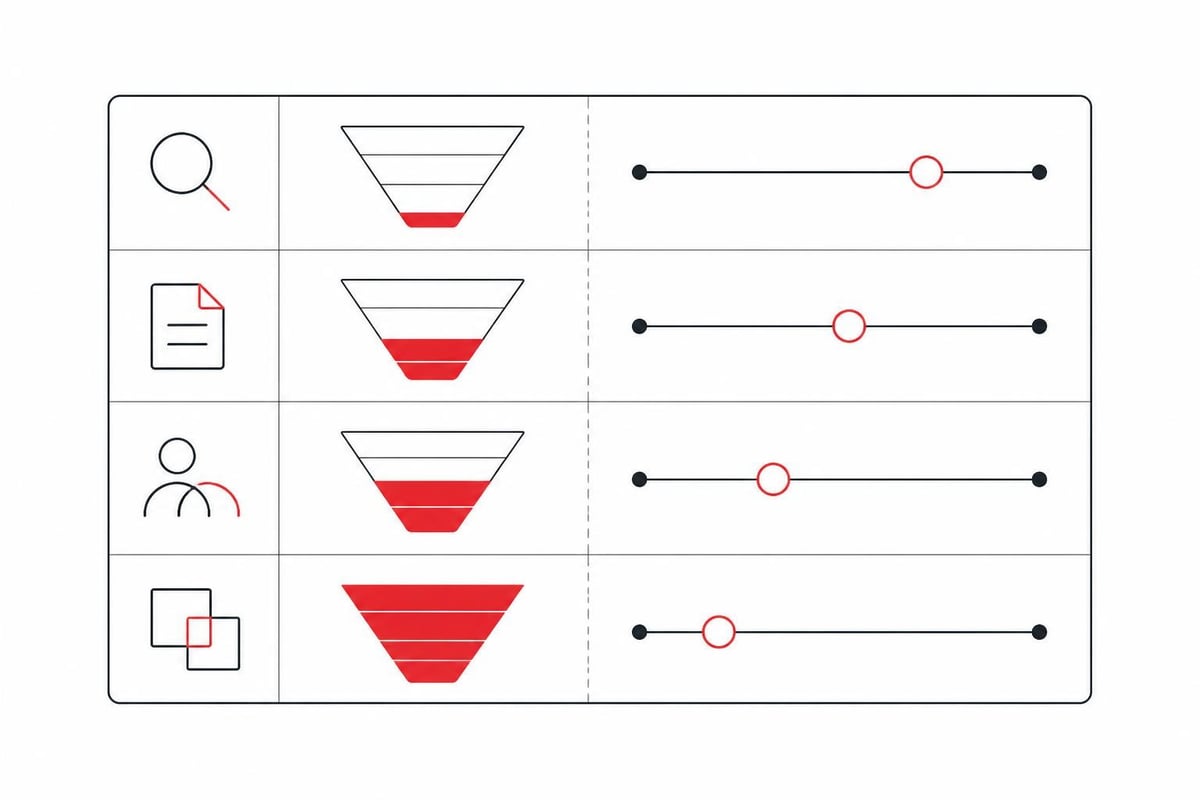
Loss analysis is criminally underused. When opportunities close-lost, most teams shrug and move on. Winners conduct post-mortem interviews to understand exactly why they lost. Were you too expensive? Did a competitor have better features? Was timing wrong? Did the prospect lack budget? Each loss reason suggests a different fix. Price losses require value justification improvement. Feature losses require product roadmap adjustments. Timing losses require better qualification to avoid wasting time on prospects not ready to buy.
The most sophisticated teams implement algorithmic approaches to funnel optimization, using multivariate testing and experimental design to identify which process changes actually improve conversion. This moves beyond opinions into statistical validation of what works.
Frequently Asked Questions
What is the difference between a sales pipeline and a sales funnel?
A sales pipeline is an inventory view showing all active opportunities and their current stage, while a sales funnel is a conversion view showing how prospects narrow as they progress through stages. The pipeline answers "what deals do we have?" while the funnel answers "how efficiently do we convert?" Both perspectives are necessary for effective sales management.
How many stages should a B2B pipeline funnel have?
Most effective B2B pipeline funnels contain 5-7 stages, balancing granularity with simplicity. Fewer stages create ambiguity about where prospects actually stand; more stages create administrative burden without analytical benefit. Define stages based on meaningful buyer commitment milestones rather than seller activities, and ensure each stage has objective entry and exit criteria.
What is a healthy pipeline coverage ratio?
B2B sales teams typically need 3-5x pipeline coverage, meaning total pipeline value should be 3-5 times your revenue quota. This accounts for average win rates of 20-30%. Calculate your specific coverage requirement by dividing 1 by your historical win rate. If you close 25% of opportunities, you need 4x coverage to reliably hit quota.
How do you fix a stalled pipeline funnel?
Identify which stage has the lowest conversion rate using 90-day historical data, then diagnose the root cause. Top-funnel problems require better targeting or lead quality. Mid-funnel problems indicate qualification or discovery issues. Late-funnel problems suggest value proposition or competitive weaknesses. Fix the biggest bottleneck first before addressing secondary issues, and measure improvements weekly.
Can AI really improve pipeline funnel performance?
Yes, when implemented strategically. AI improves pipeline funnels through predictive lead scoring, automated nurturing that maintains engagement without consuming rep time, intelligent routing that matches prospects with appropriate reps, and next-best-action recommendations based on thousands of similar deals. The key is using AI to augment human judgment, not replace it entirely, especially in complex B2B sales.
The pipeline funnel remains the fundamental framework for B2B revenue predictability, but only when properly instrumented, honestly managed, and continuously optimized based on real conversion data. Most companies suffer from top-of-funnel anemia because traditional cold outreach and event-based lead generation no longer deliver consistent results. If your pipeline coverage is declining or your early-stage conversion rates are dropping, it is time to rethink your entire lead generation approach. Aletto has developed a system that addresses this exact problem by integrating paid acquisition, AI follow-up, and automated booking to fill B2B sales calendars without cold outreach or events. Our free AI call booking report shows how we booked 1,122 qualified sales calls in 11 months, demonstrating what becomes possible when you replace hope-based pipeline building with systematic lead generation. Get the report at https://go.aletto.ai/saasreport and see the specific tactics producing consistent top-funnel flow.