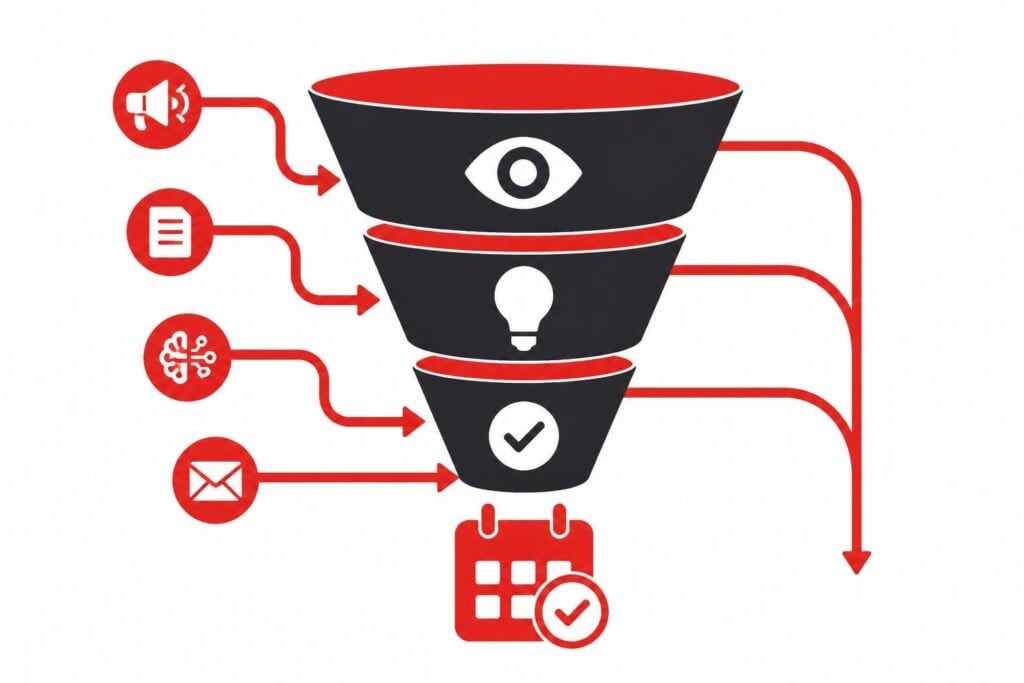
SaaS demand generation creates and nurtures interest in your software across the entire buyer journey, from awareness through closed deals, using education, trust-building, and multi-channel engagement instead of cold pitches. It differs from lead generation by focusing on market education and relationship-building before capture, ensuring prospects understand their problem and your unique solution. The post-pandemic B2B landscape has made traditional outbound tactics less effective, making demand generation strategies essential for companies that want predictable pipeline without burning out their teams on cold emails and LinkedIn spam.
The shift matters because buyers now complete 70% of their research before talking to sales. SaaS companies that invest in demand generation see longer sales cycles but higher conversion rates, better customer retention, and lower acquisition costs over time.
What makes SaaS demand generation different from traditional lead generation?
Traditional lead generation focuses on capturing contact information and passing it to sales as quickly as possible. SaaS demand generation builds a relationship with your market before anyone fills out a form.
The distinction is timing and intent. Lead generation asks "how do we get more names?" while demand generation asks "how do we make our market actively want what we sell?" One optimizes for volume, the other for readiness and quality.
The fundamental components of demand generation
Effective saas demand generation requires four interconnected elements working together:
- Market education: Teaching prospects about the problem you solve, not just your product features
- Multi-channel presence: Meeting buyers where they research, including organic search, paid channels, and community spaces
- Nurture infrastructure: Automated follow-up systems that provide value over weeks or months
- Attribution and feedback loops: Understanding which touchpoints actually drive pipeline
Most B2B SaaS companies fail at demand generation because they skip market education entirely. They jump straight to product demos and feature comparisons before prospects even understand why the status quo is broken.
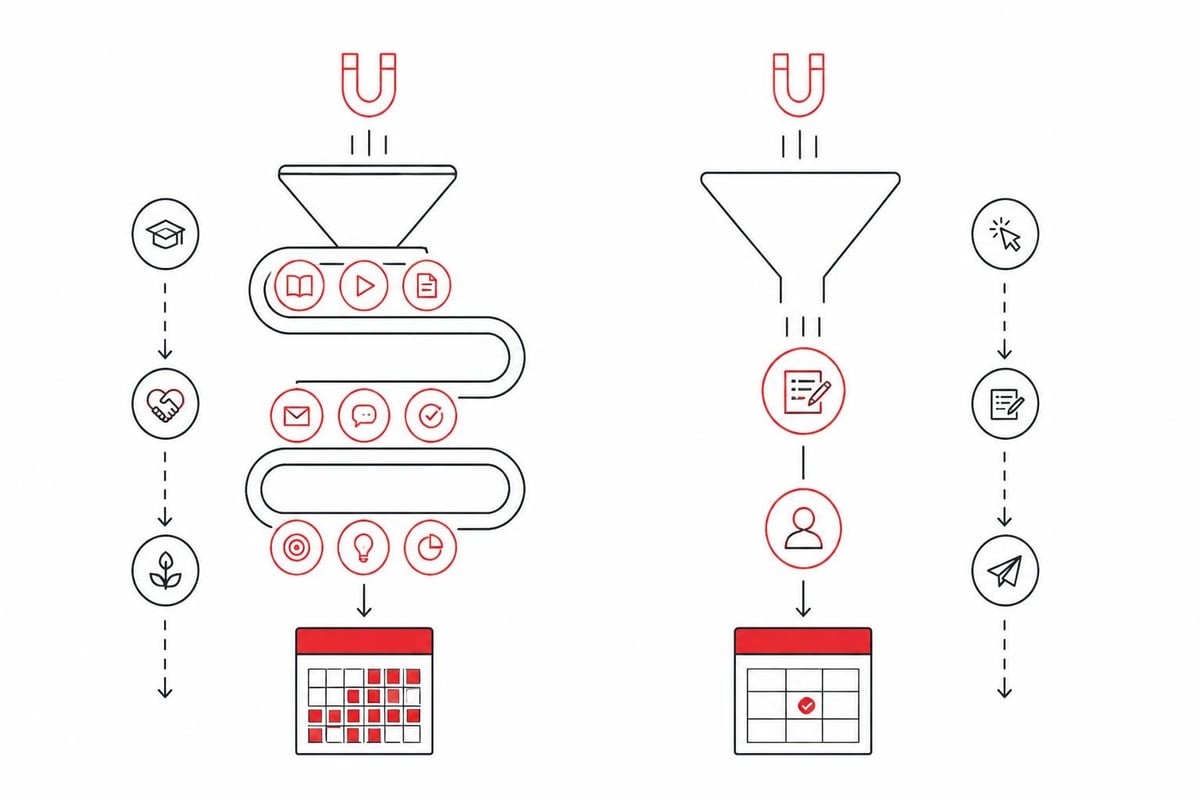
Consider a marketing automation SaaS targeting e-commerce brands. Lead generation runs ads promising "10X your email revenue" and sends everyone who clicks to a demo form. Demand generation publishes research on deliverability trends, hosts a workshop on segmentation strategy, nurtures attendees with case studies, and only then invites qualified prospects to book time.
The second approach takes longer but produces prospects who understand their problem, trust your expertise, and arrive at sales conversations ready to buy.
How do you build a demand generation engine that actually fills pipeline?
Building a saas demand generation system starts with understanding your buyer's research journey, then creating assets and automation for each stage. Most companies over-invest in top-of-funnel content and under-invest in middle-funnel nurture, where deals are actually won or lost.
Map the actual buyer journey for your category
Start by interviewing 10 recent customers about how they discovered their problem, what they researched, and which content influenced their decision. You will find patterns that contradict your assumptions.
Key questions to ask in buyer interviews:
- When did you first realize you needed a solution like ours?
- What did you search for or read in the first week?
- Which competitor or alternative did you consider most seriously?
- What convinced you we were different or better?
- How long between first awareness and booking a demo?
Aletto conducted this research across 47 B2B SaaS customers in Q4 2025 and found the average consideration period was 6.3 weeks, with prospects consuming an average of 11 pieces of content before scheduling a call. This data shaped our entire demand generation approach and helped us build systems that force leads to book.
| Buyer Journey Stage | Average Duration | Content Consumed | Key Question |
|---|---|---|---|
| Problem Awareness | 1-2 weeks | Blog posts, LinkedIn, podcasts | "Is this really a problem?" |
| Solution Exploration | 2-3 weeks | Comparison guides, case studies, webinars | "What options exist?" |
| Vendor Evaluation | 2-3 weeks | Demos, pricing pages, customer reviews | "Who should we pick?" |
Build content and assets for each stage
Once you map the journey, create specific assets for each stage. Top-of-funnel content should focus on the problem and industry trends, not your product. Middle-funnel content shows how categories of solutions work. Bottom-funnel content proves your specific approach delivers results.
Many SaaS companies make the mistake of creating only top and bottom content. They publish thought leadership and case studies but nothing that helps buyers understand their options in the middle. That gap is where prospects ghost you and sign with competitors.
Top-of-funnel assets (Problem Awareness):
- Research reports with original data
- Trend analysis and industry commentary
- Problem-focused blog posts that rank for "[problem] + [industry]" searches
Middle-funnel assets (Solution Exploration):
- Comparison guides ("In-house vs. Agency vs. Platform")
- Educational webinars on solving the problem
- Email courses that teach frameworks
- Interactive tools or calculators
Bottom-funnel assets (Vendor Evaluation):
- Detailed case studies with metrics
- Product comparison sheets
- ROI calculators specific to your solution
- Demo videos showing actual software
The research from Content Marketing Institute on B2B demand generation confirms that companies with documented content strategies for each stage see 3x higher conversion rates than those focused only on awareness content.
Implement paid acquisition strategically
Organic content takes months to gain traction. Paid acquisition lets you test messaging and reach buyers immediately, but most SaaS companies waste their budget on bottom-funnel conversion campaigns before building any brand awareness.
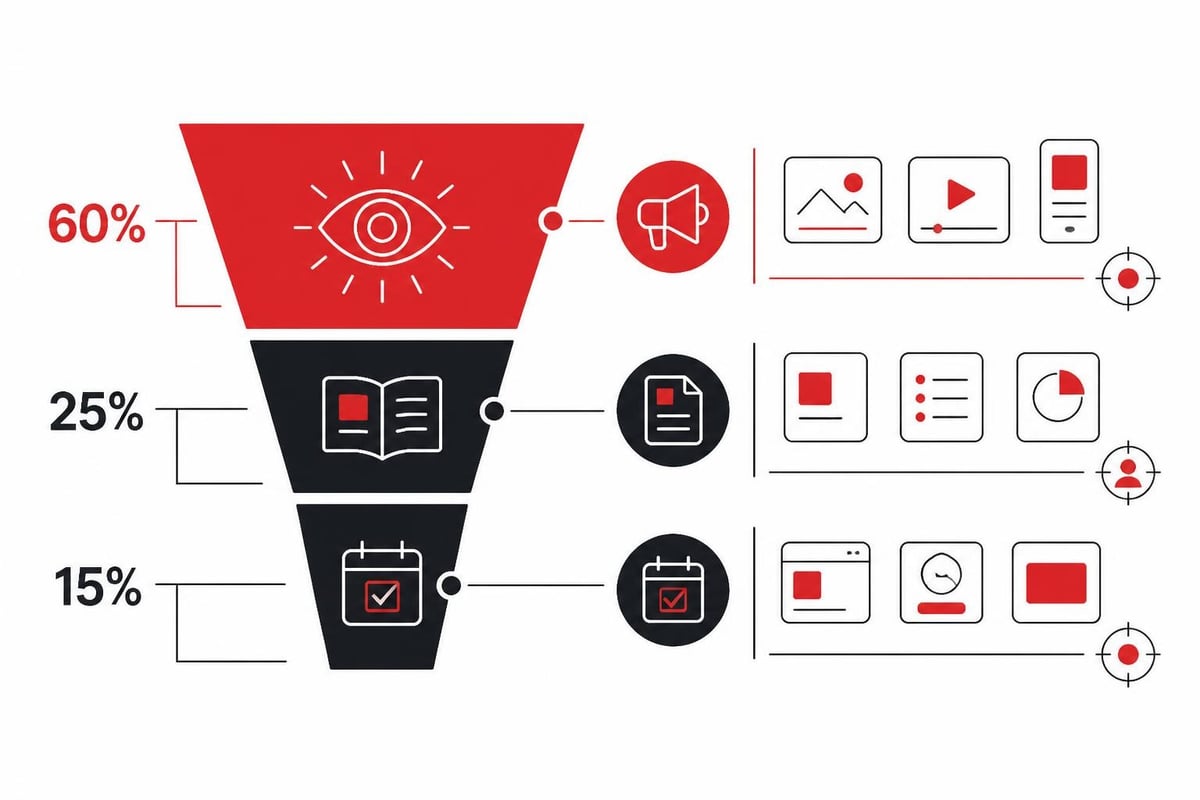
The right paid strategy for saas demand generation runs campaigns at all three stages simultaneously, with budget weighted toward top and middle of funnel. You want prospects entering your nurture system early, not just clicking to a demo page they will immediately abandon.
Paid channel allocation for demand generation:
- 60% budget: Top-of-funnel awareness (LinkedIn feed, YouTube pre-roll, display retargeting on content)
- 25% budget: Middle-funnel consideration (retargeting site visitors, email lookalikes, gated asset downloads)
- 15% budget: Bottom-funnel conversion (search ads for "[your category] software", demo retargeting)
Aletto spent $9,773 on Meta ads in Q3 2024 testing this allocation and found that front-loading awareness budget increased demo booking rates by 41% compared to conversion-only campaigns, as detailed in our Meta ads analysis.
The biggest mistake is running only bottom-funnel search ads and wondering why cost-per-demo keeps climbing. You are competing for the same ready-to-buy 3% of the market as every competitor. Demand generation expands the pool by reaching the 97% who are not actively searching yet.
What role does AI play in modern SaaS demand generation?
AI transforms demand generation from a manual, slow process into an automated system that nurtures thousands of prospects simultaneously with personalized follow-up. The technology has matured enough in 2026 that it is no longer experimental, it is table stakes.
AI-powered follow-up and nurture
The core application is automated, intelligent follow-up that feels personal. When someone downloads a guide, attends a webinar, or visits your pricing page, AI can send contextual emails, recommend next-step content, and even conduct text-based conversations without human involvement.
Aletto uses AI follow-up to nurture prospects from initial ad click through booked demo, handling objections, answering questions, and scheduling meetings. This approach booked 1,122 qualified sales calls in 11 months across our client base in 2025, proving the model works at scale.
The key is training the AI on your actual customer conversations, objections, and successful sales narratives. Generic AI chatbots fail because they sound robotic and don't understand your specific market dynamics. Properly trained AI sounds like your best salesperson and knows when to escalate to a human.
What AI follow-up handles effectively:
- Immediate response to inbound inquiries (response time matters more than most companies realize)
- Multi-touch email sequences that adapt based on engagement
- Question answering about pricing, features, and process
- Meeting scheduling and calendar coordination
- Re-engagement of cold leads based on behavioral triggers
Content creation and optimization
AI also accelerates content production for demand generation, though it requires human strategy and editing. AI’s role in marketing is growing, but the companies that win use AI to execute faster, not to replace strategic thinking.
Use AI to generate first drafts of blog posts, create social media variations of core content, write email sequences, and test multiple ad copy versions. The strategic decisions about positioning, messaging, and which battles to fight still require human judgment.
According to Forrester’s research on adaptive B2B marketing programs, companies that combine AI execution with human strategy see 2.3x higher marketing ROI than those using either approach alone.
How do you measure and optimize SaaS demand generation performance?
Demand generation cannot be measured with simple lead count metrics. You need to track awareness, engagement, pipeline influence, and revenue attribution across multiple touchpoints and time horizons.
The metrics that actually matter
Forget vanity metrics like impressions and clicks. Focus on progression through stages, time to conversion, and cost per closed deal, not cost per lead.
| Metric | What It Measures | Why It Matters | Target Benchmark |
|---|---|---|---|
| Pipeline Influenced | Percentage of opportunities that touched demand assets | Shows content effectiveness | >60% of pipeline |
| Multi-Touch Attribution | Which touchpoints appear in won deals | Reveals hidden performers | Track top 10 assets |
| Conversion Time | Days from first touch to SQL | Indicates nurture health | <45 days for SMB, <90 for enterprise |
| Cost Per Closed Deal | Total demand spend / deals closed | True efficiency metric | <20% of ACV |
The challenge is that most marketing automation platforms default to first-touch or last-touch attribution, which completely misses the point of demand generation. You need multi-touch models that credit all the assets a buyer consumed.
Building feedback loops between marketing and sales
Demand generation only works when sales and marketing operate as one system. Marketing needs to hear which leads converted and why, and sales needs to understand what prospects learned before booking their call.
Implement weekly pipeline reviews where marketing and sales examine together the deals that closed, the deals that stalled, and the leads that went dark. Look for patterns in which content sequences produced the best sales conversations.
Questions for weekly demand review:
- Which content did our best opportunities consume before booking?
- What objections or questions surprised sales this week?
- Which campaigns or channels produced leads that ghosted us?
- What do closed customers say convinced them vs. what we think convinced them?
This feedback loop helps you kill underperforming campaigns quickly and double down on what actually drives revenue. Research-driven approaches to demand generation beat gut-feel decisions every time.
What are the biggest mistakes SaaS companies make with demand generation?
Most SaaS demand generation efforts fail because companies either move too fast and burn budget on untested campaigns, or move too slow and never reach the volume needed to see patterns. Both extremes kill programs before they mature.
Expecting immediate results
Demand generation is a 6-12 month investment before you see consistent pipeline contribution. The first 90 days are research, testing, and infrastructure building. Companies that expect a positive ROI in month one will kill the program prematurely.
Budget for at least six months of operation and set leading indicators (content consumption, email engagement, retargeting pool growth) rather than lagging indicators (closed deals) in the first quarter.
Copying competitor tactics without understanding strategy
Seeing a competitor run LinkedIn ads or host webinars does not mean those tactics work for them or will work for you. Most B2B SaaS marketing is poorly executed, so copying what you see often means copying failure.
Start with buyer research, understand your specific market dynamics, and build programs based on where your buyers actually spend time and what they actually need to know. The HubSpot demand generation guide provides a solid framework for building from first principles rather than imitation.
Under-investing in the middle of the funnel
The middle of the funnel, where prospects understand their problem and explore solutions, receives the least attention and budget in most SaaS demand programs. Companies create tons of awareness content and case studies but nothing that helps buyers make sense of their options.
This gap causes prospects to do research on competitor sites and analyst reports instead of your owned channels, reducing your ability to influence their decision. Build comparison content, educational webinars, and solution-focused guides that position your approach as the smart choice.
Running demand generation as a marketing-only initiative
Sales, customer success, product, and marketing all generate demand through their activities. Customer stories, product updates, support content, and sales expertise all create opportunities to educate the market and build preference.
Treating demand generation as a marketing department project means missing 70% of your demand-building capacity. Forrester's research on preference marketing in B2B shows that integrated approaches across all customer-facing teams outperform siloed marketing programs by 3:1.
Frequently Asked Questions
What is the difference between demand generation and lead generation for SaaS companies?
Demand generation focuses on creating market awareness and educating buyers about problems and solutions before capturing contact information, while lead generation prioritizes collecting leads and passing them to sales immediately. Demand generation produces fewer but higher-quality opportunities with better conversion rates because prospects enter sales conversations already educated and partially convinced.
How long does it take to see results from a SaaS demand generation program?
Most B2B SaaS companies see meaningful pipeline contribution from demand generation in 4-6 months, with full maturity at 9-12 months. The first 90 days focus on research, content creation, and campaign testing, with limited closed deals. Leading indicators like content engagement, email list growth, and demo requests appear within 60 days if the program is properly executed.
What budget should a SaaS company allocate to demand generation?
Successful B2B SaaS companies typically invest 10-15% of revenue in demand generation, split between paid acquisition (40%), content creation (30%), marketing technology (20%), and personnel (10%). Early-stage companies should budget at least $10,000 per month for meaningful traction, though smaller tests can start at $5,000 monthly if tightly focused on a single channel and segment.
Can small SaaS teams execute demand generation without a large marketing department?
Yes, small teams can execute effective demand generation by focusing on one channel and one content format initially, then expanding as they see traction. A single skilled marketer with modest paid ad budget can run LinkedIn campaigns, publish weekly educational content, and implement AI-powered follow-up to generate qualified pipeline. The key is focus and consistency rather than trying to do everything simultaneously.
Should SaaS demand generation prioritize brand building or direct response tactics?
Modern saas demand generation requires both brand building and direct response working together. Research from WARC and LinkedIn on B2B marketing shows that campaigns combining brand awareness (60% of budget) with performance marketing (40% of budget) deliver 30% higher ROI than pure direct-response approaches, because brand-aware prospects convert faster and at higher rates.
SaaS demand generation works when you focus on educating your market before selling to it, building multi-touch nurture systems that guide prospects through their research journey, and measuring influence rather than just lead count. Companies that implement comprehensive demand programs see higher-quality pipeline, shorter sales cycles once prospects engage, and better customer retention because buyers arrive already understanding the value.
For sales teams struggling to fill their calendars without burning out on cold outreach, Aletto has developed a proven system that combines paid acquisition, AI-powered follow-up, and automated booking to generate consistent qualified demos. Our approach is documented in a free report showing exactly how we booked 1,122 qualified sales calls in 11 months without cold emails, cold calls, or events. If your current lead generation tactics are not delivering the pipeline you need, the Free AI Call Booking Report provides a practical blueprint for building a demand generation engine that actually fills your sales calendar.