
In a digital world that’s moving faster every year, finding high-quality leads for business is more challenging and more vital than ever. As competition intensifies and buyer behavior evolves, the old ways of generating leads just don’t cut it anymore.
This essential guide will show you the latest strategies, powerful tools, and proven tactics to generate, nurture, and convert leads for business success in 2025. Whether you’re a business owner, marketer, or sales leader, you’ll find actionable insights to build a scalable, predictable pipeline.
We’ll break down the fundamentals, highlight top strategies for the coming year, explore AI-driven innovations, and reveal best practices for nurturing and measuring your results. Ready to unlock step-by-step guidance that can transform your growth? Dive in and discover how to turn today’s challenges into tomorrow’s opportunities.
Understanding Leads for Business in 2025
High-quality leads for business are the foundation of growth and revenue in today’s digital-first era. As we approach 2025, understanding how leads for business are defined, qualified, and nurtured has never been more critical. The landscape is shifting rapidly, and only those who adapt will thrive.
Definition and Types of Leads
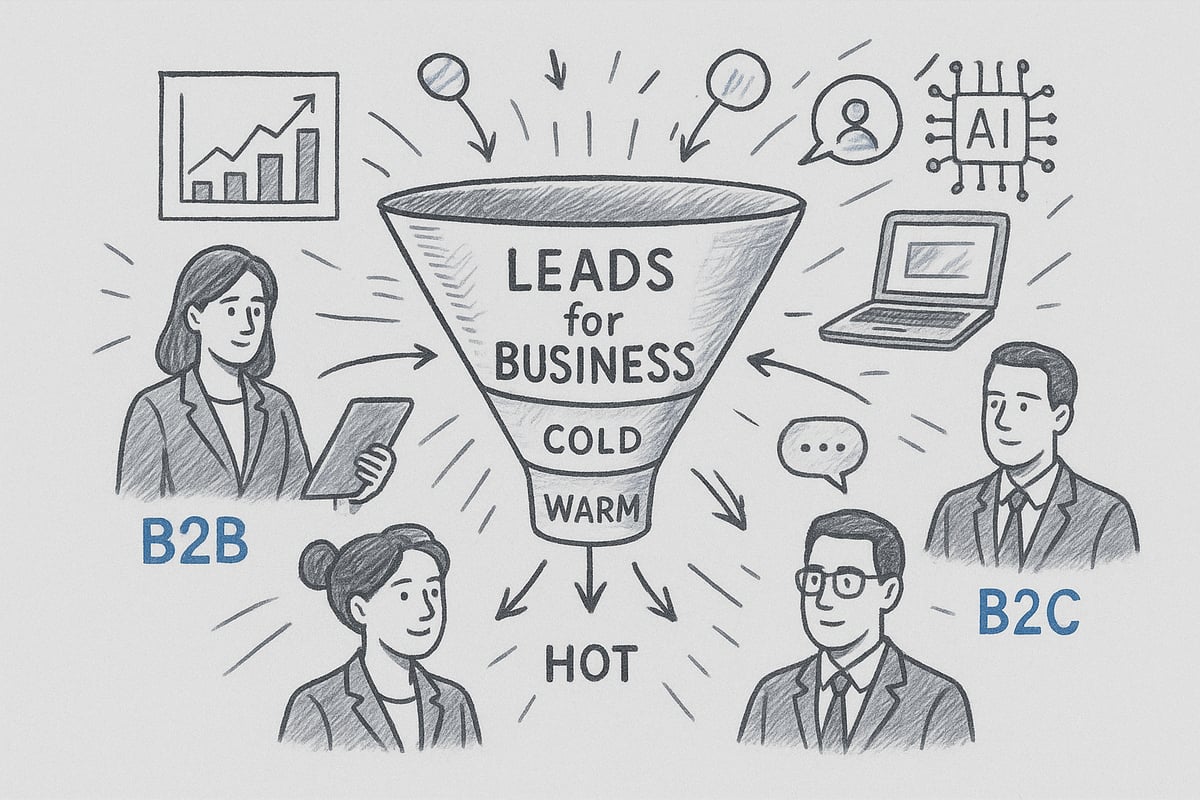
A lead in 2025 is any individual or organization that expresses interest in your product or service. Not all leads for business are created equal. They fall into three primary categories:
- Cold leads: Have shown little to no engagement yet.
- Warm leads: Demonstrate some interest, like signing up for a newsletter.
- Hot leads: Ready to buy, often after multiple interactions.
B2B leads typically involve longer decision cycles and multiple stakeholders, while B2C leads act faster and are influenced by emotion. Lead qualification is vital, using criteria like budget, authority, need, and timeline. For industry-specific nuances, see B2B sales leads explained. For example, a SaaS company’s hot lead may be a CTO requesting a demo, while a retailer’s hot lead might be a shopper with a full cart.
The Evolving Buyer Journey
The buyer journey has transformed as digital channels dominate. Today’s leads for business often self-educate, researching solutions independently before ever reaching out to sales. Omnichannel research is the new norm, with buyers toggling between websites, social media, and review platforms.
According to Gartner (2023), 74% of B2B buyers now conduct at least half their research online before contacting a provider. This shift means businesses must be present and consistent across all touchpoints. Buyers expect seamless experiences and relevant information at every stage.
The Value of High-Quality Leads
Focusing on high-quality leads for business delivers a far greater ROI than chasing sheer volume. Lead scoring helps prioritize prospects based on engagement, fit, and likelihood to convert. This allows teams to concentrate their efforts where it counts.
Companies that excel at nurturing and qualifying leads generate 50% more sales-ready leads at 33% lower cost, according to Forrester (2023). The lesson is clear: investing in lead quality, not just quantity, pays off. With the right systems, your pipeline stays healthy and conversion rates soar.
Common Lead Generation Challenges
Despite best efforts, generating leads for business in 2025 comes with hurdles. Lead fatigue is real—prospects are bombarded with offers, making it tough to stand out. Data privacy concerns and stricter regulations complicate outreach, while acquisition costs keep rising.
Market saturation means more competition for attention. Some businesses struggle with unqualified leads that waste time and resources. For instance, a marketing agency may receive hundreds of inquiries, but only a handful are truly a good fit. Addressing these challenges requires smarter targeting and better qualification.
Why 2025 Demands a New Approach
New technologies and regulations are reshaping how we generate leads for business. Artificial intelligence and automation now drive efficiency, scoring, and personalization. Meanwhile, updates to GDPR and CCPA raise the stakes for data privacy and compliance.
Customer expectations are also evolving. Buyers want tailored experiences and transparency. Companies that embrace these changes, leveraging AI while respecting privacy, will build trust and win more business. Adapting to this new landscape is not optional—it’s essential for long-term success.
Proven Lead Generation Strategies for 2025
Generating high-quality leads for business in 2025 requires a strategic mix of innovative tactics and time-tested approaches. The digital landscape is evolving quickly, and what worked last year may not deliver results today. To help you stay ahead, let’s break down the most effective ways to attract, nurture, and convert leads for business growth this year.
Content Marketing and Thought Leadership
Educational content is the cornerstone of generating leads for business in 2025. Buyers crave value and insight, so delivering helpful resources builds trust early in the journey.
Popular formats include:
- Whitepapers that address industry pain points
- Webinars featuring expert panels
- Interactive tools like ROI calculators
According to the Content Marketing Institute, 80% of B2B marketers rely on content marketing for lead generation. To discover more actionable strategies, explore these proven lead generation strategies to maximize your content’s impact.
Social Media and Community Building
Social platforms are powerful engines for leads for business, especially when you focus on authentic engagement. LinkedIn, Facebook Groups, and niche industry forums offer spaces to share expertise and foster relationships.
Effective tactics include:
- Starting value-first conversations
- Sharing client success stories
- Participating in relevant group discussions
A SaaS company recently attributed 30% of their new leads to LinkedIn groups, proving the power of targeted community building.
AI-Driven Lead Generation Tools
AI is reshaping how companies find and qualify leads for business. AI chatbots engage visitors instantly, predictive analytics identify high-potential prospects, and automation platforms streamline outreach.
Key benefits:
- Faster response times
- Precision targeting
- Personalized experiences
Recent data shows AI-powered tools can boost lead conversion rates by 20%. Embracing these technologies gives your business a competitive edge.
Paid Advertising and Retargeting
Paid channels remain essential for scaling leads for business. Google Ads, LinkedIn Ads, and Meta platforms offer robust targeting to reach ideal buyers.
Retargeting is especially effective:
- Dynamic ads remind visitors of your offering
- Custom audiences recapture lost interest
- Sequential messaging nurtures prospects back to your funnel
For instance, an e-commerce brand reduced their cost per lead by 25% using dynamic retargeting campaigns.
Email Marketing and Automation
Email continues to deliver impressive ROI for leads for business, returning $42 for every $1 spent. The secret lies in segmentation and automation.
Best practices:
- Segment lists by behavior and preferences
- Personalize subject lines and content
- Use automated nurture sequences to build relationships
Compliance with privacy regulations and maintaining high deliverability rates are crucial for ongoing success.
Partnerships, Referrals, and Co-Marketing
Strategic partnerships are a goldmine for leads for business. Collaborate with companies that share your audience but aren’t direct competitors.
Approaches include:
- Referral programs with incentives
- Co-branded campaigns or webinars
- Lead-sharing agreements
A consulting firm recently doubled their lead volume by leveraging referral partnerships, showing the potential of collaborative growth.
Events, Webinars, and Virtual Networking
Live and virtual events are back in the spotlight for leads for business. Hosting industry webinars, sponsoring summits, or facilitating virtual networking sessions can attract highly qualified prospects.
Tips for success:
- Choose topics that address urgent challenges
- Engage attendees with Q&A and polls
- Follow up promptly after the event
A recent report found that 73% of marketers rank webinars as their top lead generation tactic, making events a must-have in your strategy.
Leveraging AI and Automation in Lead Generation
AI and automation have transformed how companies approach leads for business. Instead of relying on manual processes, forward-thinking teams now harness technology to qualify, engage, and convert prospects faster than ever. In 2025, staying competitive means embracing these innovations to build scalable, predictable pipelines.
The Rise of AI in Lead Qualification
AI is now essential for qualifying leads for business. Intelligent algorithms swiftly analyze huge data sets, scoring and segmenting prospects based on behavior, engagement, and fit. For example, AI-driven CRMs can reduce manual qualification by 60 percent, freeing up sales teams to focus on closing deals.
The impact goes beyond efficiency. AI models identify patterns humans might miss, predicting which leads for business are most likely to convert. According to recent AI in Lead Generation research, AI agents collaborating with teams can drive productivity and boost lead quality, setting a new benchmark for what’s possible.
Automated Appointment Setting and Calendar Management
Automated scheduling tools are now a game changer for leads for business. By integrating AI with calendar management, businesses eliminate the back-and-forth of booking meetings. These tools detect optimal times, send reminders, and adjust for time zones, minimizing no-shows.
Companies using AI-driven scheduling report up to 30 percent higher attendance rates. This means sales reps spend less time on logistics and more time engaging with qualified leads for business, accelerating the path from first contact to closed deal.
Personalization at Scale with AI
Personalization is no longer optional for leads for business. AI enables dynamic content and messaging tailored to each prospect’s actions and preferences. Real-time website personalization tools can adjust offers, images, and calls-to-action instantly based on user behavior.
Statistics show that personalized experiences increase conversion rates by over 200 percent. By deploying AI, companies can deliver one-to-one experiences for thousands of leads for business, making every interaction feel relevant and timely.
Predictive Analytics for Lead Scoring
Predictive analytics take lead scoring to the next level for leads for business. By leveraging historical data, these models forecast which prospects are most likely to buy. Integrating predictive analytics with marketing automation ensures that high-potential leads for business receive priority outreach.
Consider a SaaS firm that improved close rates by using predictive scoring. The team focused efforts on leads for business with the highest predicted value, resulting in more efficient sales cycles and better ROI.
How Adstra Revolutionizes Lead Generation with AI
Adstra’s AI-powered systems are changing the game for leads for business, especially for appointment-based companies. Their platform automates lead generation and appointment setting, delivering qualified, ready-to-buy prospects and reducing manual prospecting.
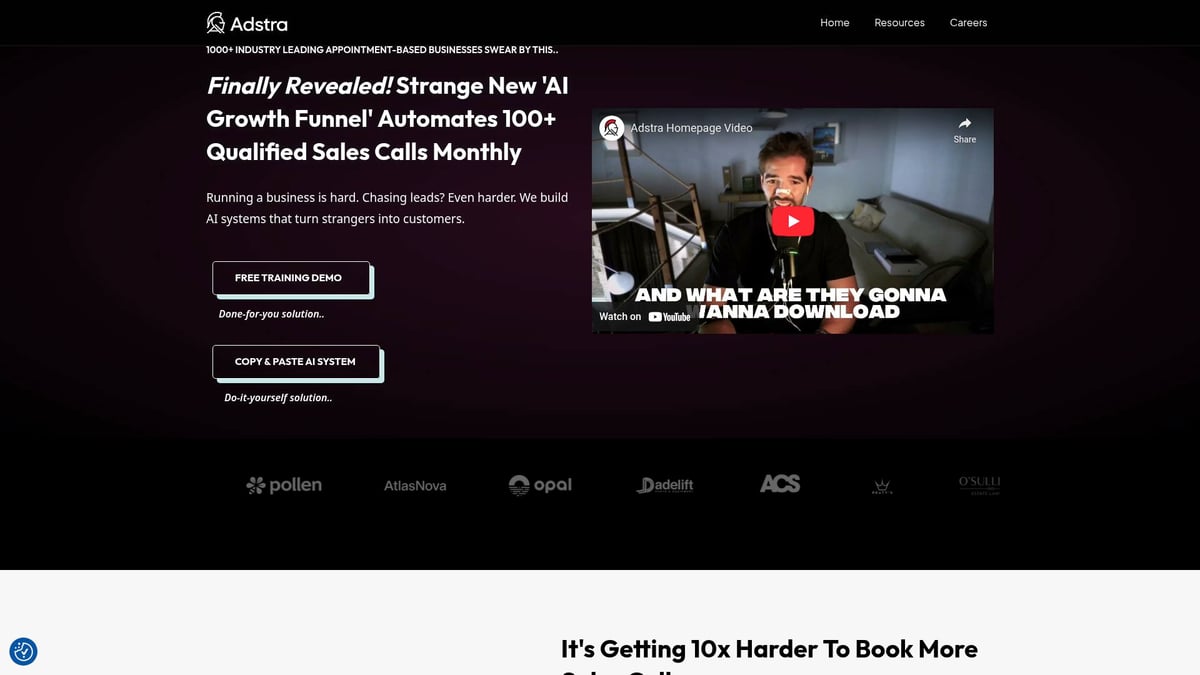
With Adstra, sales teams can concentrate on closing deals while the AI handles the legwork. The system also provides free lead training and tailored strategies, ensuring predictable, scalable revenue. Adstra’s unique growth partnership model aligns their success with clients, making it a compelling choice for companies seeking to scale leads for business efficiently.
Lead Nurturing and Conversion Best Practices
Effective lead nurturing and conversion are the backbone of successful leads for business in 2025. As competition grows and buyer journeys become more complex, mastering these best practices is essential for predictable, scalable growth. Let’s break down the proven strategies that top-performing teams use to move prospects from first touch to loyal customer.
Multi-Touch Nurturing Campaigns
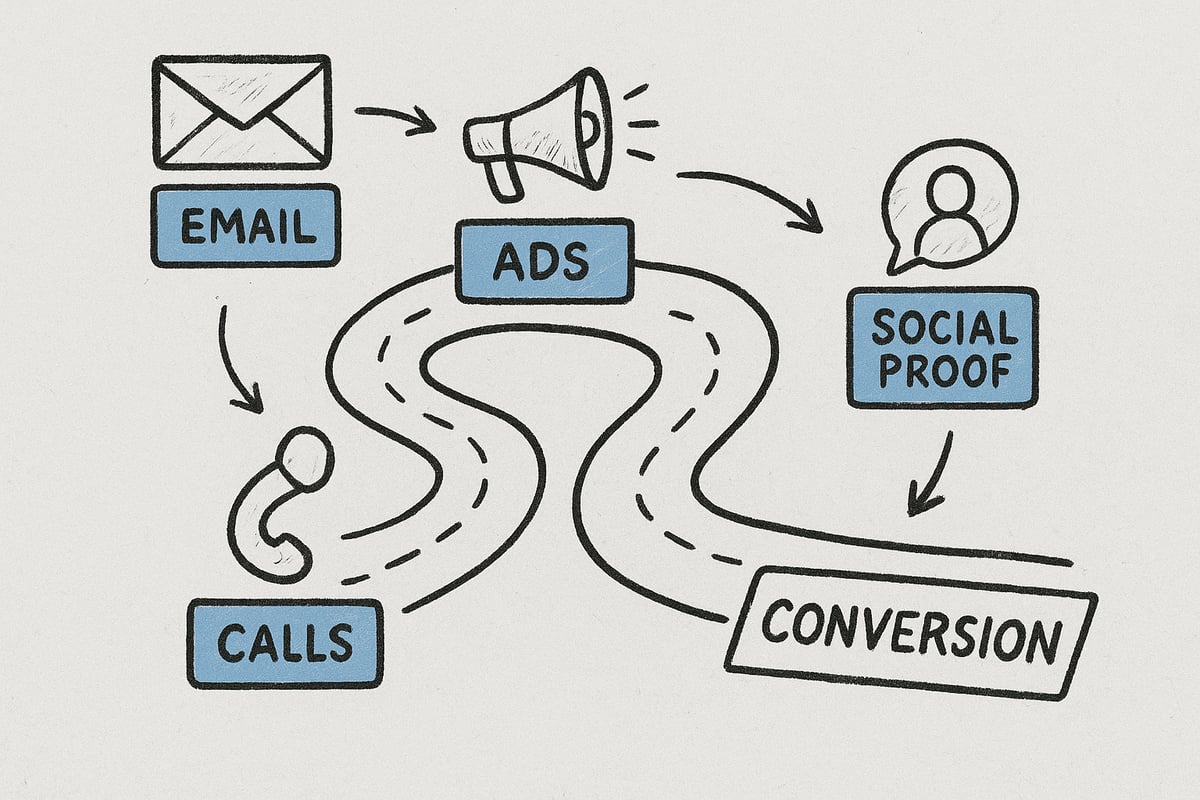
Modern leads for business rarely convert after a single interaction. Success depends on orchestrating multiple touchpoints across channels like email, retargeting ads, and SMS. Each interaction builds familiarity and trust, moving leads closer to conversion.
Consider a campaign that includes:
- Personalized email drips
- Retargeting ads on social platforms
- Timely SMS follow-ups
Data shows that leads require six to eight touches before making a decision. By mapping out these interactions, businesses keep prospects engaged and informed. Consistency and timing are key, ensuring leads for business feel valued, not overwhelmed.
Personalization and Segmentation
Personalization is no longer optional for leads for business. Segmenting leads by intent, industry, or behavior enables marketers to deliver tailored content at every stage. For instance, a B2B firm might send industry-specific case studies to manufacturing leads, while retail prospects receive product demos.
Effective segmentation includes:
- Behavioral triggers (downloads, site visits)
- Demographic filters (location, company size)
- Engagement scoring
Companies that master segmentation see higher engagement and more qualified leads for business. For in-depth approaches, explore these lead nurturing and conversion tips from industry leaders.
Sales and Marketing Alignment
Alignment between sales and marketing is critical for converting leads for business. Both teams should agree on lead definitions, qualification criteria, and follow-up processes. Service level agreements (SLAs) set expectations for response times and handoffs.
Steps for alignment:
- Define what makes a sales-ready lead
- Share data and feedback regularly
- Use integrated CRM and marketing platforms
Aligned teams achieve higher retention and conversion. When everyone works toward shared goals, leads for business move smoothly through the funnel, reducing friction and maximizing value.
Leveraging Social Proof and Case Studies
Social proof builds confidence and reduces hesitation for leads for business. Incorporate testimonials, reviews, and detailed case studies into your nurturing sequences. Real-world examples demonstrate value and address common objections.
Types of social proof:
- Customer testimonials
- Third-party reviews
- Success stories with measurable results
A service provider, for example, can increase conversions by 25 percent simply by showcasing relevant case studies. This approach helps leads for business see themselves succeeding with your solution.
Optimizing for Speed to Lead
Responding quickly to new leads for business can make or break your conversion rates. Implement automated responses and intelligent routing to ensure every inquiry gets immediate attention. Research shows that responding within five minutes increases the likelihood of conversion by up to nine times.
Optimization tips:
- Use chatbots for instant engagement
- Automate lead assignment to sales reps
- Set up real-time notifications for inbound leads
Fast, personalized responses demonstrate professionalism and commitment, giving your leads for business a reason to choose you over the competition.
Measuring, Analyzing, and Optimizing Lead Generation Efforts
In 2025, measuring and optimizing leads for business is critical for sustainable growth. Without clear benchmarks and analytics, even the best lead generation strategy can fall short. Let’s break down how to track, analyze, and improve your lead pipeline for maximum ROI.
Key Metrics and KPIs for 2025
To effectively manage leads for business, focus on KPIs like cost per lead (CPL), conversion rates, lead velocity, and pipeline value. Tracking these metrics helps you prioritize high-performing channels and allocate resources wisely.
Here’s a quick comparison of essential KPIs:
| KPI | What It Measures | Why It Matters |
|---|---|---|
| Cost per Lead (CPL) | Acquisition efficiency | Budget optimization |
| Conversion Rate | Lead-to-customer ratio | Sales effectiveness |
| Lead Velocity | Speed of lead movement | Pipeline health |
| Pipeline Value | Total deal potential | Revenue forecasting |
According to Lead Generation Statistics 2025, top-performing companies consistently review these KPIs to outperform competitors in generating leads for business.
Tools and Dashboards for Tracking Performance
Modern analytics platforms make tracking leads for business seamless and actionable. Google Analytics 4, HubSpot, and Salesforce offer real-time dashboards that visualize campaign performance and lead flow.
Benefits of integrating marketing and sales data include:
- Unified view of the customer journey
- Faster identification of bottlenecks
- More accurate attribution and ROI measurement
Dashboards should display trends in lead generation, conversion, and channel performance. This empowers teams to make data-driven decisions and optimize their approach to leads for business.
A/B Testing and Continuous Improvement
A/B testing is a proven way to boost results from leads for business. Test landing pages, CTAs, ad creatives, and email sequences to discover what resonates most with your audience.
Best practices for A/B testing:
- Test one variable at a time for clarity
- Use statistically significant sample sizes
- Analyze results and implement winning variants
For example, an e-commerce brand increased lead signups by 18 percent through A/B testing different form layouts. Continuous improvement ensures your approach to leads for business stays competitive and effective.
Overcoming Attribution and Data Quality Challenges
Attribution and data quality are ongoing challenges in managing leads for business. Multi-touch attribution helps you understand which channels contribute most to conversions, but it can be complex to implement.
To keep your data accurate:
- Regularly clean and enrich lead databases
- Use validation tools to verify contact details
- Ensure compliance with data privacy regulations
For more on identifying and qualifying leads, see How to find business leads. Prioritizing data quality will maximize the value of your leads for business and set the stage for scalable growth.
The Future of Lead Generation: Trends to Watch in 2025 and Beyond
Staying ahead in leads for business means anticipating and adapting to transformative trends. As digital ecosystems evolve, understanding what’s next can help you future-proof your lead generation strategy and secure consistent growth.
AI and Machine Learning Advancements
AI is rapidly reshaping how companies generate and qualify leads for business. Today's predictive lead scoring uses machine learning to analyze buyer intent signals, enabling real-time engagement with the most promising prospects.
Hyper-personalization is now possible at scale. For example, AI can recommend unique content or offers based on a lead’s browsing patterns. Industry forecasts predict that by 2025, over 70% of high-performing lead generation teams will leverage AI for intent prediction and automation.
| AI Trend | Impact on Leads for Business |
|---|---|
| Intent Prediction | Engages high-fit prospects |
| Hyper-personalization | Boosts conversion rates |
| Real-time Scoring | Speeds up sales cycles |
Staying current with AI-driven innovations is essential for anyone serious about leads for business.
Privacy, Compliance, and Ethical Lead Generation
As regulations tighten, privacy and compliance dramatically influence how leads for business are sourced and nurtured. Laws like GDPR and CCPA are evolving, requiring transparent data practices and explicit consent.
Consumers are increasingly aware, with 81% demanding more control over their information. Businesses must adopt ethical lead generation practices, balancing personalization with respect for privacy. Keeping up with AI Regulation in the U.S. is now a non-negotiable part of a compliant lead strategy.
Building trust is paramount. Companies that prioritize ethical standards in their leads for business initiatives are more likely to earn long-term loyalty and avoid costly penalties.
Voice Search, Conversational Marketing, and New Channels
The rise of voice assistants and chatbots is opening new doors for leads for business. Voice search makes it easy for prospects to find solutions hands-free, while conversational marketing via messaging apps delivers instant engagement.
Retailers are already seeing results, with some generating 15% of their leads from voice-enabled platforms. Integrating chatbots on your website or social channels can capture, qualify, and nurture leads automatically.
To tap into these new channels, businesses must optimize content for natural language queries and create seamless, conversational experiences. This shift ensures your leads for business strategy remains relevant as consumer habits change.
The Shift Toward Predictable, Recurring Revenue Models
Lead generation is moving beyond one-off transactions. In 2025, the focus for leads for business is shifting toward subscription and membership models that drive recurring revenue and maximize customer lifetime value.
Agencies and service providers are leading this transformation. For example, some agencies now use retainer-based growth partnerships, turning sporadic projects into steady income streams.
| Model Type | Benefit for Leads for Business |
|---|---|
| Subscription | Predictable monthly revenue |
| Membership | Higher engagement and loyalty |
| Retainer | Long-term client relationships |
Prioritizing recurring revenue models helps businesses build stability, scale efficiently, and future-proof their leads for business efforts.
You’ve just explored the most crucial lead generation strategies and AI breakthroughs shaping 2025—now it’s time to put these insights into action for your business. If you’re ready to stop guessing and start building a predictable, scalable lead pipeline, let’s map out a plan together. Imagine having a partner who guarantees growth and brings you qualified, ready-to-buy leads while freeing up your team to focus on closing deals. Want to see how Adstra’s proven approach could work for you?
Book a FREE Strategy Call and let’s chart your path to game-changing results.