
Are you finding it harder to turn prospects into paying customers in 2025? You are not alone. The landscape of generating any leads is shifting rapidly as technology, buyer behavior, and competition evolve.
Recent studies show that 68% of businesses struggle with lead generation, making it the top marketing challenge today. Many face longer sales cycles, more skeptical prospects, and a maze of new channels to master.
But there is good news. This guide will walk you through a proven, step-by-step framework to help you generate any leads, no matter your industry or business size. You will discover foundational concepts, the latest digital and offline tactics, and expert-backed strategies to qualify, nurture, and convert leads.
Ready to overcome these challenges? Dive in to learn how to future-proof your approach and finally unlock the results you have been searching for.
Understanding Lead Generation in 2025
In 2025, generating any leads requires more than just casting a wide net. The definition of a lead itself has evolved, and so have the strategies to attract and convert prospects. Before diving into tactics, it's vital to understand what makes a lead valuable and how the process has shifted in recent years.
What is a Lead? Types of Leads
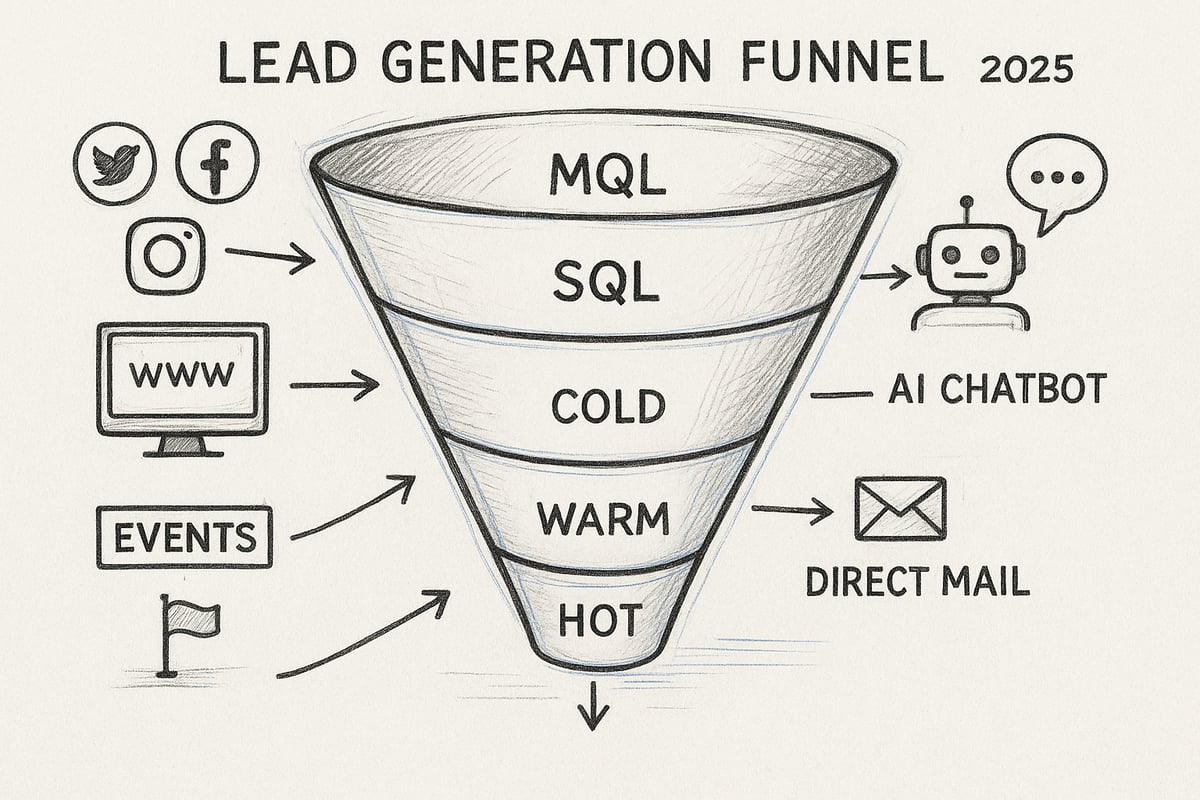
A lead is any individual or organization that shows interest in your product or service. Not all leads are created equal — understanding the different types is crucial if you want to generate any leads that truly matter for your business.
| Lead Type | Description | Typical Stage |
|---|---|---|
| Cold | No prior contact or expressed interest | Awareness |
| Warm | Some interaction, mild interest | Consideration |
| Hot | High intent, ready to buy | Decision |
| MQL | Marketing Qualified Lead, meets marketing criteria | Early Sales Process |
| SQL | Sales Qualified Lead, vetted and ready for sales | Sales Engagement |
If you focus on any leads without considering quality, you risk wasting time and budget on unqualified prospects. That’s why segmentation matters more than ever.
The Evolution of Lead Generation
Gone are the days when lead generation meant cold calling thousands of people from a list. In 2025, the journey to attract any leads is powered by AI, automation, and hyper-personalization. Companies now use predictive analytics, chatbots, and tailored content to nurture prospects through every stage of the funnel.
According to Lead Generation Statistics 2025, 68% of B2B companies say that generating any leads is now their top marketing challenge. This highlights the need for smarter, more strategic approaches.
How Buyer Behavior Has Changed
Modern buyers are more skeptical and self-directed. They research extensively before ever talking to sales. This has transformed the way businesses approach any leads.
Key shifts include:
- Buyers spend more time self-educating through online content
- Sales cycles are longer and involve more decision-makers
- Trust and transparency are now non-negotiable
Ignoring these changes can result in any leads dropping off before they reach your sales team.
Omnichannel Approaches and Regulation
Generating any leads in 2025 means meeting your audience where they are, both online and offline. Omnichannel strategies combine digital ads, social media, email, events, and even direct mail to create seamless experiences.
At the same time, regulations like GDPR and CCPA demand that you collect and use data responsibly. If you mishandle data, you risk losing access to any leads and damaging your reputation.
Quality Over Quantity: The New Standard
It’s tempting to focus on generating as many leads as possible, but the reality is stark: 79% of leads never convert without proper nurturing. Businesses now prioritize lead quality, using targeted content and scoring systems to ensure that any leads entering the pipeline are actually worth pursuing.
Real-World Example: SaaS Lead Generation Shift
SaaS companies exemplify the shift from mass outreach to hyper-targeted campaigns. Instead of blasting generic messages, they analyze user data and personalize every touchpoint. This approach not only increases the chances of converting any leads but also builds lasting trust.
Why Audience Understanding is Essential
Today, understanding your audience’s journey is the foundation of success. Mapping each stage — from awareness to decision — ensures you provide the right content at the right time. If you want to turn any leads into loyal customers, start by seeing the world through their eyes.
Step 1: Laying the Foundation—Identifying and Understanding Your Ideal Lead
Before you can generate any leads successfully, you need to know exactly who you’re trying to attract. Building a strong foundation lets you target, engage, and convert prospects with precision. Let’s break down the three essentials: defining your audience, mapping their journey, and setting measurable goals.
Defining Your Target Audience
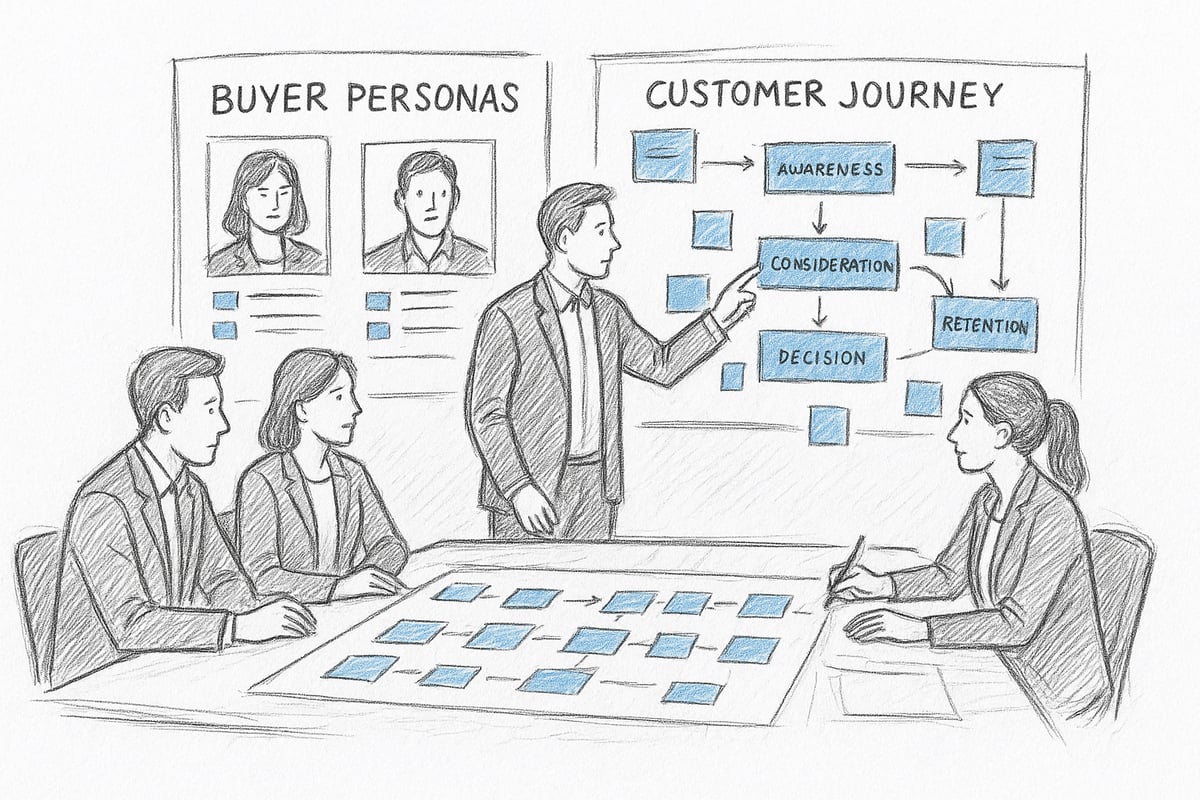
Start by picturing your perfect customer. What are their demographics, interests, and pain points? Creating buyer personas helps you see the real people behind the numbers. Use surveys, interviews, and CRM data to dig deeper and avoid guesswork.
- Demographics: Age, job title, company size
- Psychographics: Motivations, goals, challenges
- Pain Points: What keeps them up at night?
Compare persona-driven campaigns to generic outreach. Companies using tailored personas often see higher engagement and conversion rates. In fact, 56% of marketers using personas generate higher quality leads, according to Cintell.
If your targeting is off, you risk wasting time and resources pursuing the wrong prospects. To truly generate any leads that matter, align your messaging with what your audience cares about. Explore more on how to find quality leads for a deeper dive into practical targeting strategies.
The cost of misaligned targeting is high. When you know your ideal lead, every campaign becomes more effective, and you set the stage for nurturing any leads into loyal customers.
Mapping the Customer Journey
Once you know who you want to reach, plot out their journey from first touch to post-purchase. This roadmap ensures you deliver the right message at the right time, preventing valuable prospects from slipping away.
The journey typically includes:
- Awareness: They discover your brand
- Consideration: They compare solutions
- Decision: They’re ready to buy
- Post-purchase: They become advocates
For example, a B2B consulting firm mapped out every client interaction, from initial blog discovery to onboarding. By pinpointing key touchpoints, they created content and offers that matched each stage.
When mapping the journey, ask yourself: What questions do your prospects have at each step? What type of content will move them closer to a decision? By anticipating their needs, you dramatically increase your chances of converting any leads you attract.
This approach isn’t just theory. Companies that map their customer journey see fewer drop-offs and higher conversion rates, making every marketing dollar count.
Setting Measurable Lead Generation Goals
Now, set clear targets for your lead generation efforts. SMART goals—Specific, Measurable, Achievable, Relevant, Time-bound—give you a roadmap to success. Focus on both the quantity and quality of any leads you want to bring into your pipeline.
Key metrics to track:
- Cost Per Lead (CPL)
- Lead-to-customer conversion rate
- MQL to SQL conversion rate
Use industry benchmarks to set realistic expectations. For instance, a fintech startup that established precise goals saw a dramatic improvement in pipeline efficiency. They tracked every step, quickly spotting what worked and what needed tweaking.
Goal tracking fuels continuous improvement. It turns guesswork into growth and helps you adapt your process as the market evolves. With a clear system, you can measure, analyze, and optimize your strategy to consistently generate any leads that matter.
Step 2: Proven Strategies to Generate Any Leads
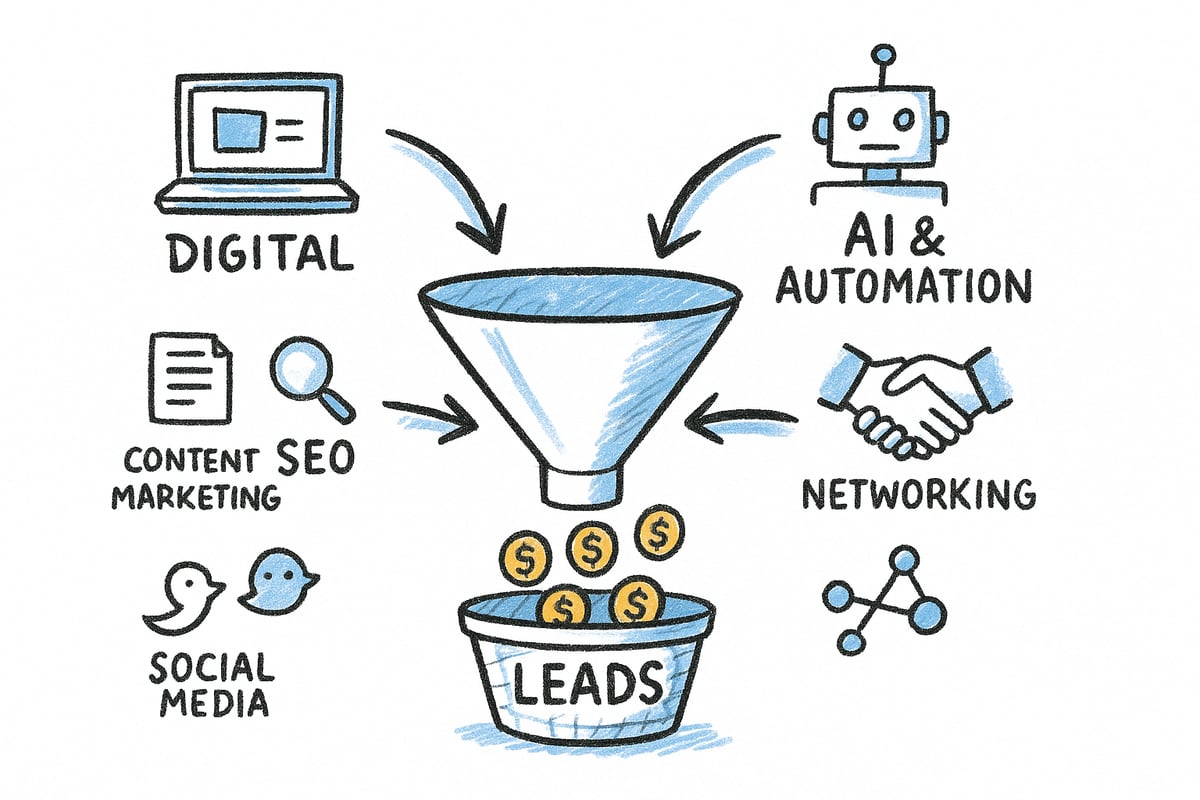
Finding ways to generate any leads in today's market requires a mix of digital, offline, and automated tactics. The landscape is more competitive than ever, so you need strategies that work across channels and adapt to changing buyer behaviors. Whether you are a startup or a global brand, these methods help you reach, engage, and convert any leads effectively.
Digital Lead Generation Tactics
Digital channels are the backbone for generating any leads at scale. Start with content marketing. High-value blogs, ebooks, and webinars act as magnets, pulling in prospects who are actively searching for solutions. For example, a SaaS company that ran a series of webinars generated over 2,000 any leads in Q1 2024, simply by addressing real user pain points and offering actionable insights.
Next, focus on SEO. Ranking for intent-driven keywords such as "best CRM for small business" can attract any leads already considering a purchase. According to HubSpot, 61 percent of marketers say SEO is their top inbound lead source, making it vital for sustainable growth.
Paid advertising accelerates results. Platforms like Google Ads, LinkedIn, and Facebook allow hyper-targeted campaigns, ensuring your message reaches the right audience. Retargeting helps recapture visitors who didn't convert the first time, turning cold traffic into warm any leads.
Social media is another powerhouse. LinkedIn works well for B2B, while Instagram and TikTok are perfect for visual, consumer-facing brands. The key is blending organic posts with strategic paid promotions. Combining these tactics increases visibility and boosts conversion potential for any leads.
Here is a quick comparison of digital tactics:
| Tactic | Best For | Lead Quality | Cost |
|---|---|---|---|
| Content Marketing | Education, trust | High | Low-Medium |
| SEO | Long-term traffic | High | Medium |
| Paid Ads | Quick results | Variable | Medium-High |
| Social Media | Engagement, branding | Medium-High | Low-Medium |
To discover more actionable methods, check out these proven lead generation strategies for practical ideas you can implement right away.
Offline and Hybrid Lead Generation Methods
Offline and hybrid tactics are making a strong comeback, offering unique ways to generate any leads that digital channels can miss. In-person networking events, trade shows, and industry conferences help build relationships quickly. These touchpoints often lead to high-quality, referral-based any leads.
Modern direct mail campaigns use personalization to stand out. Sending tailored offers or creative packages can spark curiosity and drive action, especially when paired with digital follow-ups. Community engagement, like hosting local workshops or meetups, builds trust and authority in your niche.
Consider this: a dental practice increased its any leads by 30 percent by participating in local health fairs and sponsoring community events. These efforts created memorable interactions and nurtured long-term relationships.
List of effective offline/hybrid tactics:
- Attend industry conferences and expos
- Launch personalized direct mail campaigns
- Host community workshops or info sessions
Offline channels are regaining importance as people crave genuine connections. By blending these with digital tactics, you create multiple pathways for any leads to find and trust your business.
Leveraging AI and Automation in Lead Generation
AI and automation are changing how businesses generate, qualify, and nurture any leads. AI-powered chatbots provide instant responses, answering questions and qualifying prospects 24/7. Predictive analytics help you spot high-value prospects before your competitors do, making your outreach smarter.
Automated email sequences and drip campaigns deliver the right message at the right time, moving any leads through the funnel efficiently. With CRM automation, you can track behaviors, score leads, and trigger follow-ups without manual effort.
For instance, a financial advisory firm used predictive lead scoring to boost conversions. Their CRM assigned points based on engagement and fit, so sales teams focused only on the most promising any leads. Here is a simple example of an automated nurture workflow:
If lead score > 80:
    Send personalized offer email
Else if lead score > 60:
    Send educational content
Else:
    Add to general newsletter list
Data shows that 80 percent of marketers using automation see increased lead volume. By leveraging these tools, you can scale your efforts and generate any leads with minimal manual work.
Step 3: Qualifying and Nurturing Leads Effectively
Turning any leads into loyal customers requires more than just gathering contact information. You need a proven process to qualify, score, and nurture prospects every step of the way. In this section, we break down exactly how to sort, prioritize, and build relationships with any leads so your sales team focuses on the right opportunities.
Lead Scoring and Qualification Frameworks
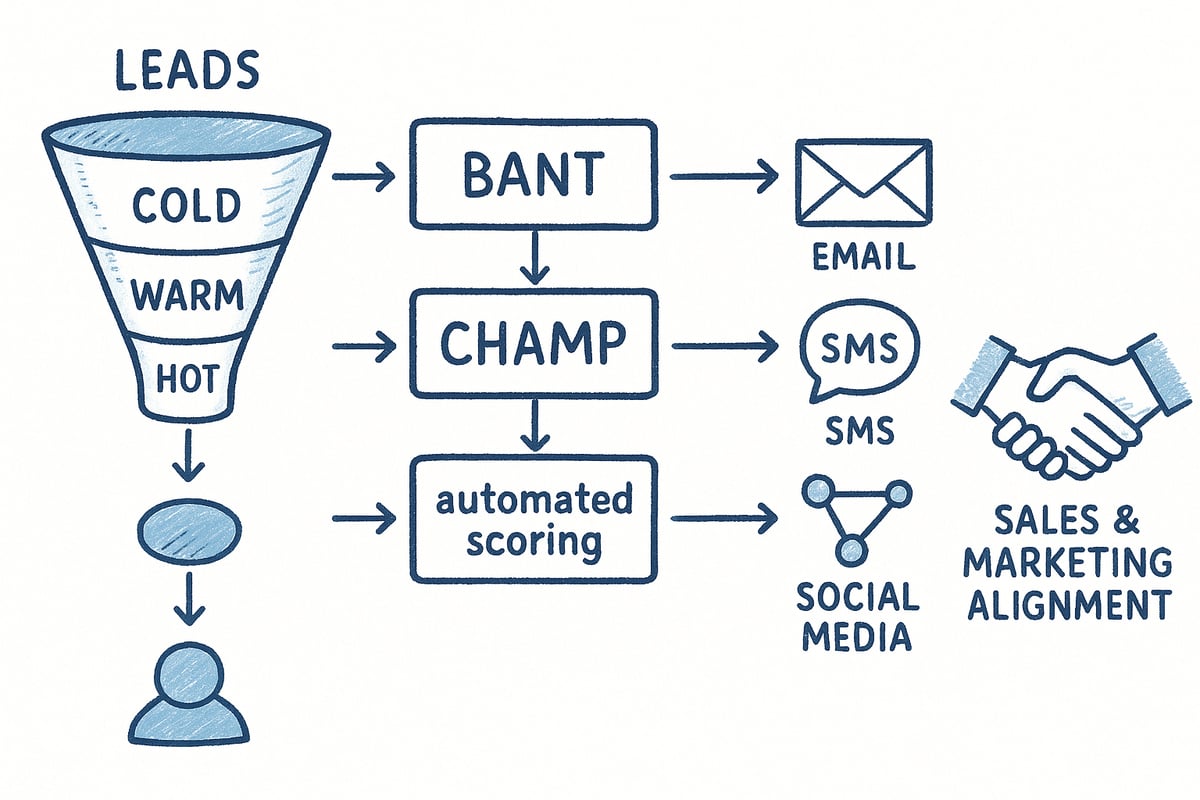
Not all leads are created equal. To ensure your team spends resources wisely, you must qualify any leads using clear frameworks. Two of the most effective are BANT (Budget, Authority, Need, Timeline) and CHAMP (Challenges, Authority, Money, Prioritization).
Here's a quick comparison:
| Framework | Core Focus | Best For |
|---|---|---|
| BANT | Budget, Timing | Complex sales |
| CHAMP | Challenges, Priority | Consultative sales |
Assign scores based on engagement, fit, and intent. Use tools like HubSpot or Salesforce for automated scoring to quickly sort any leads and surface the highest potential. For example, a SaaS company reduced sales workload by 30% by automating lead scoring, freeing reps to focus on hot prospects.
Companies that implement lead scoring see a 77% higher ROI on any leads. Want more detailed frameworks and real-world tips? Check out these lead qualification and nurturing tips to sharpen your process.
Lead Nurturing Strategies
Even the best-qualified any leads need nurturing to convert. Multi-channel strategies—email, SMS, retargeting, and social media—keep your brand top of mind. Personalization at scale is now table stakes. Segment your lists and use dynamic content so every touchpoint resonates with your audience.
Drip campaigns are especially powerful. Map each email to the buyer journey stage, and time your messages for maximum impact. For example, a consulting firm boosted conversions by 40% after launching tailored nurture tracks for its any leads.
Timely follow-ups are critical. The magic happens when you combine automation with a human touch, ensuring no opportunity slips through. Remember, nurturing any leads compounds over time, increasing both trust and conversion rates.
Aligning Sales and Marketing for Seamless Handoffs
For any leads to become customers, marketing and sales must work as a single unit. Set clear Service Level Agreements (SLAs) so everyone knows when a lead is sales-ready. Regular feedback loops and joint pipeline reviews catch bottlenecks before they impact results.
Consider this: a B2B agency saw a 40% drop in conversions after a misalignment caused qualified any leads to stall in limbo. Building a collaborative culture—with shared goals and open communication—keeps your pipeline healthy.
When sales and marketing unite, any leads are less likely to fall through the cracks. This alignment is your secret weapon for sustained growth.
Step 4: Measuring, Analyzing, and Optimizing Your Lead Generation Efforts
Measuring your ability to generate any leads is the engine that drives growth in 2025. Without clear visibility into what is working and what is not, you risk wasting resources and missing out on high-quality opportunities. Today’s top marketers know that data-driven decision-making is not just a buzzword, it is essential for converting any leads into loyal customers.
The Power of Measurement
To truly capture any leads, you need to track the right KPIs. These include Cost Per Lead (CPL), conversion rate, lead velocity, and customer acquisition cost. Creating a simple table like the one below can help your team stay aligned:
| KPI | What It Measures |
|---|---|
| CPL | Cost to acquire each lead |
| Conversion Rate | Percentage of leads converting |
| Lead Velocity | Speed of leads through the funnel |
| Customer Acquisition Cost | Total cost to gain a customer |
Top-performing marketers review these metrics weekly to spot trends and act fast. By focusing on these KPIs, you set the stage for predictable, scalable results with any leads.
Tracking the Right KPIs and Analytics Tools
Using robust analytics tools is non-negotiable when it comes to tracking any leads. Platforms like Google Analytics, HubSpot, and custom dashboards make it easy to monitor performance and identify bottlenecks. Multi-touch attribution models reveal which channels influence conversions, helping you invest in what works.
For more insights on choosing the best metrics and tools, check out Lead Generation Metrics 2025. Remember, the right data brings clarity and confidence to your lead generation strategy.
Testing and Optimization Strategies
The journey to optimizing any leads is ongoing. A/B testing your landing pages, calls to action, and lead magnets uncovers what resonates with your prospects. For example, an e-commerce business doubled lead quality by continuously refining their forms and offers.
Small tweaks—like changing button colors or headline copy—can have a big impact. If you are looking for budget-friendly ideas, free lead generation tactics provide actionable ways to test and learn without overspending.
Continuous Improvement: The Growth Mindset
Treating lead generation as an iterative process is what separates good from great. Reviewing your data, experimenting with new approaches, and learning from every campaign keeps your pipeline full of any leads that actually convert.
Seventy percent of top marketers check their metrics every week. This discipline fuels innovation and helps you pivot quickly if results dip. In the race for any leads, those who measure, analyze, and optimize relentlessly will always stay ahead.
Step 5: Future-Proofing Your Lead Generation Strategy for 2025 and Beyond
Navigating the future of generating any leads requires more than just adapting to new tools, it demands a mindset shift. The landscape is shifting fast, and staying ahead is not optional if you want consistent results. Here’s how to ensure your lead strategy thrives in 2025 and beyond.
Adapting to Emerging Trends and Technologies
The future of any leads is tied directly to your ability to embrace emerging technology. Voice search, conversational AI, and video-first content are quickly becoming the new normal for attracting and converting prospects.
Marketing teams are now rethinking how they approach privacy. With cookie-less tracking and strict consent requirements, brands must find innovative ways to gather and nurture any leads without crossing ethical lines. For example, a home services brand recently shifted to video explainers, resulting in a threefold increase in qualified leads.
AI-powered solutions are at the core of this evolution. From predictive analytics to automated content, AI is helping businesses target, engage, and qualify any leads more efficiently than ever. For deeper insights on this shift, check out AI in Lead Generation 2025.
Staying ahead means keeping your tech stack updated and empowering your team to experiment with new formats and platforms.
Building Trust and Authority in a Crowded Market
Standing out and winning any leads in today’s crowded market is all about trust and authority. Buyers are skeptical, and they crave proof before making decisions.
Leverage thought leadership by sharing expertise on guest blogs, podcasts, and industry panels. Social proof is your best friend, whether it’s client testimonials, case studies, or user reviews. For example, a medical practice saw a surge in inquiries after sharing genuine patient stories online.
The numbers speak for themselves: 92% of buyers trust peer recommendations. By focusing on transparency and continuous value, you position your business as the obvious choice for any leads looking for a partner they can rely on.
Creating a Culture of Continuous Learning and Innovation
To future-proof your ability to generate any leads, foster a culture where learning and innovation are core values. Equip your team with regular training, encourage experimentation, and celebrate new ideas.
Financial advisory firms that run monthly “innovation sprints” see measurable improvements in lead quality and conversion. The lesson? Adaptability is your secret weapon for capturing any leads no matter how the market evolves.
Organizations that prioritize agility never fall behind. Make ongoing improvement part of your DNA and you’ll be ready for whatever the next wave of lead generation brings.
Now that you’ve seen how the right strategies and a bit of AI magic can completely change the way you generate leads, why not take the next step? If you’re serious about turning more prospects into ready-to-buy customers and want a tailored plan that actually fits your business, let’s talk strategy. You don’t have to figure this out alone—at Adstra, we’ve helped countless businesses just like yours unlock predictable growth and automate their lead generation with real, measurable results. Ready to see what’s possible for you? Book a FREE Strategy Call and let’s start building your growth story together.