
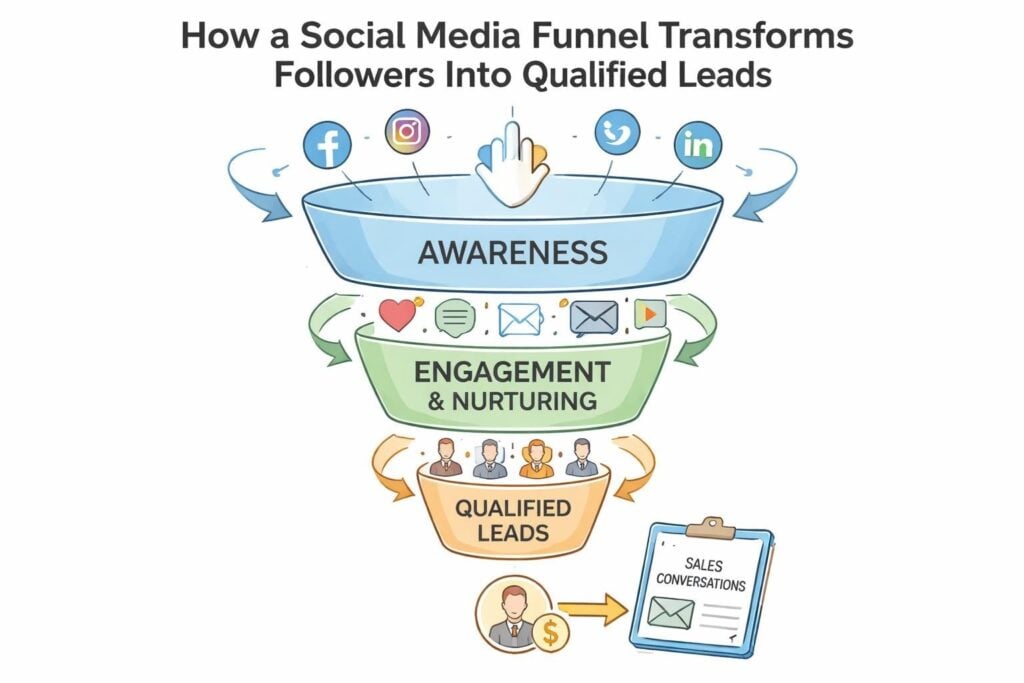
Your business is bleeding opportunity on social media. Every day, thousands of potential customers scroll past your content, engage with your posts, and then vanish into the digital void. The problem isn't your content quality or posting frequency. It's that you're treating social media like a megaphone instead of a strategic pathway designed to guide prospects toward becoming qualified leads. A well-designed social media funnel transforms random followers into predictable revenue by mapping every interaction to a specific stage in your customer journey. Understanding how to build and optimize this funnel is the difference between wasting budget on vanity metrics and generating consistent, qualified appointments.
Understanding the Social Media Funnel Framework
A social media funnel represents the strategic journey you design to move prospects from initial awareness through to conversion. Unlike traditional marketing funnels, the social media funnel operates in a non-linear environment where users can enter at any stage and move back and forth based on their interactions.
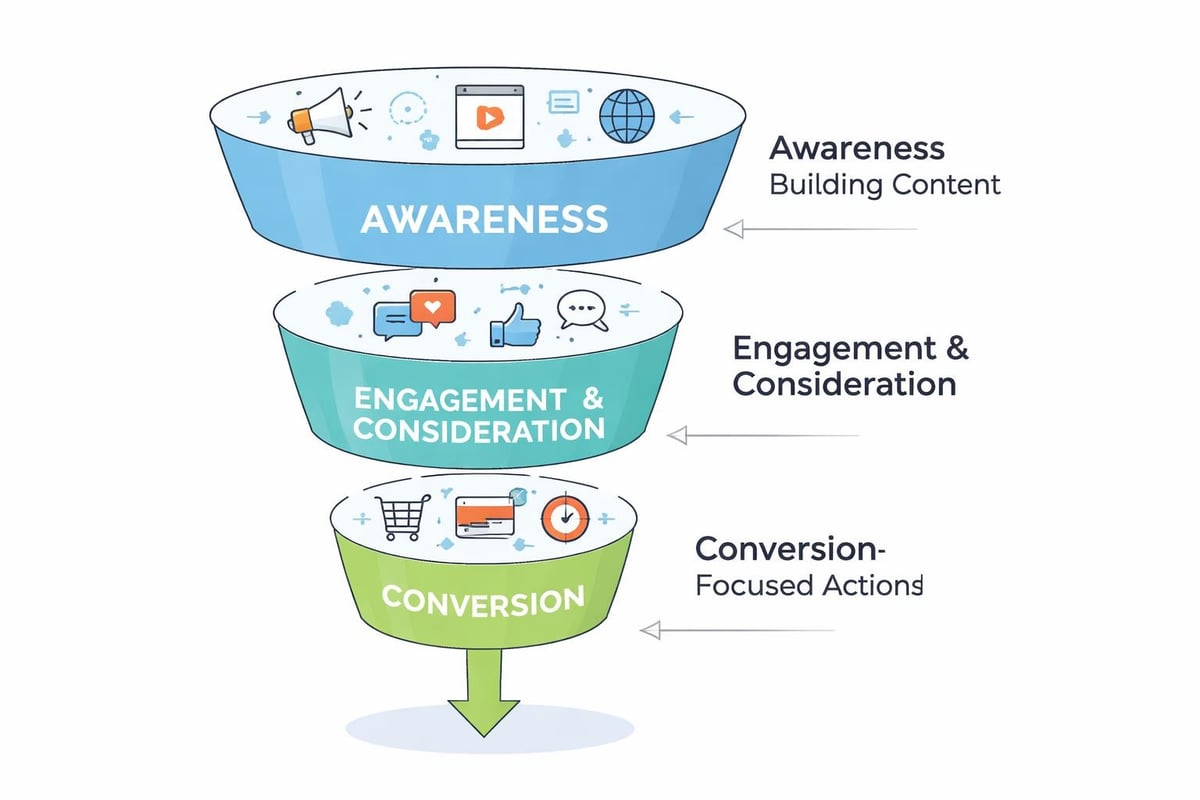
The framework consists of distinct stages that align with customer psychology. At the top, you're building awareness among people who've never heard of your solution. In the middle, you're nurturing interest and demonstrating value. At the bottom, you're converting warmed-up prospects into customers who are ready to buy.
The Three Critical Stages
Awareness Stage: This is where cold audiences first discover your brand. Your content focuses on education, entertainment, or inspiration rather than direct selling. The goal is to stop the scroll and establish credibility.
Consideration Stage: Prospects know who you are and are evaluating whether you can solve their problem. Content becomes more specific, showcasing methodologies, case studies, and social proof that builds trust.
Conversion Stage: These are warm prospects who need a final push. Your messaging addresses objections, creates urgency, and provides clear pathways to take action.
Building Awareness That Actually Converts
Most businesses fail at the awareness stage because they confuse visibility with value. Posting consistently won't move the needle if your content doesn't resonate with your ideal customer profile. You need to understand the exact pain points, aspirations, and language your prospects use.
Start by developing content pillars that address different aspects of your prospects' challenges. For a company like Adstra focused on lead generation in the US market, these pillars might include sales automation challenges, cost per acquisition concerns, and appointment setting struggles.
Content Formats That Drive Awareness
- Educational carousel posts that break down complex topics into digestible insights
- Short-form video addressing specific objections or common mistakes
- Data-driven infographics that showcase industry trends and benchmarks
- Thought leadership posts that challenge conventional wisdom in your space
The key is making your awareness content immediately applicable. When someone discovers you, they should walk away with a tactical insight they can implement today, even if they never become a customer.
Your awareness content should also include strategic hooks that naturally lead prospects deeper into your funnel. Ask questions that create curiosity gaps, tease frameworks you'll explain in future content, or reference resources available through your email list.
Nurturing Consideration Through Strategic Engagement
Once you've captured attention, the consideration stage is where most social media funnels leak prospects. This happens when businesses jump straight from awareness to hard selling without building the necessary trust and demonstrating competency.
Creating an effective social media funnel requires understanding that consideration isn't passive consumption. It's active evaluation where prospects are comparing you against alternatives and assessing whether you truly understand their situation.
Tactics for Deepening Engagement
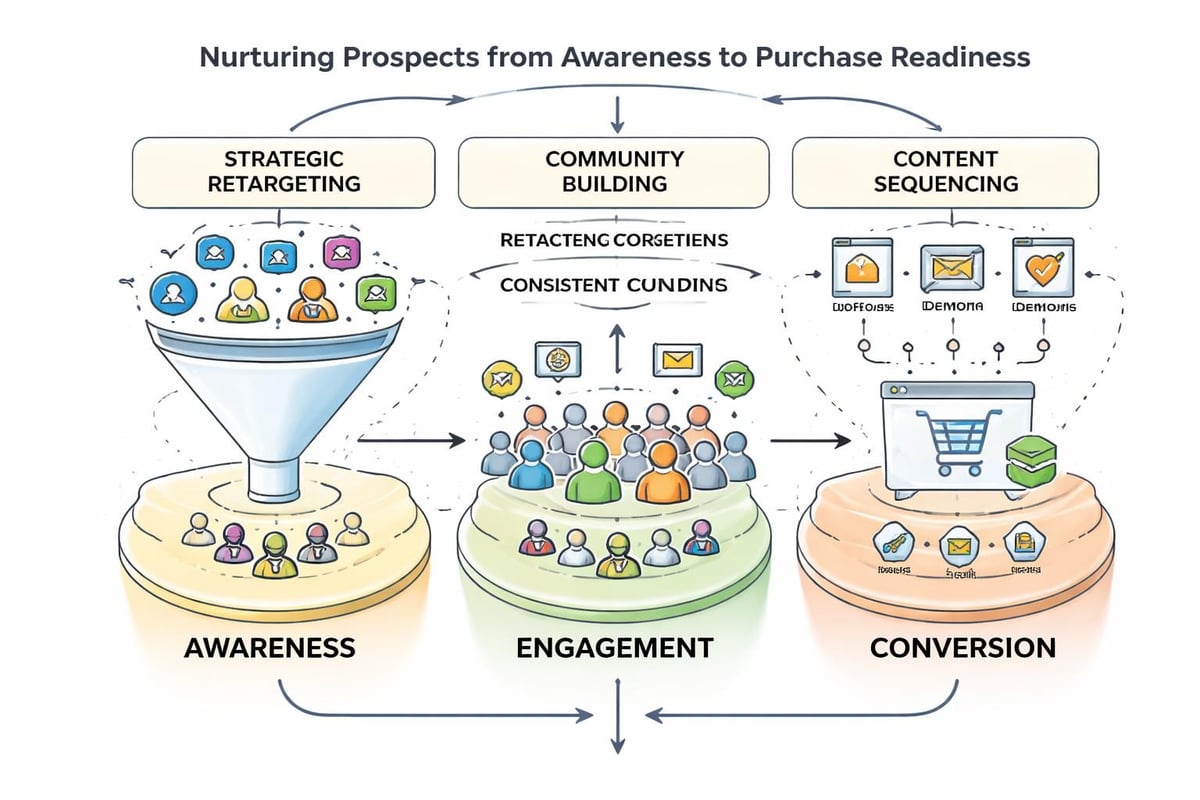
Retargeting plays a crucial role here. People who've engaged with your awareness content should see different messaging that speaks to their growing familiarity with your brand. Use platform-specific retargeting to serve case studies, testimonials, and methodology breakdowns to warm audiences.
Community building accelerates consideration dramatically. When prospects see others asking questions, sharing wins, and engaging with your brand, social proof compounds. Create spaces where your audience can interact, whether through LinkedIn groups, Instagram communities, or dedicated forums.
| Engagement Tactic | Purpose | Expected Outcome |
|---|---|---|
| Live Q&A Sessions | Address objections in real-time | Increased trust and clarity |
| Customer Success Stories | Demonstrate proven results | Social proof and relatability |
| Behind-the-Scenes Content | Humanize your brand | Emotional connection |
| Industry Commentary | Showcase expertise | Thought leadership positioning |
The consideration stage is also where you introduce lead magnets strategically. Unlike generic ebooks that everyone offers, your lead magnets should directly address the specific challenges your awareness content surfaced. If you're discussing the failure of cold outreach, offer a framework for warm lead generation strategies.
Converting Warm Prospects Into Booked Appointments
The conversion stage is where your social media funnel proves its value in revenue terms. By this point, prospects understand their problem, know you can solve it, and need the right trigger to take action.
Your conversion content should create urgency without manipulation. Showcase limited opportunities, exclusive offerings, or time-sensitive bonuses that reward immediate decision-making. The goal isn't to trick people into buying but to help ready buyers overcome natural hesitation.
Conversion-Optimized Content Approaches
Direct response posts work exceptionally well when your audience is warmed up. These are straightforward calls-to-action that invite prospects to book consultations, schedule demos, or claim specific offers. The key is ensuring your awareness and consideration content has done the heavy lifting first.
Video sales letters (VSLs) integrated into your social strategy can dramatically increase conversion rates. When you've built trust through consistent value delivery, a well-crafted VSL that outlines the transformation becomes incredibly compelling. Learn how to implement VSL strategies that generate thousands of leads.
Automated conversation flows through platform messaging (Facebook Messenger, Instagram DMs, LinkedIn messages) allow you to qualify prospects and book appointments without manual intervention. This is where AI tools in marketing become game-changers, handling qualification questions and routing serious prospects directly to your calendar.
Optimizing for Different Platforms
Each social platform requires tailored conversion approaches. LinkedIn users respond well to professional development opportunities and ROI-focused messaging. Instagram audiences prefer visual proof and community validation. Facebook groups enable longer-form discussions that naturally lead to conversion.
The mistake most businesses make is using identical conversion tactics across all platforms. Your detailed breakdown of the social media conversion funnel should account for platform-specific user behavior and expectations.
Measuring What Actually Matters
Vanity metrics kill social media funnels. Likes, shares, and follower counts feel good but don't predict revenue. Your measurement framework must connect social activity directly to business outcomes: qualified leads generated, appointments booked, and deals closed.
Key Performance Indicators by Funnel Stage
Awareness Metrics:
- Reach and impressions among your target demographic
- Engagement rate from cold audiences
- Profile visits from new users
- Content saves (indicating future reference intent)
Consideration Metrics:
- Click-through rates on educational resources
- Video view-through rates (watching 75%+)
- Lead magnet download conversions
- Retargeting audience growth
Conversion Metrics:
- Cost per qualified lead
- Appointment booking rate
- Show rate for scheduled calls
- Customer acquisition cost from social
Track these metrics in a unified dashboard that shows the complete journey. When you can see that a prospect discovered you through an awareness post on LinkedIn, downloaded your guide two days later, engaged with retargeting content, and then booked a call, you understand which content actually drives revenue.
Advanced Strategies for Funnel Optimization
Once your basic social media funnel functions, optimization becomes your competitive advantage. Small improvements in conversion rates at each stage compound into massive revenue differences over time.
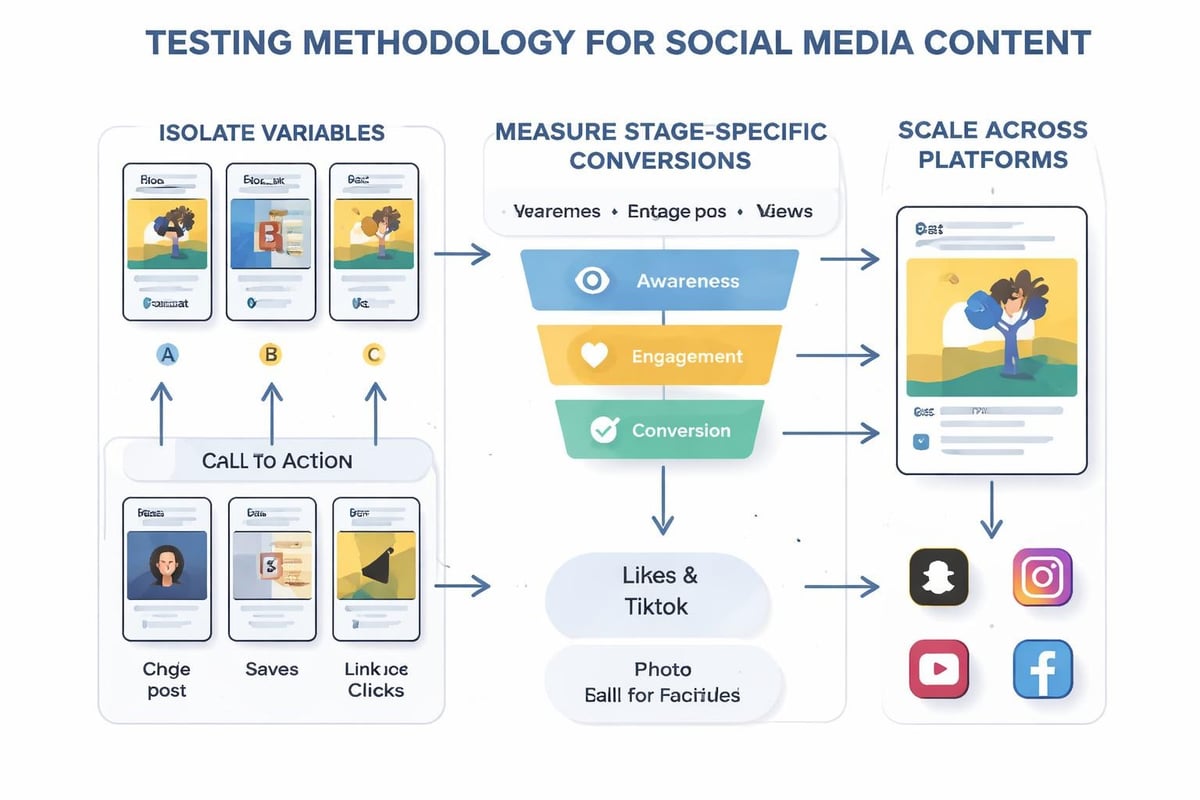
Content testing should be systematic, not random. Test different hooks, formats, and calls-to-action against control content. But test one variable at a time so you know what actually moved the needle. Most businesses test everything simultaneously and learn nothing.
Lookalike audiences based on your highest-value customers allow you to find more prospects who match your ideal profile. These audiences enter your funnel pre-qualified, moving through stages faster and converting at higher rates than cold traffic.
Leveraging User-Generated Content
Your customers' success stories become your most powerful funnel content. When prospects see real people achieving results, objections dissolve. Build systematic processes for collecting testimonials, case studies, and transformation stories.
Influencer partnerships in your niche can instantly fill the top of your funnel with qualified prospects. But the key is choosing partners whose audience matches your ideal customer profile. A million followers means nothing if they're not your buyers.
For businesses focused on B2B lead generation, employee advocacy turns your team into a distribution network. When employees share company content with their professional networks, it carries more weight than branded posts. Implement programs that make sharing easy and rewarding.
Integration With End-to-End Marketing Systems
Your social media funnel doesn't exist in isolation. It's one component of your complete marketing ecosystem. The most effective approach integrates social with email, paid advertising, content marketing, and sales processes into a cohesive system.
When someone engages with your social content, they should enter email sequences that continue the conversation. When they visit your website, retargeting pixels should track them across platforms. When they book an appointment, your CRM should trigger preparation sequences that improve show rates. Understanding end-to-end marketing approaches creates multiplier effects across your entire acquisition engine.
Creating Seamless Transitions
The handoff from social to other channels must feel natural. If someone downloads a lead magnet from your LinkedIn post, your email sequence should reference the specific content that brought them in. Generic "Thanks for subscribing" emails waste the context you've built.
Unified messaging across all touchpoints reinforces your positioning. The language, tone, and value propositions in your social content should mirror what prospects encounter in emails, on sales calls, and in proposal documents. Inconsistency creates doubt.
Consider how your social media funnel supports your sales team rather than operating independently. Sales reps armed with insights about which content prospects engaged with can personalize conversations dramatically. Integration between social platforms and CRM systems makes this possible at scale.
Common Pitfalls That Destroy Funnel Performance
Even well-designed social media funnels fail when businesses make predictable mistakes. Recognizing these pitfalls helps you avoid months of wasted effort and budget.
Impatience kills funnels. Social platforms reward consistency over time. Businesses that post sporadically, give up after two weeks, or constantly change strategy never build the momentum required for sustainable lead generation. According to research on how social media funnels drive ROI, success requires a minimum three-month commitment to see meaningful results.
| Common Mistake | Why It Happens | How to Fix It |
|---|---|---|
| Selling too early | Desperation for quick results | Build awareness first, then nurture |
| Inconsistent posting | No content system | Create content batches in advance |
| Ignoring comments | Treating social as broadcast | Engage within 2 hours of posting |
| Generic targeting | Trying to reach everyone | Define specific customer avatars |
| No retargeting | Assuming one touch converts | Layer retargeting for warm audiences |
Poor targeting wastes the majority of social ad spend. When you target broadly hoping to "find" customers, you're competing in expensive auctions against established brands. Narrow targeting based on specific behaviors, interests, and demographics makes every dollar work harder.
Neglecting the middle of your funnel creates a leaky bucket. You might attract attention and have strong conversion offers, but without nurturing content that builds trust, prospects disappear. The consideration stage requires the most content volume because it's where prospects spend the most time.
Adapting Your Funnel to Platform Evolution
Social platforms change constantly, introducing new features, adjusting algorithms, and shifting user behavior. Your social media funnel must evolve accordingly or become obsolete.
Short-form video dominates attention in 2026 across every major platform. Businesses clinging to text-only posts miss massive reach opportunities. But the key isn't just creating video – it's creating video that serves each funnel stage strategically.
Algorithm changes often reward new features. When platforms introduce fresh formats like LinkedIn newsletters, Instagram notes, or new ad types, early adopters gain disproportionate distribution. Stay informed about platform updates and test new features before they become saturated.
Future-Proofing Your Approach
Build your social media funnel on principles rather than tactics. Tactics change constantly, but principles like providing value before asking, building trust through consistency, and meeting prospects where they are remain evergreen.
Owned audiences protect you from platform changes. Every social follower should have opportunities to join your email list, community, or other channels you control. When algorithm changes tank your organic reach overnight, owned audiences keep your funnel functioning.
Cross-platform presence diversifies risk. Businesses dependent on a single social channel face existential risk when that platform changes or declines. Distribute your funnel across multiple platforms while adapting content to each one's unique culture and format preferences.
Building an effective social media funnel transforms random social activity into predictable lead generation and revenue growth. The key is understanding that every piece of content serves a strategic purpose in moving prospects from awareness through consideration to conversion, while measurement systems ensure you're optimizing for actual business outcomes rather than vanity metrics. If you're ready to stop wasting budget on social content that doesn't convert and start generating qualified appointments from your social presence, Adstra leverages advanced AI systems to build and optimize complete social media funnels that turn cold audiences into ready-to-buy customers. Our guaranteed growth partnership model means we only succeed when you do, aligning our interests with your revenue goals.