


The difference between businesses that thrive and those that merely survive comes down to one critical factor: their ability to consistently source and convert qualified leads. In 2026, the landscape of lead sourcing has evolved dramatically from the outdated spray-and-pray tactics of yesterday. Companies that master the art and science of identifying, attracting, and qualifying potential customers gain an insurmountable competitive advantage. This isn't about collecting random contact information and hoping for the best. It's about building systematic, intelligent pipelines that deliver predictable revenue growth month after month.
Understanding Modern Lead Sourcing in the AI Era
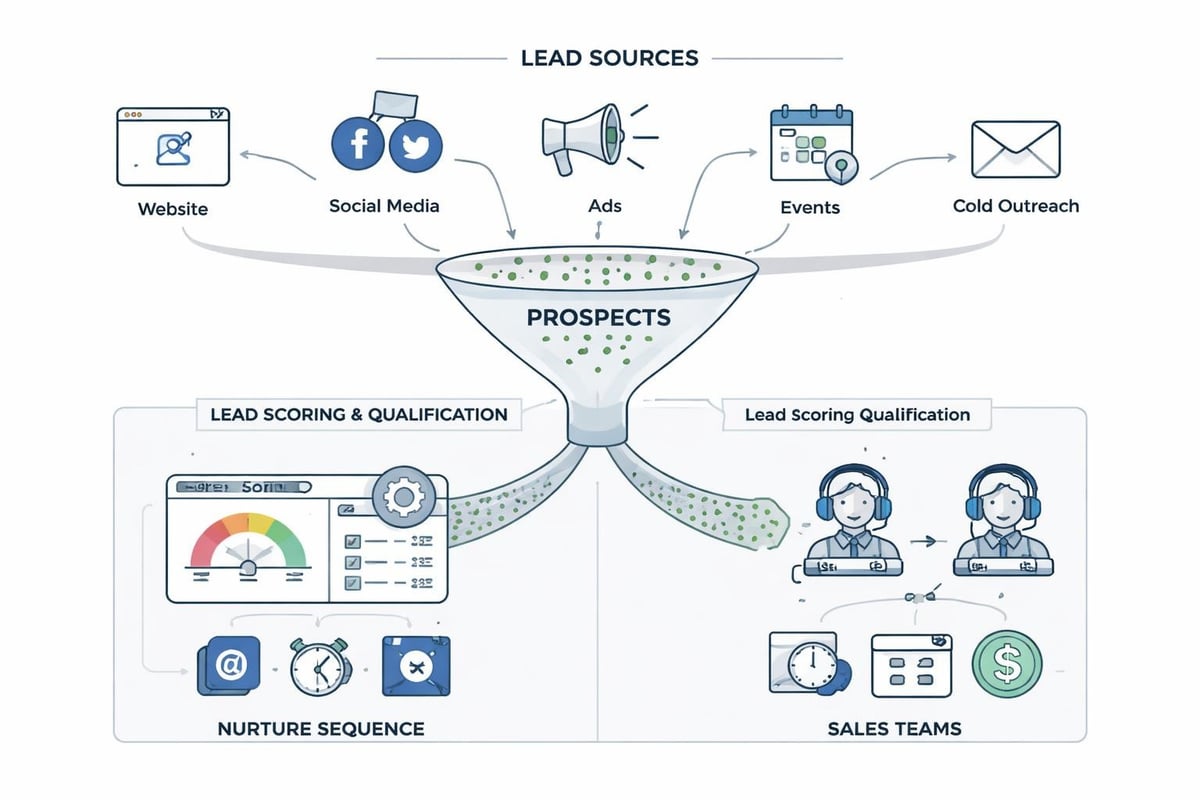
Lead sourcing represents the strategic process of identifying and attracting potential customers who match your ideal customer profile. Unlike generic lead generation that casts wide nets, effective lead sourcing strategies focus on precision targeting and quality over quantity.
The fundamental shift happening right now:
- Traditional cold outreach is dying a slow, painful death
- AI-powered personalization has become table stakes, not optional
- Buyers expect immediate value, not aggressive sales pitches
- Data quality matters infinitely more than database size
The businesses winning at lead sourcing in 2026 understand that every prospect interaction must deliver genuine value. They've abandoned the tired playbook of batch-and-blast emails and robotic cold calls. Instead, they're implementing sophisticated systems that identify buying intent, personalize messaging at scale, and engage prospects at precisely the right moment.
The Evolution From Lead Generation to Lead Sourcing
Here's what separates lead sourcing from simple lead generation: intentionality and qualification built into every step. When you're generating leads, you're focused on volume and capturing contact information. When you're sourcing leads, you're strategically identifying prospects who have both the need and the capacity to become customers.
Consider this comparison:
| Lead Generation | Lead Sourcing |
|---|---|
| High volume, lower quality | Strategic volume, higher quality |
| Focus on capturing contacts | Focus on identifying ready buyers |
| Reactive engagement | Proactive targeting |
| Generic messaging | Personalized outreach |
| Manual qualification | Automated qualification systems |
The companies that understand lead sourcing best practices recognize that sourcing isn't a one-time activity but an ongoing strategic function that requires constant optimization.
Strategic Lead Sourcing Channels That Drive Results
The channel mix you choose determines whether your lead sourcing efforts deliver consistent results or sporadic wins. Each channel serves different purposes in your overall strategy, and the key lies in understanding which combinations work best for your specific market.
Database-Driven Sourcing for B2B Success
B2B database platforms have become exponentially more sophisticated, moving far beyond simple contact lists. Modern database sourcing integrates firmographic data, technographic signals, and behavioral indicators to identify prospects at the perfect stage of their buying journey.
Essential database sourcing tactics:
- Layered filtering that combines company size, technology stack, and recent funding rounds
- Intent signal monitoring that tracks when prospects research solutions like yours
- Job change alerts that identify decision-makers entering new roles
- Competitive intelligence revealing prospects using competitor solutions
The most effective practitioners don't just pull lists from databases. They create dynamic segments that automatically update based on changing prospect characteristics and behaviors.
Content-Driven Inbound Sourcing
While outbound tactics grab attention, inbound content strategies build sustainable lead sourcing engines. The critical shift here involves creating content that doesn't just attract visitors but actively qualifies them.
Your content strategy should map directly to specific buyer journey stages and qualification criteria. Educational content attracts early-stage researchers. Solution-focused content engages active evaluators. Case studies and ROI calculators attract ready-to-buy prospects.
High-converting content types for lead sourcing:
- Interactive assessments that qualify while providing value
- Industry-specific calculators demonstrating potential ROI
- Comparison guides positioning your solution strategically
- Implementation roadmaps showing the path to success
- Video demonstrations addressing specific pain points
The businesses mastering local lead generation understand that content must speak directly to geographic and industry-specific needs.
Advanced Lead Sourcing Tactics for 2026
The lead sourcing landscape continues evolving rapidly, and staying ahead requires adopting emerging tactics before they become saturated. Here's what's working exceptionally well right now.
AI-Powered Prospect Intelligence
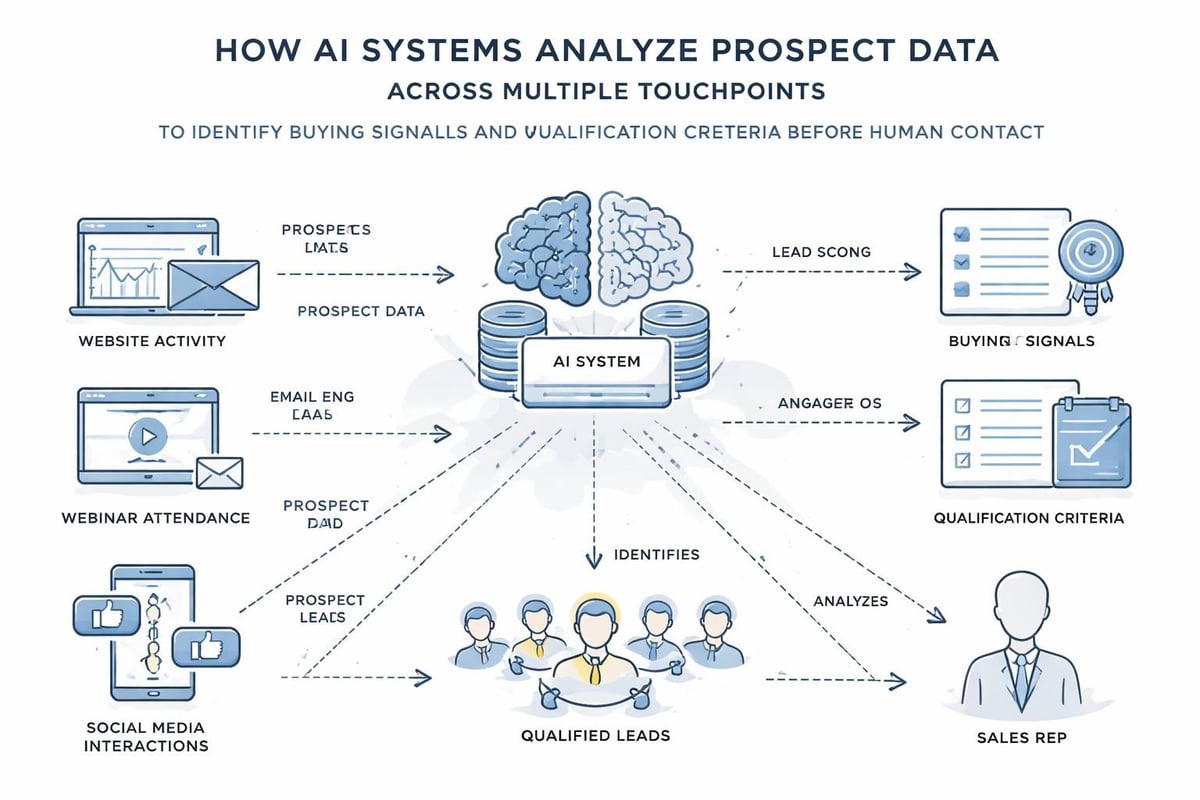
Artificial intelligence has transformed lead sourcing from an art into a predictable science. AI systems now analyze thousands of data points to identify prospects showing buying intent signals that human analysts would never catch.
Modern AI sourcing platforms track:
- Website visitor behavior patterns indicating research phase
- Social media engagement suggesting pain point awareness
- Technology adoption signals revealing budget availability
- Organizational changes creating buying opportunities
- Market triggers indicating timing for solutions
The key advantage? These systems work 24/7, continuously identifying and scoring prospects based on real-time signals. When you're exploring tools for lead generation, prioritize platforms that offer predictive scoring and automated enrichment capabilities.
Account-Based Lead Sourcing
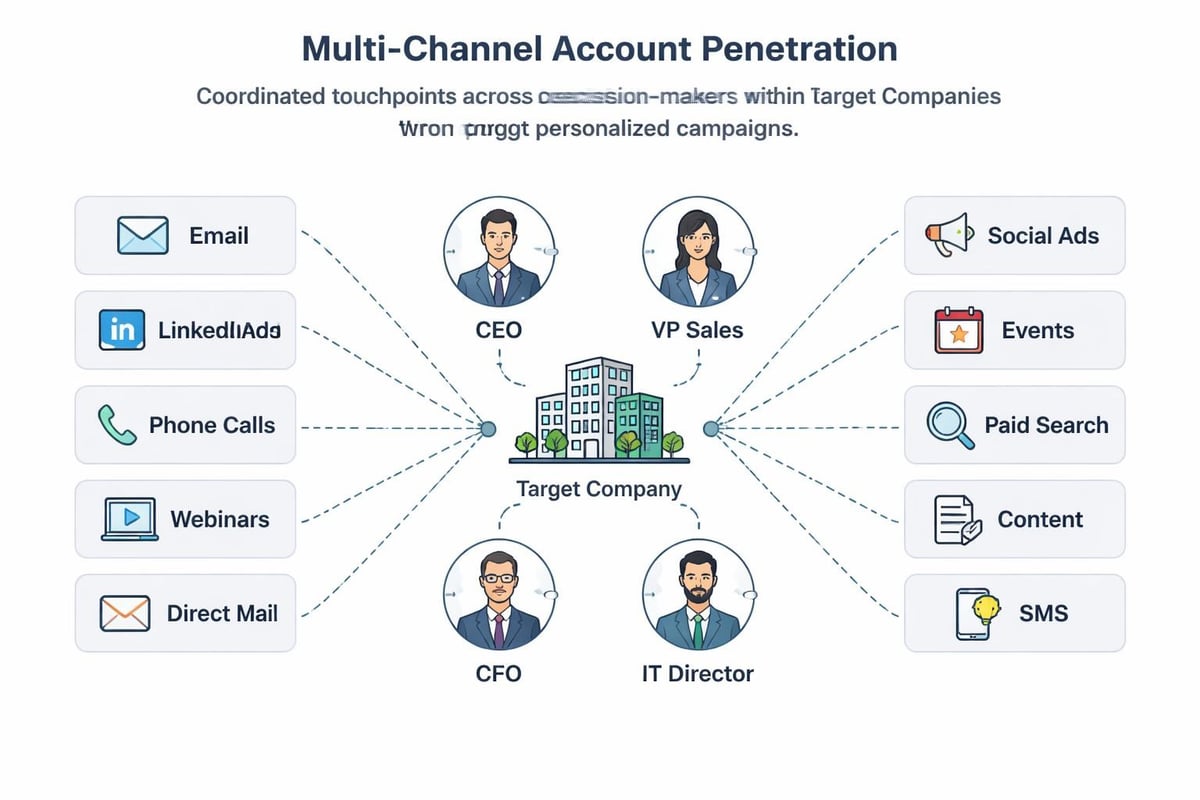
Account-Based Marketing (ABM) has evolved into Account-Based Sourcing, where every tactic focuses on penetrating specific high-value accounts rather than casting wide nets. This approach delivers dramatically higher conversion rates for complex B2B sales.
| Traditional Sourcing | Account-Based Sourcing |
|---|---|
| Target: Broad audience segments | Target: Specific named accounts |
| Message: General value propositions | Message: Account-specific insights |
| Success metric: Volume of leads | Success metric: Account engagement depth |
| Sales alignment: Handoff model | Sales alignment: Integrated from start |
| Timeline: Short-term campaigns | Timeline: Long-term account development |
The proven tactics and marketing strategies that work best in ABM focus on multi-threading connections within target accounts rather than relying on single-point-of-contact relationships.
Building Your Lead Sourcing Infrastructure
Creating sustainable lead sourcing success requires more than tactics. You need robust infrastructure that supports consistent execution and continuous improvement.
Data Management and Enrichment Systems
Your lead sourcing effectiveness lives or dies based on data quality. Garbage in, garbage out isn't just a cliché-it's the harsh reality of modern marketing operations.
Critical data infrastructure components:
- Real-time enrichment that automatically appends firmographic and contact data
- Deduplication protocols preventing waste and poor customer experiences
- Data decay monitoring identifying when contact information becomes stale
- Source attribution tracking revealing which channels deliver best results
- Compliance frameworks ensuring adherence to privacy regulations
Companies that excel at lead sourcing treat their databases as living assets requiring constant maintenance, not static repositories they update quarterly.
Qualification Frameworks That Scale
The bottleneck in most lead sourcing operations isn't finding prospects-it's qualifying them efficiently. Manual qualification doesn't scale, and purely automated qualification misses nuanced signals.
Build hybrid qualification systems combining automated scoring with strategic human touchpoints. Your framework should answer these essential questions for every prospect:
- Do they match our ideal customer profile demographics?
- Are they experiencing pain points our solution addresses?
- Do they have budget authority or access to decision-makers?
- What's their timeline for implementing solutions?
- Have they shown active buying signals recently?
The businesses succeeding with digital marketing funnels build qualification directly into every funnel stage rather than treating it as a separate downstream activity.
Integration Strategies That Multiply Results
Lead sourcing never exists in isolation. Your sourcing strategy must integrate seamlessly with sales processes, marketing automation, and customer success workflows to maximize conversion rates and revenue impact.
Sales and Marketing Alignment
The handoff between marketing-sourced leads and sales teams remains the most critical integration point. Misalignment here wastes sourcing investments and frustrates both teams.
Essential alignment elements:
- Shared definition of qualified leads with specific criteria
- Real-time lead routing based on territory and specialization
- Automated context transfer providing sales with complete prospect history
- Feedback loops allowing sales to inform sourcing strategy
- Joint accountability metrics measuring pipeline and revenue, not just lead volume
When exploring top lead generation companies, evaluate how they facilitate sales and marketing alignment rather than just delivering contact lists.
Multi-Channel Orchestration
Single-channel lead sourcing leaves massive opportunities on the table. Prospects engage across multiple touchpoints before making buying decisions, and your sourcing strategy must reflect this reality.
Modern orchestration connects:
- Paid advertising creating initial awareness
- Content marketing providing education and building trust
- Email sequences nurturing prospects through buying stages
- Social media engagement humanizing your brand
- Direct outreach at optimal timing based on engagement signals
The most sophisticated operators use best practices for following up with leads across coordinated sequences that adapt based on prospect behavior and response patterns.
Measuring and Optimizing Lead Sourcing Performance
What gets measured gets improved. Yet most organizations track vanity metrics that don't correlate with actual business outcomes. Your lead sourcing measurement framework should focus relentlessly on metrics that predict revenue.
Critical Performance Indicators
Move beyond counting leads and start tracking metrics that matter:
Top-of-Funnel Metrics:
- Source-specific lead quality scores
- Cost per qualified lead by channel
- Time from first touch to qualification
- Source mix diversity and concentration risk
Mid-Funnel Metrics:
- Lead-to-opportunity conversion rates by source
- Sales acceptance rates of marketing-sourced leads
- Average deal size by sourcing channel
- Sales cycle length variations by source
Revenue Metrics:
- Customer acquisition cost by sourcing method
- Lifetime value of customers by original source
- Return on investment for each sourcing channel
- Revenue contribution percentage from sourced leads
Companies implementing simple tactics to generate qualified leads recognize that simplicity in execution requires sophistication in measurement.
Continuous Improvement Frameworks
Lead sourcing optimization never ends. Market conditions change, competitor tactics evolve, and prospect preferences shift. Your optimization framework should include:
- Weekly performance reviews identifying trends and anomalies early
- Monthly channel audits reallocating budget toward highest performers
- Quarterly strategy sessions incorporating market changes and new tactics
- Annual comprehensive reviews reshaping overall sourcing strategy
The fastest-growing companies treat lead sourcing as a competitive advantage worthy of constant investment and attention, not a set-it-and-forget-it marketing function.
Advanced Personalization at Scale
Generic outreach fails spectacularly in 2026. Prospects ignore messages that don't demonstrate genuine understanding of their specific situations. Yet manual personalization doesn't scale beyond tiny volumes.
The solution lies in structured personalization frameworks that combine automation with authentic customization. Modern systems can personalize across multiple dimensions simultaneously:
- Industry-specific pain points and use cases
- Company size and organizational structure considerations
- Geographic location and regional market factors
- Technology stack and integration requirements
- Recent company news and triggers
Personalization layers that convert:
- Dynamic content blocks adapting to prospect characteristics
- Industry-specific case studies and social proof
- Customized ROI calculations based on company data
- Relevant integration demonstrations for their tech stack
- Personalized video messages at scale using AI
When you're acquiring leads effectively, remember that personalization isn't about using someone's first name. It's about demonstrating you understand their specific challenges and can solve their unique problems.
Risk Mitigation in Lead Sourcing
Every lead sourcing strategy carries inherent risks that can undermine your entire operation if left unaddressed. The savviest operators identify and mitigate these risks proactively.
Common Sourcing Pitfalls
Channel over-concentration creates vulnerability when algorithm changes or market shifts occur. Diversify your sourcing mix to ensure no single channel represents more than 40% of qualified leads.
Data quality degradation happens gradually and invisibly. Implement automated monitoring that flags when bounce rates increase, engagement drops, or conversion rates decline by source.
Compliance violations carry devastating financial and reputational consequences. Stay current on GDPR, CCPA, and industry-specific regulations affecting data collection and prospect outreach.
Attribution confusion prevents accurate optimization when you can't identify which touchpoints actually drive conversions. Implement proper tracking and multi-touch attribution models.
The organizations running effective Facebook lead generation campaigns understand that paid channel dependency creates risk requiring backup sourcing strategies.
Mastering lead sourcing in 2026 requires sophisticated systems, intelligent automation, and relentless optimization-not guesswork and hope. The businesses winning in today's competitive landscape have moved far beyond basic lead generation into strategic sourcing that delivers qualified, ready-to-buy prospects consistently. If you're ready to transform your lead sourcing from a cost center into a predictable revenue engine, Adstra leverages advanced AI systems and proven methodologies to generate qualified sales leads and automate appointment bookings that actually convert. Our guaranteed growth partnership model means we invest directly in your success, delivering the transparent, value-driven results traditional agencies can't match.