
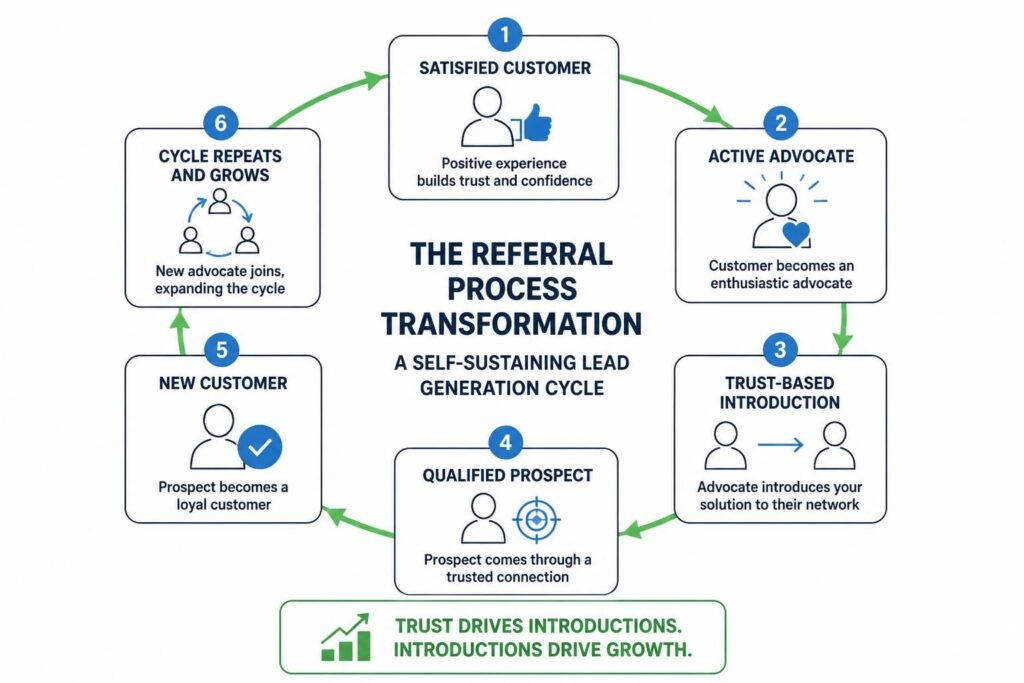
Every business owner knows the frustration of pouring money into marketing campaigns that generate nothing but tire-kickers and ghost inquiries. Meanwhile, the most valuable leads often come from the most unexpected source: your existing customers. Sales referrals represent the single highest-converting lead source available in 2026, outperforming cold outreach, paid ads, and even content marketing in both conversion rates and customer lifetime value. When someone vouches for your business, they transfer their trust directly to the prospect, eliminating the skepticism that plagues traditional marketing channels. The challenge isn't whether referrals work, but how to systematically generate them at scale without sounding desperate or transactional.
Why Sales Referrals Dominate Every Other Lead Source
The numbers tell an undeniable story about referral effectiveness. According to benchmark research on referral performance, referred customers convert at rates 3-5 times higher than leads from other channels and demonstrate 16% higher lifetime value. This isn't coincidental; it's the natural result of pre-qualified trust.
When a satisfied customer recommends your service, they're essentially conducting the first stage of your sales process for you. They've already:
- Established credibility and trust with the prospect
- Identified a genuine need or pain point
- Positioned your solution as the answer
- Eliminated the cold introduction barrier
Traditional lead generation forces you to build trust from scratch with every prospect. Sales referrals skip that entire phase, placing you directly into consideration mode. This acceleration doesn't just save time; it fundamentally changes the economics of customer acquisition.
The Trust Transfer Phenomenon
Think about your own buying behavior. When a colleague recommends a vendor they've worked with successfully, you approach that conversation differently than responding to a cold email. The skepticism disappears. The defensive posture softens. You're actively looking for reasons to say yes rather than reasons to say no.
This psychological shift creates massive advantages:
| Traditional Lead | Referral Lead |
|---|---|
| Skeptical mindset | Open mindset |
| Long sales cycle | Accelerated decision |
| Price-focused | Value-focused |
| Multiple objections | Pre-qualified need |
| Low close rate (2-5%) | High close rate (15-40%) |
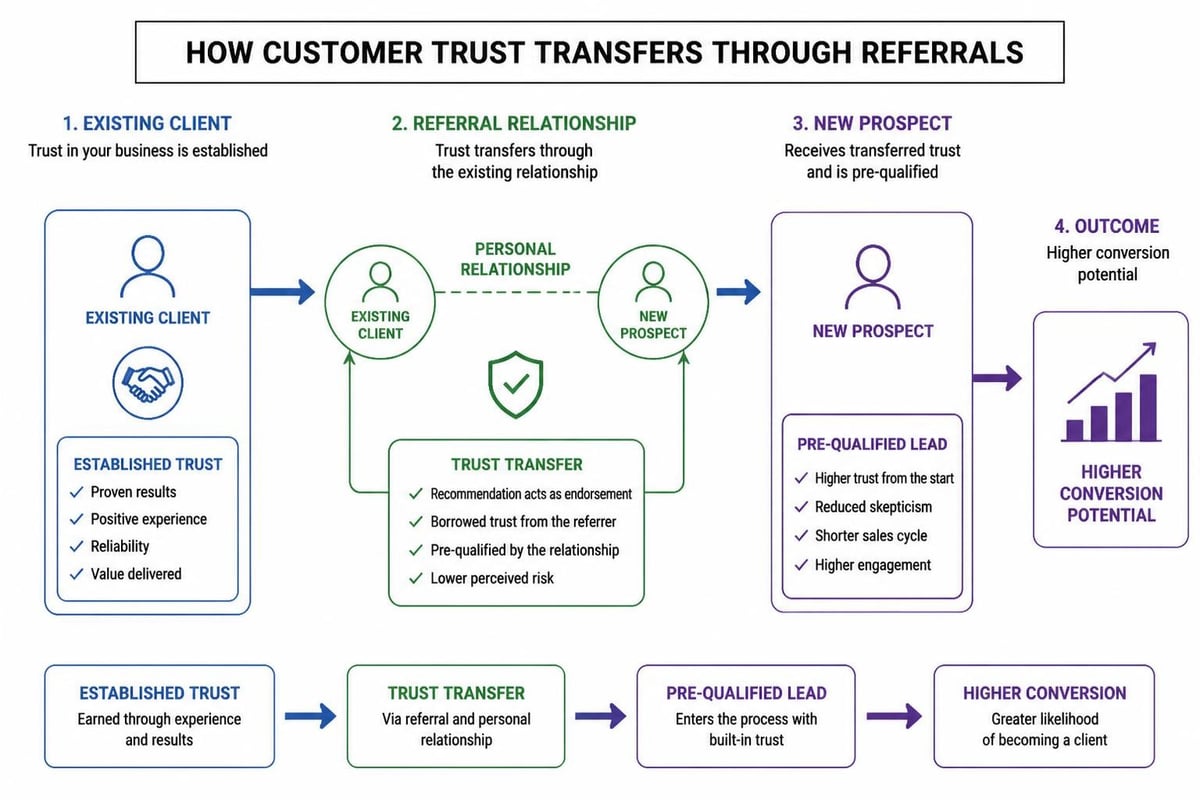
The implications for lead generation strategies are profound. While most businesses obsess over acquiring new prospects through paid channels, they overlook the goldmine sitting in their existing customer relationships. Every satisfied client represents potential access to 10-50 similar prospects within their network.
Building a Systematic Referral Generation Engine
Most businesses fail at sales referrals because they treat them as random windfalls rather than engineered outcomes. They wait passively, hoping customers will spontaneously recommend them. This approach generates sporadic results at best. Building a predictable referral engine requires intentional systems and consistent execution.
The foundation starts with exceptional service delivery. You cannot systemize referrals if your product or service doesn't consistently deliver results. As Forbes notes in their referral strategies, exceptional service creates natural advocacy. Customers who experience transformative results don't need convincing to make referrals; they need structure and permission.
The Three-Phase Referral System
Phase 1: Referral Readiness
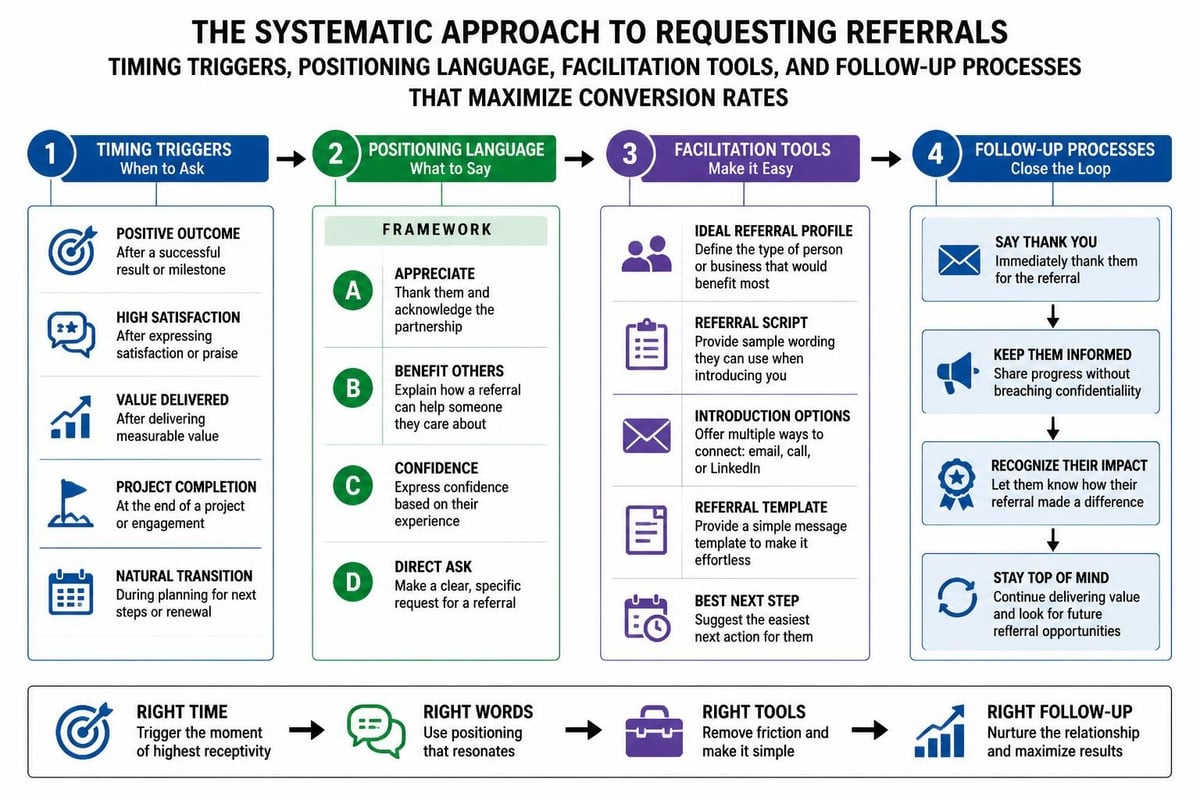
Before requesting referrals, ensure you've delivered measurable value. Identify specific trigger points in your customer journey where satisfaction peaks:
- Successful project completion
- Milestone achievement
- Positive ROI realization
- Problem resolution
- Anniversary of partnership
These moments represent optimal referral request timing. Your customer is experiencing maximum satisfaction and gratitude, making them most receptive to helping you grow.
Phase 2: Strategic Asking
The biggest mistake businesses make is never actually asking for referrals. According to research on driving quality referrals, 83% of satisfied customers are willing to make referrals, but only 29% actually do. The gap exists because businesses fail to ask directly and specifically.
Effective referral requests include:
- Context setting: Remind them of the results you've delivered
- Specific targeting: Ask about particular types of prospects (industry, role, challenge)
- Easy action: Provide simple next steps (introduction email, phone number, meeting setup)
- Reciprocity: Offer value in return (not monetary incentives, but professional support)
Phase 3: Frictionless Facilitation
When a customer agrees to make a referral, eliminate every possible barrier. Provide pre-written introduction templates they can customize. Offer to handle the follow-up entirely. Make the process so simple that their commitment automatically converts to action.
Many lead generation agencies now incorporate referral facilitation into their service offerings, recognizing that automation can dramatically increase referral conversion rates. Tools that trigger referral requests at optimal moments and streamline the introduction process can double or triple referral generation without additional effort.
Overcoming the Fear of Asking
The primary obstacle preventing most salespeople from generating more sales referrals isn't capability; it's psychology. They fear appearing needy, desperate, or transactional. This fear costs businesses millions in lost revenue annually. Understanding how to ask for referrals without sounding desperate transforms this obstacle into opportunity.
The secret lies in positioning. When you approach referral requests as opportunities to help others solve problems (rather than favors for yourself), the entire dynamic shifts.
Consider these contrasting approaches:
Desperate: "I'm trying to hit my quarterly goal. Do you know anyone who might need our services?"
Professional: "We've helped you reduce customer acquisition costs by 40%. I'm looking to create similar results for two more companies in your industry this quarter. Who comes to mind that faces similar challenges?"
The second approach positions the referral as value delivery to the prospect, not a favor to you. This reframing eliminates the discomfort on both sides of the conversation.
The Accountability Factor
Working with a business coaching firm can dramatically accelerate your referral generation because external accountability forces consistent execution. Most salespeople know they should ask for referrals but never develop the habit. An accountability partner ensures you're making referral requests systematically rather than sporadically.
The discipline of tracking referral requests, conversions, and outcomes also reveals patterns. You'll discover which customer segments provide the highest-quality referrals, which industries generate the most introductions, and which asking approaches yield the best results. This data transforms referrals from art to science.
Advanced Referral Strategies for Scaling Growth
Once you've mastered basic referral generation, advanced strategies can multiply your results exponentially. These approaches require more sophistication but deliver outsized returns for businesses serious about leveraging sales referrals as their primary growth engine.
Reciprocal Referral Networks
Rather than treating referrals as one-way transactions, create mutual referral relationships with complementary service providers. If you provide marketing services, partner with web developers, copywriters, and business consultants who serve similar client profiles. Each closed deal becomes a potential source of multiple referrals across the network.
Structure these partnerships with clear expectations:
- Monthly referral targets
- Introduction protocols
- Feedback loops on referral quality
- Shared success metrics
This systematic approach, similar to B2B lead generation strategies, transforms random referrals into predictable pipeline contribution.
The Customer Advisory Board Approach
Select your top 5-10 customers and formalize their role as advisors. Schedule quarterly meetings where they provide feedback on your service, industry insights, and strategic direction. In exchange, you deliver exclusive value: early access to new offerings, preferred pricing, or strategic consulting.
This structure creates natural referral opportunities because:
- Regular engagement keeps you top-of-mind
- Advisory role increases their investment in your success
- Peer-to-peer discussions expose them to other potential advocates
- Formal structure makes referral requests expected rather than awkward
Companies implementing advisory boards report 40-60% increases in referral volume from participating customers compared to standard client relationships.
Referral Incentive Programs (Done Right)
Financial incentives for referrals can work, but most businesses implement them incorrectly. Offering $100 for a referral commoditizes the relationship and attracts low-quality introductions. Instead, structure incentives around outcomes:
| Incentive Type | Effectiveness | Best Use Case |
|---|---|---|
| Flat fee per introduction | Low | Never recommended |
| Percentage of first sale | Medium | Transactional relationships |
| Service credits | High | Ongoing client relationships |
| Charitable donations | High | Professional services |
| Exclusive experiences | Very High | Premium offerings |
The goal isn't to pay for referrals but to acknowledge and appreciate the effort involved in making quality introductions. According to effective sales referral techniques, non-monetary recognition often outperforms cash incentives because it preserves the altruistic motivation behind referrals.
Integrating Referrals into Your Sales Process
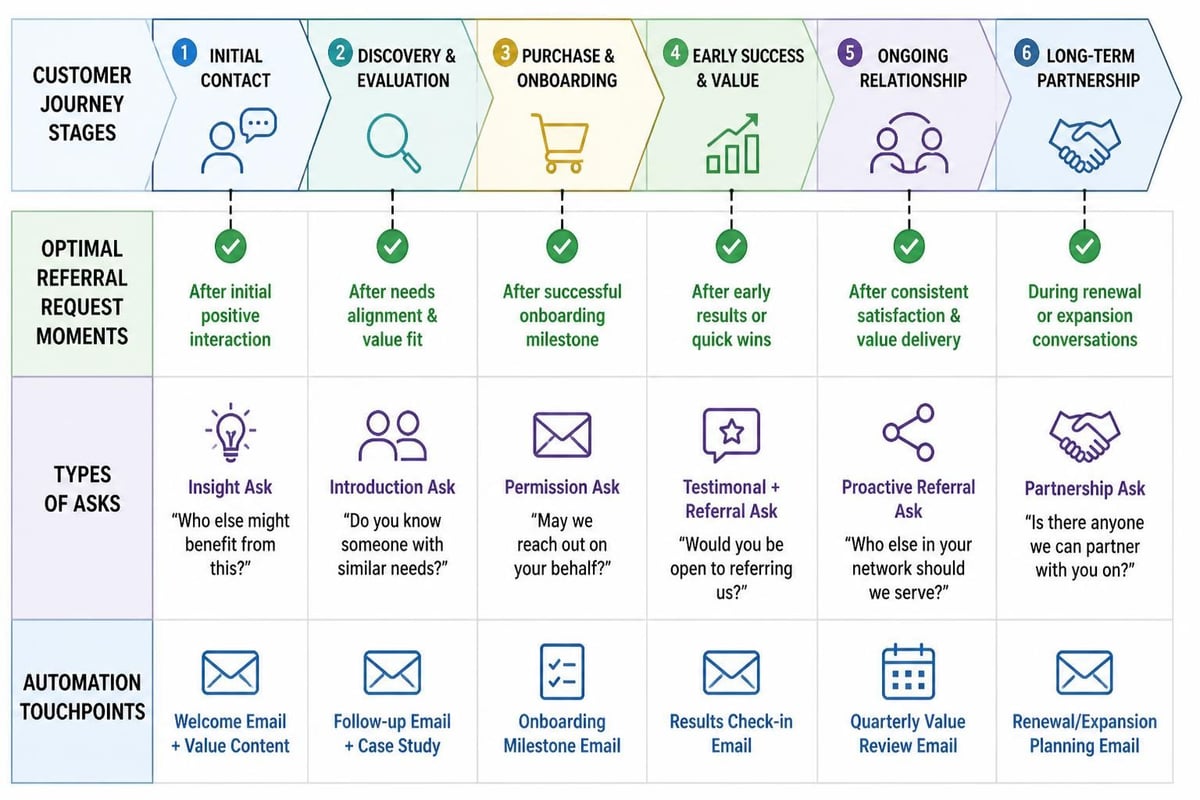
Sales referrals shouldn't exist as a separate activity outside your core sales process. The most successful organizations embed referral generation into every stage of the customer journey, creating multiple touchpoints for advocacy development.
Pre-Sale Referral Priming
Before prospects even become customers, introduce the referral expectation. During your sales conversations, mention how your business grows primarily through referrals from satisfied clients. This accomplishes two objectives: it builds credibility through social proof and sets the expectation that successful customers help others discover your services.
Implementation tactics:
- Share specific customer success stories during sales presentations
- Mention recent referrals naturally in conversation
- Include referral testimonials in proposals and presentations
- Discuss your selective client approach (positioning referrals as the primary acquisition channel)
This approach, similar to strategies outlined in sales funnel optimization, creates a referral mindset before the relationship even begins.
Mid-Engagement Referral Opportunities
Don't wait until project completion to request referrals. As you deliver quick wins and early results, ask for specific micro-referrals:
- "We just helped you solve [specific problem]. Who else in your network struggles with this?"
- "This result typically takes 90 days. We achieved it in 30. Would you be comfortable sharing this success with [specific role] in your organization?"
- "Your team has mentioned [related challenge] several times. We have a solution for that. Should we loop in your colleagues?"
These incremental referral requests feel natural because they're tied to specific value delivery moments. They also generate referrals while enthusiasm is highest, rather than waiting months for project completion.
Post-Sale Referral Automation
After successful engagement, automate your referral request process without losing personalization. Effective approaches include:
- 90-day success review: Schedule a formal review meeting to discuss results, then transition naturally into referral requests
- Case study development: Invite top customers to participate in case studies, which naturally leads to referral conversations
- Email sequences: Deploy personalized email series requesting specific referral types at optimal intervals
- Referral rewards programs: Send automated acknowledgments and rewards when referrals convert
Modern marketing agency tools enable sophisticated automation while maintaining the personal touch that makes sales referrals effective. The key is balancing efficiency with authenticity.
Measuring and Optimizing Referral Performance
What gets measured gets managed. Tracking referral metrics transforms gut feelings into data-driven decisions. Most businesses have no idea which customer segments generate the best referrals, what conversion rates they achieve, or how referral quality compares to other lead sources.
Essential Referral Metrics
Establish baseline measurements across these dimensions:
Volume Metrics:
- Total referrals requested per month
- Total referrals received per month
- Referral request conversion rate (requests to actual referrals)
- Referrals per customer segment
Quality Metrics:
- Referral-to-opportunity conversion rate
- Referral-to-customer conversion rate
- Average deal size from referrals vs. other sources
- Sales cycle length for referrals vs. other sources
- Customer lifetime value from referrals vs. other sources
Efficiency Metrics:
- Cost per referral lead (time + tools + incentives)
- Customer acquisition cost from referrals
- Return on referral investment
- Referral revenue as percentage of total revenue
This analytical approach mirrors the demand generation marketing methodology, where continuous optimization based on performance data drives exponential improvements.
Identifying Your Referral Champions
Not all customers generate equal referral value. Analyze your data to identify patterns:
- Which industries provide the highest referral volume?
- Which customer personas make the most introductions?
- What engagement levels correlate with referral activity?
- Which service offerings generate the most referrals?
Once you've identified your referral champions, double down. Provide them extra attention, exclusive benefits, and special recognition. These customers represent your highest-leverage growth investment.
Common Referral Mistakes That Kill Results
Even businesses that understand sales referrals' importance often sabotage their own efforts through common mistakes. Avoiding these pitfalls can immediately improve your referral generation results.
Mistake 1: Generic Referral Requests
"Do you know anyone who might need our services?" is the death of referral generation. This vague question forces your customer to do extensive mental work: scan their entire network, evaluate who might have relevant needs, and assess whether they'd be comfortable making an introduction.
Instead, make specific requests that reduce cognitive load:
- "We're looking to work with two more SaaS companies experiencing rapid growth. Who in your network fits that profile?"
- "Our ideal client is a VP of Sales managing a team of 10-50 reps. You probably know several people in that exact role."
- "We specialize in helping businesses like yours scale from $2M to $10M. Which companies in your industry are at that inflection point?"
The more specific your request, the easier you make the referral process. As outlined in strategies for asking for referrals, specificity dramatically increases both referral quantity and quality.
Mistake 2: Referral Request Timing Failures
Asking for referrals before delivering value destroys trust. Requesting them too long after success allows enthusiasm to fade. Optimal timing requires careful attention to customer experience and results delivery.
Poor timing examples:
- Week 1 of a 90-day engagement
- Immediately after resolving a service issue
- During contract renewal negotiations
- After months of radio silence
Optimal timing examples:
- Immediately after delivering a significant result
- Following positive feedback or testimonial
- During quarterly business reviews celebrating success
- After expanding service scope (demonstrating increased trust)
Mistake 3: Failing to Close the Loop
When a customer provides a referral, many businesses drop the ball on communication. They fail to update the referring customer on progress, outcomes, or appreciation. This negligence ensures the customer never makes another referral.
Implement a referral feedback loop:
- Immediate acknowledgment: Thank the customer within 24 hours of receiving the referral
- Progress updates: Inform them when you make contact, schedule meetings, or encounter challenges
- Outcome notification: Share whether the referral converted, regardless of result
- Appreciation: Send thoughtful recognition proportional to referral quality
This systematic follow-up, similar to best practices in acquiring qualified leads, transforms one-time referrers into consistent referral sources. They see that their introductions are valued, respected, and handled professionally.
Referrals vs. Cold Outreach: The 2026 Reality
The lead generation landscape has fundamentally shifted since 2025. Why cold outreach is failing has been extensively documented, with spam filters, ad blindness, and skepticism reaching all-time highs. Meanwhile, sales referrals continue gaining effectiveness as buyers increasingly trust peer recommendations over marketing messages.
Consider the comparative economics:
Cold Outreach:
- 1-3% response rate
- 0.1-0.5% conversion to customer
- $200-500 customer acquisition cost
- 60-90 day sales cycle
- High churn rates
Sales Referrals:
- 50-70% response rate
- 15-40% conversion to customer
- $50-150 customer acquisition cost
- 20-45 day sales cycle
- Low churn rates
The choice becomes obvious when you examine actual performance data. Yet most businesses still allocate 80% of their acquisition budget to cold outreach and only 20% to referral development. This misallocation represents one of the largest growth opportunities available in 2026.
Sales referrals aren't just another lead source-they're the most efficient, highest-converting growth channel available to businesses willing to systematically develop them. By implementing the referral generation systems, measurement frameworks, and optimization strategies outlined here, you can transform satisfied customers into a predictable pipeline of pre-qualified prospects. If you're ready to move beyond traditional lead generation approaches and build a referral engine that delivers consistent, qualified opportunities, Aletto specializes in creating systematic growth partnerships that align our success with yours, leveraging advanced AI systems to complement your referral efforts with automated lead qualification and appointment booking that turns warm introductions into closed deals.