


The digital landscape has transformed how businesses attract and convert potential customers, making digital marketing leads the lifeblood of modern revenue generation. Every day, thousands of companies compete for attention online, yet most struggle to generate qualified prospects who actually convert into paying customers. Understanding how to systematically generate, nurture, and convert digital marketing leads separates thriving businesses from those that merely survive. With advanced technologies and data-driven strategies now accessible to companies of all sizes, the opportunity to build predictable lead generation systems has never been greater.
Why Digital Marketing Leads Matter More Than Ever in 2026
The statistics tell a compelling story. Businesses that prioritize lead generation strategies see 50% more sales-ready leads at 33% lower cost than those relying on outdated methods. The latest lead generation statistics reveal that companies using multiple digital channels experience significantly higher conversion rates compared to single-channel approaches.
Digital marketing leads represent more than just contact information. They're potential relationships with people who've expressed interest in solving problems your business addresses. Unlike traditional advertising that interrupts people, digital lead generation attracts prospects already searching for solutions.
The shift toward digital-first buying behaviors has accelerated dramatically. Today's buyers complete 70% of their purchase journey before ever speaking with a sales representative. This means your digital presence must work harder than ever to capture attention, build trust, and demonstrate value before human interaction begins.
The Real Cost of Ineffective Lead Generation
Many businesses waste thousands monthly on campaigns that generate low-quality leads. These "leads" never answer calls, lack budget authority, or simply weren't ready to buy in the first place. The opportunity cost compounds when sales teams spend valuable time chasing dead ends instead of closing deals.
Consider these common pain points:
- Marketing budgets depleted without measurable ROI
- Sales teams frustrated by unqualified prospects
- Inconsistent revenue making growth planning impossible
- Inability to scale because lead quality decreases with volume
- Wasted resources on tactics that worked years ago but fail today
Building a Foundation for High-Quality Digital Marketing Leads
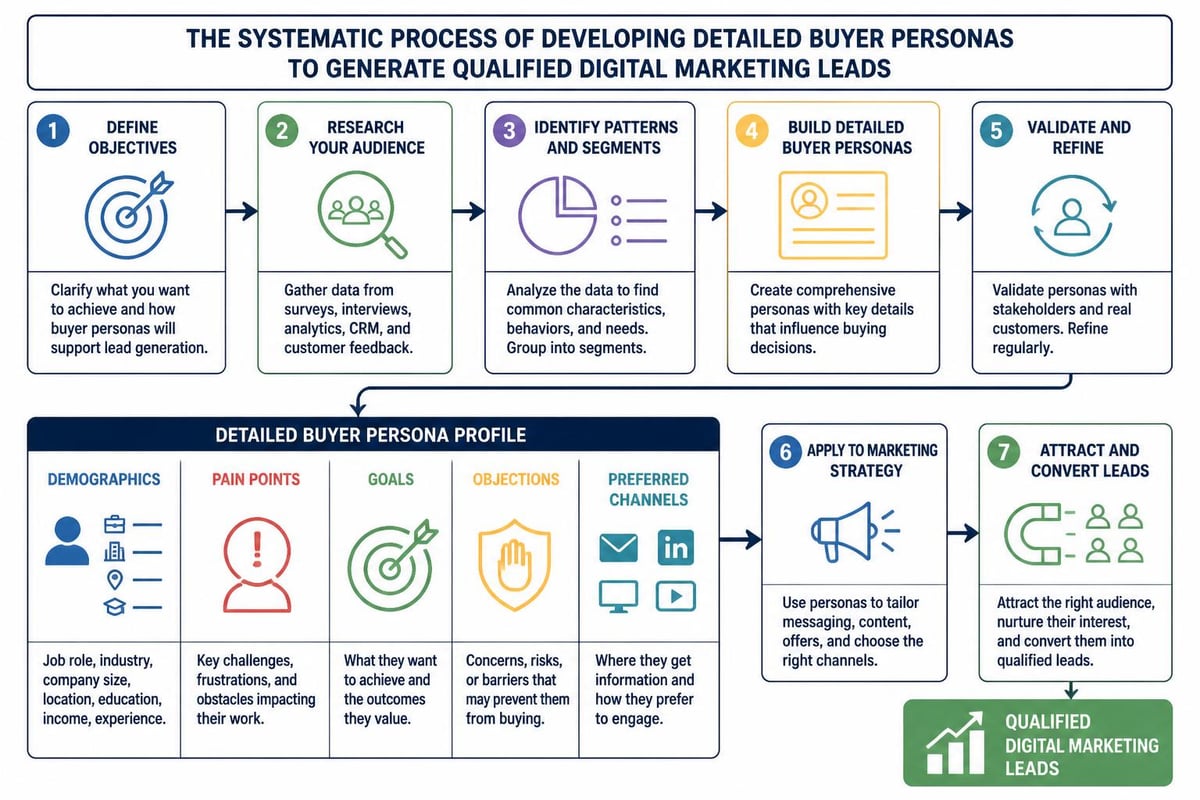
The complete lead generation process involves multiple stages, each requiring specific strategies and systems. Success starts with understanding your ideal customer profile at a granular level.
Target audience definition goes beyond demographics. You need psychographic insights: What keeps your prospects awake at night? Which specific problems do they need solved urgently? What objections prevent them from buying? When you can answer these questions precisely, your messaging resonates powerfully.
Creating detailed buyer personas transforms abstract concepts into actionable intelligence. Document your ideal customers' job titles, responsibilities, challenges, goals, and preferred communication channels. This clarity informs every subsequent decision about content, channels, and conversion strategies.
Choosing the Right Channels for Lead Acquisition
Not all digital channels deliver equal results. Your target audience congregates in specific online spaces, and reaching them requires strategic channel selection.
| Channel | Best For | Average Cost Per Lead | Conversion Timeline |
|---|---|---|---|
| Search Engine Marketing | High-intent buyers actively searching | $50-$200 | Immediate to 7 days |
| Content Marketing | Building authority and trust | $30-$100 | 30-90 days |
| Social Media Advertising | Brand awareness and retargeting | $25-$150 | 14-45 days |
| Email Marketing | Nurturing existing relationships | $10-$50 | 7-60 days |
| LinkedIn Outreach | B2B decision-makers | $75-$300 | 14-90 days |
The digital marketing lead generation strategies that work best combine multiple channels into integrated campaigns. This multi-touch approach ensures prospects encounter your message repeatedly through their preferred platforms.
Advanced Tactics for Generating Digital Marketing Leads That Convert
Modern lead generation extends far beyond basic contact forms and generic content offers. The businesses winning today leverage sophisticated systems that identify, attract, and qualify prospects automatically.
AI-powered lead generation represents the current frontier. Machine learning algorithms analyze thousands of data points to identify patterns in successful conversions, then optimize campaigns in real-time based on performance. This technology makes decisions faster and more accurately than human marketers ever could.
AI tools for marketing have evolved dramatically, now handling tasks from content personalization to predictive lead scoring. These systems learn continuously, improving performance as they process more data about which prospects convert and why.
Content That Attracts and Qualifies Simultaneously
Your content strategy should accomplish dual purposes: attracting traffic while pre-qualifying visitors. Generic blog posts generate traffic but rarely produce qualified leads. Strategic content addresses specific pain points your ideal customers experience, naturally filtering out poor-fit prospects.
Consider these high-converting content formats:
- Calculator tools that provide instant value while collecting lead information
- Assessment quizzes that diagnose problems and recommend solutions
- Interactive ROI estimators showing potential returns from your solution
- Comparison guides positioning your offering against alternatives
- Case study libraries demonstrating results for similar businesses
Each format gives value first, making prospects willing to exchange contact information. The self-selection process means people who engage are genuinely interested in what you offer.
Optimizing Conversion Points Across the Customer Journey
Digital marketing leads don't materialize randomly. They result from deliberate conversion optimization across every customer touchpoint. From initial awareness through consideration to decision stages, each interaction should guide prospects toward conversion.
Landing page optimization dramatically impacts lead quantity and quality. Minor improvements in headline clarity, form design, or trust signals can double conversion rates. Effective lead generation tactics emphasize continuous testing and refinement based on data, not assumptions.
The psychology of conversion reveals that reducing friction matters more than adding persuasive elements. Every unnecessary form field, unclear call-to-action, or page distraction costs you leads. Simplification often outperforms sophistication.
Form Design That Maximizes Completion
Traditional lead capture forms request too much information too early. Progressive profiling collects data gradually across multiple interactions, improving initial conversion rates while still gathering necessary qualification details.
Best practices for high-converting forms:
- Request only essential information initially (typically name and email)
- Use smart defaults and conditional logic to reduce typing
- Position forms above the fold on high-traffic pages
- Explain clearly what happens after submission
- Test form length against lead quality, not just quantity
Remember that lead generation for digital agencies often requires different approaches than e-commerce or SaaS businesses. Your ideal form design depends on your specific offer, audience, and sales process complexity.
Leveraging Automation to Scale Lead Generation
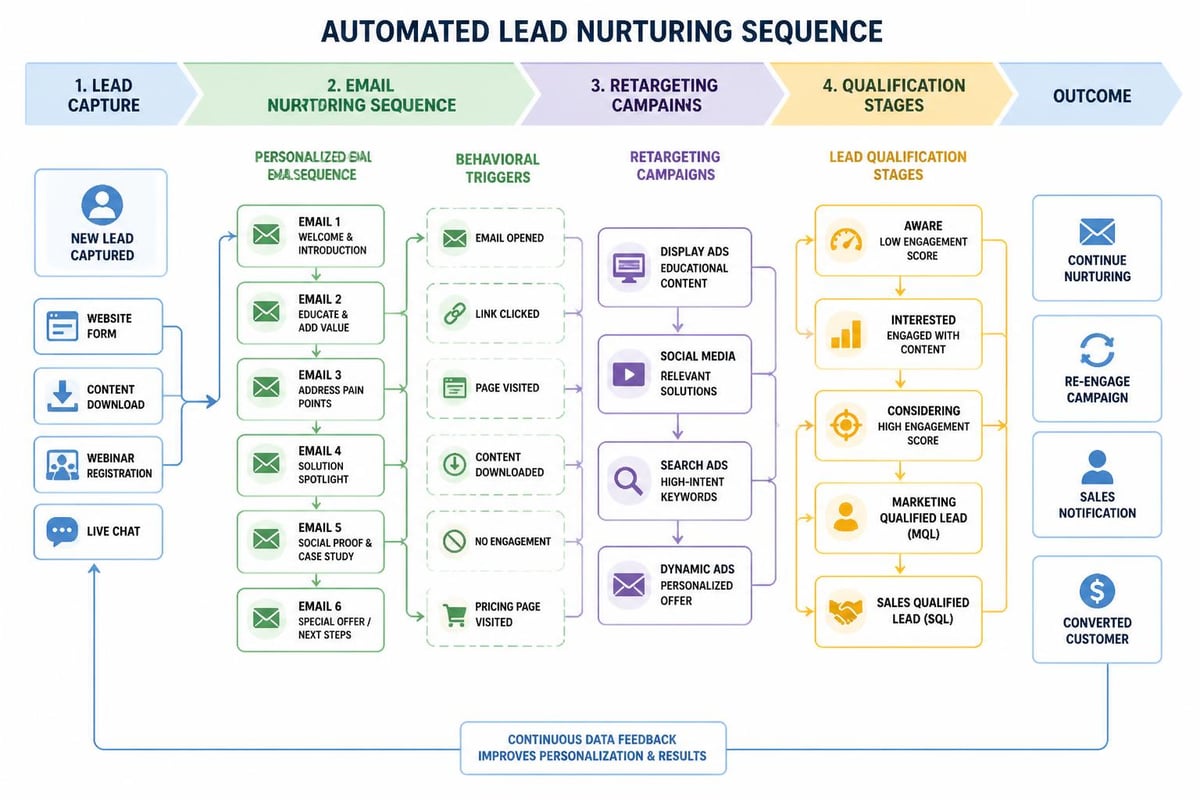
Manual lead generation caps your growth potential. Automation systems handle repetitive tasks, allowing your team to focus on high-value activities like strategy and relationship building. The businesses generating thousands of qualified leads monthly all rely on sophisticated automation.
Email automation nurtures digital marketing leads efficiently at scale. Behavior-triggered sequences send relevant messages based on specific actions prospects take. Someone who downloads a pricing guide receives different follow-up than someone who watched a product demo video.
Marketing automation platforms track every interaction, scoring leads based on engagement levels and fit characteristics. This scoring system helps sales teams prioritize their outreach, focusing energy on prospects most likely to convert soon.
Retargeting Campaigns That Recapture Lost Opportunities
Most visitors leave without converting on their first visit. Retargeting campaigns keep your brand visible as prospects continue researching solutions across the web. Strategic retargeting turns single site visits into multiple touchpoints, significantly improving eventual conversion rates.
Effective retargeting segments audiences based on behavior:
- Website visitors who viewed specific product pages
- People who started but didn't complete forms
- Previous customers eligible for complementary offers
- Email subscribers who haven't engaged recently
- High-value prospects who match ideal customer profiles
Each segment deserves tailored messaging addressing their specific situation and likely objections. Generic retargeting ads waste impressions on broad audiences rather than speaking directly to individual needs.
Qualifying Digital Marketing Leads for Maximum Sales Efficiency
Lead volume means nothing without quality. A system generating 1,000 unqualified contacts monthly performs worse than one producing 50 sales-ready prospects. B2B lead generation especially requires rigorous qualification to prevent wasting sales resources.
Lead scoring models assign numerical values based on demographic fit and behavioral engagement. Points accumulate as prospects take meaningful actions like visiting pricing pages, downloading case studies, or attending webinars. When scores exceed predetermined thresholds, leads automatically route to sales for immediate follow-up.
The most effective scoring models balance explicit data (information prospects provide) with implicit signals (behavioral patterns indicating buying intent). Someone with the right job title at a target company size who's visited your site five times this week scores higher than a student researcher browsing once.
Implementing Lead Qualification Frameworks
Popular frameworks like BANT (Budget, Authority, Need, Timeline) and CHAMP (Challenges, Authority, Money, Prioritization) provide structured approaches to qualification. These frameworks ensure consistent evaluation across your team, preventing subjective judgments from skewing results.
| Qualification Factor | Questions to Answer | Scoring Weight |
|---|---|---|
| Budget Availability | Can they afford your solution? | 25% |
| Decision Authority | Are they the buyer or influencer? | 20% |
| Pain Intensity | How urgently do they need a solution? | 30% |
| Timeline to Purchase | When are they ready to buy? | 25% |
Modern qualification happens automatically through smart forms, chatbots, and behavioral tracking. Prospects self-qualify by answering questions embedded naturally in your content and conversion points. This approach feels helpful rather than interrogative, improving user experience while gathering essential qualification data.
Measuring and Optimizing Lead Generation Performance
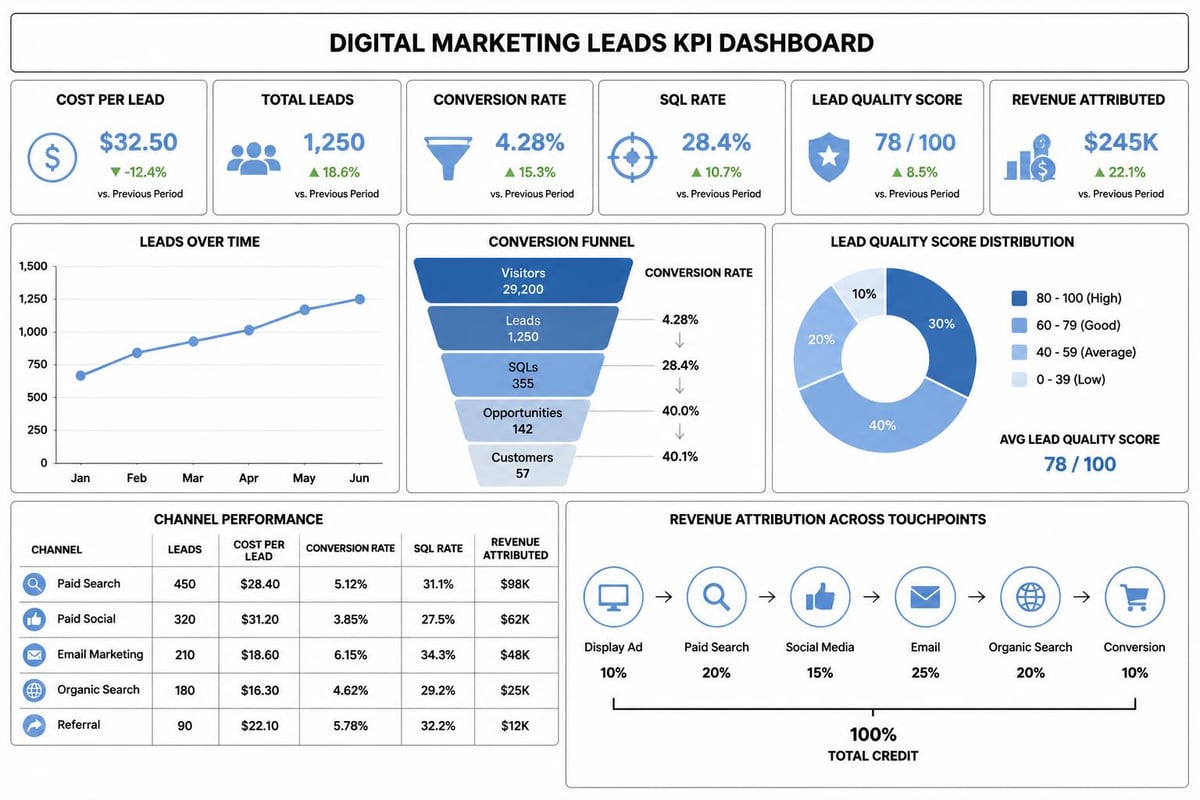
You can't improve what you don't measure. Comprehensive analytics reveal which tactics generate the best digital marketing leads and which waste resources. Digital lead generation strategies that lack measurement frameworks rarely achieve sustainable success.
Beyond vanity metrics like traffic and impressions, focus on conversion-oriented KPIs. These include cost per lead, lead-to-customer conversion rate, customer acquisition cost, and lifetime value. Understanding these economics enables confident scaling decisions.
Attribution modeling answers the critical question: which marketing activities deserve credit for conversions? Multi-touch attribution reveals that leads typically interact with 7-13 touchpoints before converting. Single-touch models that credit only the first or last interaction dramatically misrepresent reality.
A/B Testing for Continuous Improvement
Systematic testing separates growing businesses from stagnant ones. Every element of your lead generation system offers optimization opportunities: headlines, images, calls-to-action, form designs, offer positioning, and page layouts.
Effective A/B testing follows disciplined processes:
- Hypothesize based on data, not gut feelings
- Test one variable at a time for clear causation
- Reach statistical significance before declaring winners
- Document results to build institutional knowledge
- Implement winners and start the next test immediately
Companies committed to continuous testing improve conversion rates 20-30% annually through incremental gains. These improvements compound over time, creating substantial competitive advantages. Partnering with specialists in website design can accelerate optimization by ensuring technical excellence supports your conversion goals.
Integrating AI and Machine Learning Into Lead Generation
Artificial intelligence fundamentally transforms how businesses identify and convert digital marketing leads. The application of neural networks in digital marketing enables personalization at scale previously impossible with human-managed campaigns.
Predictive lead scoring uses machine learning to identify conversion patterns invisible to human analysts. These algorithms process hundreds of variables simultaneously, recognizing subtle behavioral combinations that signal purchase readiness. Accuracy improves continuously as the system learns from new conversion data.
Chatbots powered by natural language processing engage website visitors 24/7, answering questions and qualifying prospects automatically. Advanced implementations feel remarkably human, maintaining conversations that guide visitors toward conversion while collecting valuable qualification data.
Privacy Considerations in Modern Lead Generation
The data collection and privacy landscape has evolved significantly with regulations like GDPR and CCPA. Ethical lead generation requires transparency about data usage and respect for privacy preferences. Businesses that prioritize trust-building over aggressive data collection often achieve better long-term results.
Implement these privacy-first practices:
- Clear opt-in processes explaining exactly what subscribers receive
- Easy unsubscribe mechanisms respected immediately
- Transparent data usage policies written in plain language
- Secure data storage protecting against breaches
- Regular audits ensuring compliance with evolving regulations
Prospects increasingly reward businesses that demonstrate respect for privacy with loyalty and referrals. Short-term gains from questionable practices rarely justify the long-term reputation damage.
Aligning Sales and Marketing for Lead Conversion Success
The handoff between marketing and sales represents a critical juncture where many digital marketing leads disappear. Cold call leads that aren't properly nurtured before sales contact often result in wasted effort and frustrated prospects.
Service level agreements (SLAs) between marketing and sales teams create accountability. Marketing commits to delivering specific lead quantities and quality thresholds. Sales commits to contacting qualified leads within defined timeframes and providing feedback on lead quality.
Regular alignment meetings review performance against SLAs, discuss lead quality issues, and share insights about prospect objections and questions. This continuous feedback loop helps marketing refine targeting and messaging based on real sales conversations.
Creating Seamless Handoff Processes
Technology enables smooth transitions from marketing to sales. When a lead reaches qualification thresholds, automatic notifications alert sales representatives with complete context about the prospect's journey, interests, and previous interactions.
This information empowers sales teams to personalize initial outreach, referencing specific content the prospect consumed or problems they've researched. Personalized approaches dramatically outperform generic sales scripts that ignore the prospect's existing relationship with your brand.
Scaling Lead Generation Without Sacrificing Quality
Growth creates pressure to prioritize quantity over quality. Resisting this temptation separates sustainable businesses from those that collapse under the weight of unmanageable lead volumes. Smart scaling maintains quality standards while increasing output systematically.
Strategic capacity planning ensures your infrastructure supports growth. Before dramatically increasing lead generation, verify that your sales team, CRM systems, and fulfillment processes can handle higher volumes without degrading customer experience.
Working with top lead generation companies provides access to proven systems and expertise that accelerates scaling while avoiding common pitfalls. These partnerships supplement internal capabilities during growth phases without the overhead of expanding permanent staff.
Consider this scaling progression:
- Optimize existing channels to their maximum potential before adding new ones
- Document successful processes so they can be replicated systematically
- Automate repetitive tasks to free capacity for strategic work
- Test new channels at small scale before committing significant resources
- Monitor quality metrics closely during expansion to catch degradation early
The businesses most successful at scaling maintain discipline around testing, measurement, and incremental expansion rather than making dramatic leaps based on optimism.
Generating high-quality digital marketing leads requires strategic thinking, sophisticated systems, and continuous optimization based on real performance data. The businesses that win combine human creativity with AI-powered automation to attract, qualify, and convert prospects at scale while maintaining the quality standards necessary for sustainable growth. Adstra specializes in building these exact systems for businesses ready to transform their lead generation from unpredictable to systematic, leveraging advanced AI to deliver qualified leads and booked appointments that drive measurable revenue growth.